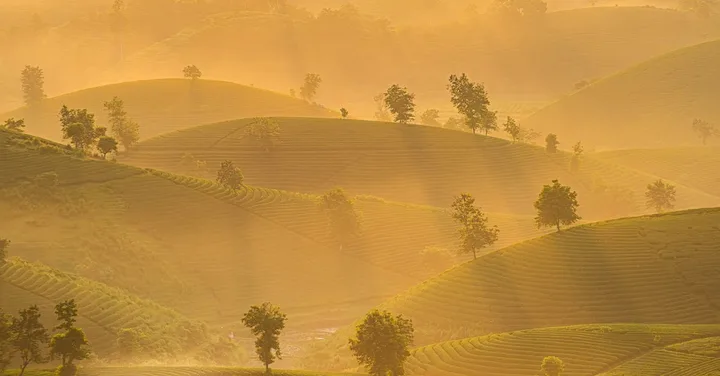
The rain hits just as you cross the wooden bridge at Ghangaria. You pull your jacket tighter, round a bend in the trail, and then the valley opens up. Stretching nearly 90 square kilometres across the Zanskar range, it's a riot of colour you didn't expect: cobalt blue Himalayan poppies, crimson bistort, yellow St. John's wort, white anemones. The air smells of wet earth and something faintly sweet you can't name. Snow patches cling to the ridges above. A mule train passes with a soft clang of bells. You stop walking. You just stand there.
In This Guide
- Valley of Flowers Uttarakhand 2026 for Indian Travellers: What You Actually Get
- Best Time to Visit (Month-by-Month, Honest)
- Top Experiences You Can't Miss
- Safari Sutra Package Options & Prices in INR
- Getting There: Flights from India
- Visa, Vaccinations & Practical Prep
- Frequently Asked Questions
- Plan Your Valley of Flowers Uttarakhand 2026 Trip with Safari Sutra
That moment is why people do this trek.
Valley of Flowers Uttarakhand 2026 for Indian Travellers: What You Actually Get
The Valley of Flowers National Park sits at an altitude of roughly 3,658 metres in the Chamoli district of Uttarakhand. It's a UNESCO World Heritage Site, part of the Nanda Devi Biosphere Reserve, and one of the most genuinely beautiful places in India. Not in a "poster on a hotel wall" way. In a "I did not know landscapes like this existed in my country" way.
The base for the trek is Ghangaria (also called Govindghat or Pulna depending on who you ask), reached after a 13-km walk from Pulna. The valley itself is another 4 km from Ghangaria. Most trekkers also combine this with the Hemkund Sahib yatra, the sacred Sikh shrine at 4,329 metres, which shares the same trail.
For Indian travellers, this is a deeply rewarding trip: spiritually resonant, physically achievable for fit adults and older teens, and honestly one of the better value-for-effort treks you'll do anywhere. You don't need a sleeping bag at -20°C or crampons. You need decent walking shoes, reasonable fitness, and the right two weeks.
What makes this trek special isn't just the flowers. It's the combination: high-altitude meadows, the Pushpawati river rushing alongside the trail, Himalayan wildlife including snow leopard (rarely seen, but present), bhoral or blue sheep on the ridges, and the complete quietness of the upper valley in the early morning before other trekkers arrive. If you've done the Uttarakhand Himalaya Tour Packages route through Kedarnath or Badrinath, this is the next logical step, and in many ways the more intimate one.
The valley is open from June to October. Entry is regulated. Camping inside the valley is prohibited. You trek in, spend your time, and trek back to Ghangaria before dark.
Best Time to Visit (Month-by-Month, Honest)
June (mid-June onwards): The valley just opens after the winter snowmelt. Flowers are beginning to bloom, trails can be slippery, and the crowds are thin. Good option if you want solitude and don't mind slightly muddy paths. The Pushpawati river runs high and fast.
July: This is peak bloom. The monsoon brings almost daily afternoon rain, but it's also exactly that rain which keeps the valley so spectacularly lush. Over 300 species of wildflowers are at their fullest. Mornings are often clear. If you can handle getting wet on the trail, July is the most rewarding month. Bring proper rain gear, not a poncho.
August: Still excellent. Blooms continue, the weather pattern is similar to July, and the light in August afternoons, when the clouds part, is genuinely stunning. August also coincides with high footfall for Hemkund Sahib yatra, so Ghangaria gets busy on weekends.
September: The monsoon withdraws progressively. Fewer flowers, but the valley takes on warmer amber tones as some species seed. The air is cleaner, views of the surrounding peaks are sharper, and the trails are drier. A good month for those who prioritise mountain views over floral maximum.
October (first two weeks): The park closes around mid-October. Most flowers have gone, but the silence and the light compensation. Snow can arrive at higher elevations. Not recommended for first-timers who specifically want the flowers.
Our honest recommendation: Come in mid-July to early August. Full stop. This IS the best window for what the valley does best.
Top Experiences You Can't Miss
The valley in morning light
Leave Ghangaria at 6 AM. You'll reach the valley entrance by 7:30 and have nearly an hour before the bulk of day-trekkers arrive. The flowers hold dew. The light comes sideways through the gorge. You'll have whole sections entirely to yourself. This is worth setting an alarm for.
Hemkund Sahib
The trek to Hemkund Sahib is a separate 6-km climb from Ghangaria, gaining around 1,400 metres. The glacial lake at the top, surrounded by seven Himalayan peaks, is extraordinary. The Gurudwara here is one of the highest in the world. Whether or not you're Sikh, the arrival at the lake after that climb carries a distinct emotional weight. The langar served here, simple dal and roti at 4,329 metres, is something you'll remember.
Ghangaria itself
Underestimated. This tiny settlement is your base camp and has a warmth about it. Garhwali families running small dhabas, pilgrims and trekkers sharing benches, mules picking through the lanes at dusk. Eat the rajma chawal. It's exactly what you need after 13 km on your feet.
The Pushpawati river crossing points
Multiple bridges and natural crossings along the valley floor. Standing above the river where it cuts through rock, watching the milky glacial water move, is one of the sensory highlights of the trip. It's loud in a satisfying, all-consuming way.
Sunrise from the ridge above the valley
For fit trekkers willing to push higher, the ridgeline above the valley offers a 360-degree Himalayan panorama including Gauri Parbat and Hathi Parbat. No official trail, ask your guide. Go early.
Safari Sutra Package Options & Prices in INR
Safari Sutra Holidays designs this trek for travellers who want the experience done properly, with good accommodation at basecamp, experienced local guides, and the small logistics handled so you're not fussing with permits at 6 AM.
Option 1: Classic Valley of Flowers Trek (6 nights / 7 days)
Haridwar to Haridwar. Covers Pulna to Ghangaria, a full day in the Valley of Flowers, and a day trek to Hemkund Sahib.
From INR 22,000 per person (twin sharing, includes accommodation, guide, permits, meals at trek)
Option 2: Valley of Flowers + Badrinath Extension (9 nights / 10 days)
Adds the Badrinath Dham darshan, one of the Char Dham, for travellers who want to combine the spiritual and the natural.
From INR 34,000 per person (twin sharing, same inclusions plus Badrinath stay and temple visit)
Option 3: Premium Small-Group Trek (8 nights / 9 days)
Limited to 8 pax. Better accommodation options at Joshimath and Ghangaria, a more experienced guide with botanical knowledge, and a customised itinerary with the early morning valley access built in.
From INR 52,000 per person (twin sharing, includes all meals, premium stays, and a trip briefing call with our trek planner)
Option 4: Family Trek Package (7 nights / 8 days)
Designed for families with children aged 12+. Includes extra acclimatisation day, slightly slower pacing, and accommodation selected for comfort over budget.
From INR 42,000 per person (based on a family of four)
Option 5: Private Custom Trek (flexible duration)
You choose the pace, the dates, the level of comfort. We build it around you. Custom pricing on request, typically from INR 65,000 per person for a private experience.
Prices are per-person estimates for 2026 season and exclude travel to Haridwar or Rishikesh. Contact us for the exact quote for your group size and travel dates.
Getting There: Flights from India
The nearest airport is Jolly Grant Airport in Dehradun, 35 km from Rishikesh and about 50 km from Haridwar.
From Delhi: Flights on IndiGo and Air India take around 50 minutes. Prices from INR 3,500-6,000 one way depending on how early you book. Most travellers fly into Dehradun and begin the road journey from there.
From Mumbai: No direct flights. Connect through Delhi. Total journey time including the Dehradun connection is 3-4 hours. Alternatively, a few travellers take the overnight Dehradun Express from Mumbai directly, a solid 24-hour train option if you like trains and aren't in a rush.
From Bengaluru, Hyderabad, Chennai: All connect through Delhi. Book Bangalore-Delhi-Dehradun as a single itinerary to protect connections.
Road from Dehradun/Haridwar to Pulna:
The drive to Joshimath via Rishikesh-Rudraprayag-Chamoli takes 9-10 hours. This is a mountain drive: spectacular, winding, and best done in daylight. Joshimath is the last proper town before the trek begins. From Joshimath to Govindghat is 30 minutes, and from Govindghat/Pulna the trek starts.
Visa, Vaccinations & Practical Prep
This is entirely a domestic India trip, so no visa is required for Indian citizens. Foreign nationals need a standard India tourist visa, available as an e-visa through the official Incredible India government portal.
Permits for the Valley of Flowers:
The entry permit for Valley of Flowers National Park is issued at the forest department counter in Ghangaria. As of 2025, it was INR 150 per day for Indian nationals and INR 600 for foreign nationals. Prices may be revised for 2026 season. The permit is non-transferable and must be carried inside the park.
Hemkund Sahib does not require a separate trekking permit but registration is done at the Gurudwara trust checkpoint.
What to pack (the honest list):
- Waterproof trekking shoes (not sneakers)
- Warm mid-layer and a waterproof outer shell
- Trekking poles (helpful for descent, available for rent at Govindghat)
- Personal first aid kit including altitude sickness tablets, ask your doctor about Diamox
- Reusable water bottles, water purification tablets or a filter
- Sunscreen SPF 50+ (UV at 3,600 metres is brutal)
- Insect repellent
- A small daypack for valley days
Altitude note: Ghangaria sits at 3,048 metres and Hemkund Sahib at 4,329 metres. If you're flying from a sea-level city like Mumbai, build at least one acclimatisation night at Joshimath (2,000 metres) into your plan. Headaches and fatigue are common without this buffer. Rushing the altitude is the most common reason treks go sideways.
Mobile connectivity: Patchy to non-existent from Govindghat onwards. Download offline maps, inform your family of your itinerary, and embrace the digital detox.
Frequently Asked Questions
Q: How difficult is the Valley of Flowers trek? Can non-trekkers do it?
The trek from Pulna to Ghangaria is 13 km on a well-maintained trail with a moderate incline. It takes 4-5 hours for average walkers. The valley day-walk is relatively flat. Hemkund Sahib is genuinely steep and physically demanding. If you walk regularly and don't have joint or cardiac issues, Ghangaria and the valley are achievable. Hemkund Sahib needs a base of fitness and a comfortable night's sleep at altitude first.
Q: Is it safe to trek here independently without a guide?
The trail to Ghangaria is well-marked and busy enough that you won't get lost. Inside the valley, signs are clear. You can technically do this independently. That said, after 12 years and 15,000+ trips, we've found the biggest difference between an average trip and a great one is guide quality and the knowledge they bring. A local guide who knows the valley's botanical layout, the best spots, and the right timing will transform your experience. These are things we get right for every Safari Sutra client.
Q: Can children trek to the Valley of Flowers?
Yes, with sensible planning. Children who are 10 and above and reasonably active can handle the Pulna-Ghangaria trail with rest stops. Mule rides are available for tired legs. The valley itself is fine for kids. Hemkund Sahib is a different matter: that climb is hard even for adults, and we generally recommend it only for children 14 and above with good fitness.
Q: What's the accommodation like in Ghangaria?
Ghangaria has a mix of government rest houses, GMVN (Garhwal Mandal Vikas Nigam) accommodation, and small private guesthouses. Basic but adequate. Don't expect five-star comfort. Hot water is limited. Beds are simple. The food at the local dhabas is honest and filling. If creature comforts matter to you, Joshimath offers better hotel options: many trekkers stay there and do a day-trip in to Ghangaria and the valley.
Q: Are there ATMs or card payments on the trek route?
No ATMs at Ghangaria. The last reliable ATM is at Joshimath. Carry enough cash for 2-3 extra days beyond your plan: mule hire, additional meals, any emergency purchases. Most dhabas and guesthouses work on cash only.
Q: When does the park open and close in 2026?
The valley typically opens in the first week of June and closes in the second week of October. Exact dates depend on snowmelt and are announced by the Forest Department. Check the official notification closer to your travel date. We track this every season and will confirm dates for any booking.
Q: Can I extend my trip to other Uttarakhand destinations?
Absolutely, and we'd encourage it. Auli for meadows and skiing infrastructure (great views even in summer), Joshimath's Narasimha temple, and the Badrinath Dham are all within striking distance. The Char Dham circuit is also practical to combine if you have 12-14 days. Our team can design a longer Uttarakhand itinerary that works with your timing and budget.
Plan Your Valley of Flowers Uttarakhand 2026 Trip with Safari Sutra
The 2026 trekking season opens in June and the July-August peak window fills faster each year. If you're serious about this trip, start planning by February at the latest, especially for premium packages with limited group sizes.
Safari Sutra Holidays has been building Himalayan and domestic India trips for over 12 years. We know which guesthouses in Joshimath are worth the price, which guides actually know the botanical names of what you're looking at, and how to build an itinerary that doesn't leave you gasping on the first day because the altitude wasn't accounted for.
This trek deserves to be done right. Not rushed, not under-prepared, not booked on a whim with an operator who's never walked the trail.
Ready to Plan Your Trip?
Safari Sutra Holidays — 13 years, 15,000+ trips, zero cookie-cutter itineraries.
Get Your Free Custom Quote →+91 9860415774 | hello@thesafarisutra.com

Safari Sutra Team
Travel curators with 13 years of experience planning Indian and international holidays — from safari adventures to island escapes.
View All Posts