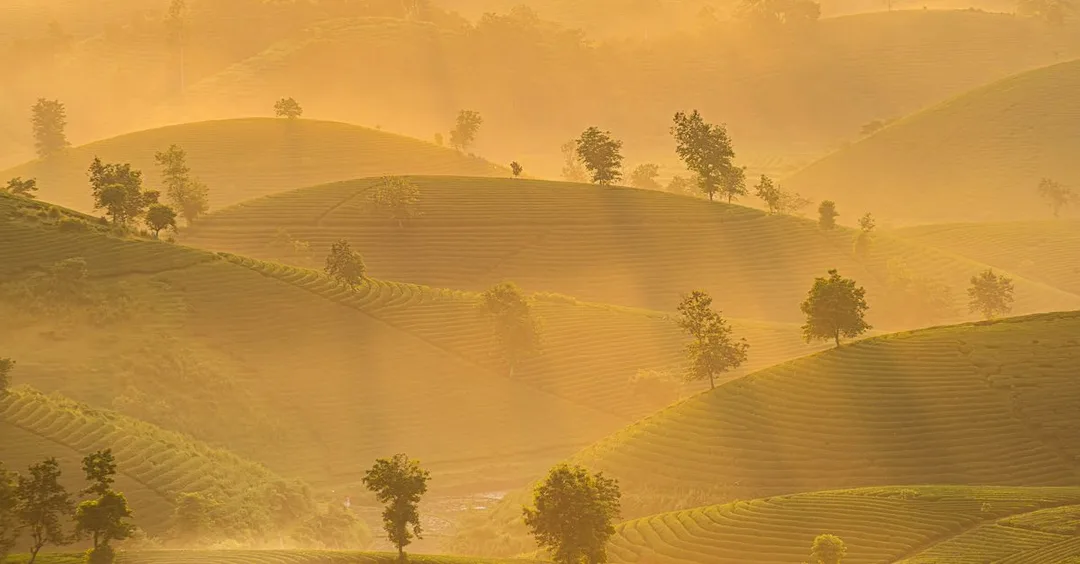
The mist rolls in around 6am, thick enough that you can barely see the tea bushes ten feet in front of you. Then it lifts, slowly, and what's revealed feels almost theatrical: ridge after ridge of bright green tea, broken only by the silver thread of a waterfall and the occasional flash of a Nilgiri flycatcher. The air smells of damp earth, eucalyptus, and something faintly sweet that you'll later realize is fresh-plucked tea. Your hands are cold. Your chai is hot. And you're wondering why it took you this long to come to Munnar.
This is the Western Ghats at their most generous.
Munnar Kerala Tea Plantation Guide for Indian Travellers: What You Actually Get
Let's be honest about what Munnar is and what it isn't.
Munnar is not a beach destination. It's not a party town. It's not a quick weekend fix if you want zero effort travel. What it is, is one of the most genuinely beautiful hill stations in India, sitting at around 1,600 metres above sea level in Kerala's Idukki district. The British planted tea here in the 1880s, and today roughly 30,000 hectares of the Kannan Devan Hills are under cultivation, mostly managed by Tata Tea's subsidiary, KDHP (Kanan Devan Hills Plantations).
For the Indian premium traveller, Munnar delivers on several fronts. You get dramatic, rolling landscapes that feel nothing like the Himalayas or Rajasthan. You get a cooler climate that's a genuine relief from Mumbai or Delhi heat. You get excellent food, real Kerala cuisine, not a hotel approximation of it. And you get a pace of life that's slow enough to actually feel like a break.
The destination suits couples, small families, and friends travelling together. It works especially well as part of a larger Kerala trip. If you're planning to combine it with the Kerala backwaters, our Kerala Backwaters Tour Packages pair beautifully with a Munnar leg, giving you both the highland green and the lowland shimmer of Alleppey's canals.
The food here deserves its own paragraph. Appam with stew for breakfast. Fish moilee with rice for lunch. Beef pepper fry (yes, in Kerala it's common and it's excellent) if you eat it. Puttu and kadala curry from a roadside stall that costs less than your airport coffee. Eating well in Munnar requires exactly zero effort.
The Incredible India tourism portal lists Munnar as one of Kerala's top hill destinations, and for once, that kind of official recognition is actually deserved.
Best Time to Visit (Month-by-Month, Honest)
Munnar has a genuinely complicated relationship with rain. Here's the honest picture.
October to March is the sweet spot. The monsoon has pulled back, the hills are a ridiculous shade of green, temperatures sit comfortably between 10°C and 25°C, and the roads are clear. December and January are peak months, which means more tourists and higher hotel rates, but the weather is as close to perfect as it gets. If you can travel in October-November, you'll find thinner crowds, post-monsoon freshness, and significantly better hotel deals.
April and May are warm by Munnar standards, pushing to 28-30°C in the lower elevations, but still far cooler than most Indian cities in summer. These months are popular with families during school holidays. Book early because good properties fill up fast.
June to September is monsoon season, and this is where you need realistic expectations. Munnar receives heavy rainfall, roads can get tricky, and some of the higher viewpoints stay fogged in for days at a time. That said, the plantation landscape during monsoon is genuinely extraordinary. If you're comfortable with rain, don't mind the occasional road closure, and get a thrill from mist-wrapped valleys, monsoon Munnar has a raw, moody beauty that the postcard version simply can't match. Rates drop significantly, and the crowds disappear almost entirely.
The one month we'd actually steer you away from is June, specifically the first two weeks, when the pre-monsoon and monsoon transition can make travel genuinely unpredictable.
Our honest recommendation: October through early December is the best combination of good weather, reasonable prices, and manageable crowds. That's our window for most of the Munnar trips we plan.
Top Experiences You Can't Miss
Walking through the tea gardens in the early morning is the thing to do in Munnar. Not a guided tour. Not a jeep safari (though those exist). Just walking along the plantation paths as the pickers arrive, baskets on their heads, moving with a practiced efficiency that's both humbling and beautiful. The KDHP-managed plantations near Mattupetty and the Top Station road allow some access. Ask your hotel or homestay to point you in the right direction, as the specific entry points change.
Eravikulam National Park is non-negotiable. This is where you'll find the Nilgiri Tahr, a stocky mountain goat that looks deceptively cuddly and is actually a Schedule I protected species. The park opens in January after the December closure for Tahr calving season. The trek to Rajamala and the views from there are worth every step. Book tickets online before you go because walk-in capacity is limited.
Top Station sits at about 1,700 metres and on a clear day (pick your timing wisely, morning is best) you can see straight into Tamil Nadu. The name comes from an old aerial ropeway that carried tea from here down to the plains. The ropeway is gone, the views remain.
Mattupetty Dam and Lake is one of those places that sounds like a checklist item but actually earns its place. Hire a paddle boat, stay for an hour, watch the hills reflect in the water. It's simple and genuinely lovely.
The Tata Tea Museum is better than you'd expect a corporate museum to be. It covers the full history of tea cultivation in the Kannan Devan Hills, has working plantation machinery on display, and the chai at the end is, predictably, very good.
Chinnakanal Waterfalls (also called Power House Falls) is less visited than Attukad Falls, which means you'll have more peace there. The road getting there is narrow, so if you're renting a self-drive, check road conditions first.
A Kerala cooking class at your accommodation, if they offer it, is worth half a day. Learning to make a proper Kerala fish curry from someone who grew up making it is a genuinely useful thing to take home.
Safari Sutra Package Options & Prices in INR
After 12 years and 15,000+ trips, we've found the biggest difference between an average trip and a great one is guide quality and the quality of the local connections who actually know when the park is less crowded, which tea estate welcomes visitors, and where to eat that doesn't appear on any app. These are the things we get right for every Safari Sutra client.
Here's how we structure Munnar trips, depending on what you're looking for.
Option 1: Munnar Weekend Escape (2 Nights / 3 Days)
Good for couples or a quick break from Kochi or Coimbatore. Includes accommodation at a mid-range plantation property, airport or railway station transfers, a half-day guided plantation walk, and breakfast daily.
Starting from approximately Rs. 18,000 per person (twin sharing)
Option 2: Munnar Classic (3 Nights / 4 Days)
The most popular option for first-time visitors. Covers Eravikulam National Park, Mattupetty, Top Station, the Tea Museum, and a sunset viewpoint picnic. Accommodation at a 4-star plantation resort. All transfers included.
Starting from approximately Rs. 28,000 per person (twin sharing)
Option 3: Munnar Premium Plantation Stay (4 Nights / 5 Days)
For those who want to actually slow down. Includes accommodation at a private estate bungalow or boutique heritage property (think four-poster beds, private verandahs, estate walks at dawn). More time at each location, smaller group or fully private itinerary, a cooking class, and a guided forest walk.
Starting from approximately Rs. 45,000 per person (twin sharing)
Option 4: Kerala Highlands + Backwaters Combo (7 Nights / 8 Days)
Munnar (3 nights) plus Alleppey houseboats (1 night) plus Kumarakom or Varkala (3 nights). This is the full Kerala sweep, hills to coast. One of our most-booked Kerala itineraries.
Starting from approximately Rs. 65,000 per person (twin sharing)
Option 5: Family Munnar (customised)
School holidays bring a specific kind of travel need: activities that keep kids engaged, properties with good family facilities, and an itinerary that doesn't require a 5am start every day. We build these on request, priced based on group size and property choice.
All packages can be adjusted based on travel dates, group size, and your preferred pace. Plan Your Trip with Safari Sutra to get a quote built around what you actually want.
Getting There: Flights from India
Munnar doesn't have its own airport. The nearest and most practical option is Cochin International Airport (COK), which is around 110 kilometres from Munnar, roughly a 3.5 to 4-hour drive through the mountains.
From Mumbai: IndiGo, Air India, and Vistara operate multiple daily flights to Kochi. Flight time is approximately 1 hour 45 minutes. Fares start around Rs. 3,500 one-way if you book 4-6 weeks ahead.
From Delhi: Direct flights to Kochi take about 3 hours. IndiGo and Air India offer the most frequency. Budget around Rs. 5,000-8,000 one-way for reasonable advance booking.
From Bangalore: The drive from Bangalore to Munnar (around 460 km via Mysuru and Sulthan Bathery) is actually a viable option for some travellers, especially if you want a road trip. The route through the Wayanad forests is beautiful, though it's a full day's drive. Flying to Kochi is faster and often cheaper once you factor in fuel and wear.
From Kochi, getting to Munnar is best done by hired car. State buses exist, and they're genuinely fine if you're comfortable with hill road bus travel, but the private car gives you the flexibility to stop at viewpoints, which on this drive is the whole point. The road climbs through rubber plantations, waterfalls, and small Kerala towns before the temperature drops noticeably as you gain elevation.
Visa, Vaccinations & Practical Prep
Munnar is in Kerala, which is in India, which means if you're an Indian citizen, you obviously need no visa. For international travellers, India's e-Visa is available for most nationalities and is straightforward to apply for online.
What to pack for Munnar (specifically):
- Layers. The temperature swings between 10°C at night and 25°C in the afternoon. A light fleece and a windcheater are both useful.
- Comfortable walking shoes with grip. Plantation paths are often damp and uneven.
- A good rain jacket if you're travelling June to September.
- Sunscreen. The UV at altitude is stronger than it feels when you're surrounded by cool air.
- Cash. While Munnar town has ATMs and most hotels take cards, smaller stalls and plantation entry points sometimes prefer cash.
No specific vaccinations are required for Munnar, but routine vaccinations (Hepatitis A, Typhoid) are sensible for any travel in India if you're not already covered.
Mobile connectivity is generally good in Munnar town and along the main routes. Go deeper into the plantations or toward some of the waterfalls and you'll lose signal. This is, depending on your perspective, a feature.
Frequently Asked Questions
Q: Is Munnar worth visiting or is it just another overhyped hill station?
Munnar is genuinely worth it, with one condition: you need to stay at least two full nights, ideally three. People who feel underwhelmed by Munnar usually rushed through it, ticking off viewpoints without actually settling into the pace of the place. Give it time, get up early, eat local, and it delivers.
Q: Can I visit Munnar during the monsoon?
Yes, and many travellers who've done it say it's their favourite version of Munnar. The caveats are real though: some roads get difficult, Eravikulam National Park is closed during parts of this period, and you need to be flexible if a day's plan gets rained out. If you go during monsoon, build flexibility into your itinerary and pick a property with a good indoor space where you're happy to spend a slow afternoon.
Q: How do I combine Munnar with Alleppey backwaters?
This is one of the most natural Kerala itineraries and hugely popular with Indian travellers. The typical sequence is Munnar first (3 nights), then drive down to Alleppey or Kumarakom for the houseboats (1-2 nights), then either home or onward to a coastal town like Varkala. The drive from Munnar to Alleppey takes about 4.5 hours. Our Kerala Backwaters Tour Packages can be easily combined with a Munnar leg.
Q: What's the best area to stay in Munnar?
Munnar town is convenient but not particularly atmospheric. For a more immersive experience, look for properties on the plantation roads outside town, particularly toward Devikulam, Mattupetty, or the Chinnar direction. These locations give you the early morning mist, the bird sounds, and the genuine plantation feel that makes the whole trip click.
Q: Is Munnar suitable for families with young children?
Very much so. The climate is comfortable, the activities are gentle, and children genuinely love watching tea pickers at work and spotting Nilgiri Tahr at Eravikulam. The drives between attractions are scenic enough to hold attention. Pick a property with some outdoor space and you're set.
Q: How much should I budget per day for food and local expenses?
If you're eating at local restaurants and roadside spots, Rs. 500-800 per person per day covers food comfortably. If you're eating primarily at your hotel or resort, that number depends on the property. Local experiences like plantation walks, viewpoint entry fees, and boat rides on Mattupetty Lake typically cost under Rs. 500 per person per activity.
Q: Is it safe to self-drive to Munnar from Kochi?
The roads are manageable for a confident driver, but the mountain stretch from Adimali to Munnar involves significant hairpin bends and narrow sections. If you're not comfortable with hill driving or don't have experience with ghat roads, a hired driver is the better call. It also means someone else is watching the road while you're watching the waterfalls, which is the right arrangement.
Plan Your Munnar Kerala Tea Plantation Guide Trip with Safari Sutra
Munnar is one of those destinations that rewards good planning almost more than most. The difference between a room on the highway and a private estate bungalow with a morning plantation walk is not just comfort, it's a completely different trip. Knowing which part of the park to visit first, which local restaurant actually serves proper Kerala sadya on weekends, which month has the Neelakurinji in bloom (every twelve years, next in 2030, so you have time) - these details add up.
At Safari Sutra Holidays, we've been putting together Kerala trips for over a decade. We know the properties that photograph well and the ones that actually feel good to stay in. We know that Eravikulam is best visited right when it opens and that the light on the tea gardens at 7am is something you'll remember longer than any viewpoint.
If you're thinking about Munnar, whether it's a standalone trip, part of a Kerala loop, or something more custom, let's talk it through.
Ready to start planning? Contact Safari Sutra Holidays and we'll handle everything.

Safari Sutra Team
Travel curators with 13 years of experience planning Indian and international holidays — from safari adventures to island escapes.
View All Posts