The Tirthan River runs cold and green over smooth grey stones, and the sound it makes, that constant, rushing, alive sound, follows you everywhere in this valley. You wake up to it. You eat beside it. You fall asleep to it. There are no horns here, no construction noise, no WhatsApp notifications that feel urgent. Just pines, rhododendrons, the distant call of a koklass pheasant, and the kind of silence that takes a day or two to actually settle into your body. Tirthan Valley in Himachal Pradesh is not a resort destination. It's a place. And that difference is everything.
In This Guide
- Tirthan Valley Himachal Pradesh for Indian Travellers: What You Actually Get
- Best Time to Visit (Month-by-Month, Honest)
- Top Experiences You Can't Miss
- Safari Sutra Package Options & Prices in INR
- Getting There: Flights from India
- Visa, Vaccinations & Practical Prep
- Frequently Asked Questions
- Plan Your Tirthan Valley Himachal Pradesh Trip with Safari Sutra
Tirthan Valley Himachal Pradesh for Indian Travellers: What You Actually Get
Most Indian travellers who've heard of the Kullu-Manali belt haven't heard of Tirthan. That's partly the point. The valley sits in the Kullu district, about 65 kilometres from Kullu town, and shares its eastern boundary with the Great Himalayan National Park, a UNESCO World Heritage Site that protects over 1,100 square kilometres of alpine meadows, dense forests, and glacial streams. This is not a zoo. Wildlife here is genuinely wild, the trails are real, and the park doesn't hold your hand. You either hire a local guide and go in properly, or you stay on the periphery and enjoy the river and the air.
For Indian premium travellers, Tirthan hits a very specific sweet spot. It's a place where "luxury" means a wooden cottage with a fireplace, a glass of local wine, and a naturalist who actually knows what he's talking about. It's not about thread counts and pool bars. If that sounds like your kind of reset, you're in the right place.
Tirthan is also one of the few valleys in India where fly fishing is a genuine activity, not just a prop for photos. The river is a designated conservation reserve, and brown trout and snow trout move through its waters. Catch-and-release is the norm. You don't need experience to start, but if you've always been curious about standing in a cold Himalayan river with a rod in your hand, this is where you do it.
Beyond the river, the valley rewards slow exploration. Village walks through Gushaini and Shoja, overnight treks to Shilt Meadow, bird watching in the buffer zone of the national park, and evenings around a bonfire listening to rain on a tin roof. This is what you actually come for. You can Explore All Destinations, Safari Sutra to compare it with other Himalayan escapes if you're still weighing options.
Best Time to Visit (Month-by-Month, Honest)
April to June is warm, clear, and genuinely beautiful. Rhododendrons are in bloom through April, the trails into GHNP open up, and the river is full from snowmelt. This is the busiest window, but "busy" in Tirthan is relative. You won't find crowds; you might just find that the good homestays are already booked.
July to September brings monsoon. The valley gets lush and green in a way that photographs can't quite capture. The roads can get tricky, some trails close, and leeches are real on forest paths. But the off-peak pricing is significant, the river is dramatic, and if you don't mind occasional rain days, this season has a moody, cinematic quality that some travellers specifically seek out.
October to November is the sweet spot. The rains have cleared, the air is crisp and sharp, visibility is excellent, and the forests are turning gold and amber. The GHNP buffer zone is fully accessible. This is when experienced Himalayan travellers tend to visit.
December to March: snow arrives from December. The higher trails and parts of the national park become inaccessible. But the valley itself stays open, and a snowbound Tirthan with a fireplace going and no other tourists around has its own distinct appeal. Road conditions need checking before travel.
Top Experiences You Can't Miss
Fly Fishing on the Tirthan River
You don't need to be a fly fishing veteran. Local guides will teach you the basics, set you up with gear, and walk you to the best spots. The catch-and-release ethic here is taken seriously, and standing thigh-deep in that cold green water, watching your fly drift over a riffle, is meditative in the best possible way.
Trekking into the Great Himalayan National Park
The most accessible trail for day visitors is the Rolla-Sakachi trail through the buffer zone. For serious trekkers, multi-day routes go up to Tirthan Valley's higher reaches, with wildlife encounters possible including Himalayan brown bear, serow, and monal pheasant (the state bird of Himachal). Always enter with a registered guide.
Shilt Meadow Overnight Trek
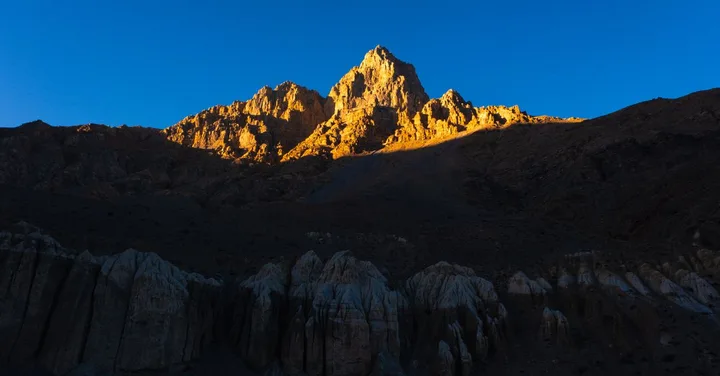
A 12-14 kilometre trail that takes you above the treeline to a high alpine meadow with 360-degree Himalayan views. Camp overnight, wake at dawn, and have the mountains entirely to yourself. This is a moderate trek and doable for anyone with reasonable fitness.
Village Life and Local Food
Tirthan's villages, particularly Gushaini, are working agricultural communities. Walk the paths between terraced fields, sit in someone's kitchen, and eat siddu (a steamed wheat bread) with ghee and local chutney. The simplicity is the point.
Birdwatching in the Buffer Zone
With over 180 recorded bird species in the national park area, this is serious birding territory. Monal, koklass pheasant, western tragopan, and various raptors are regularly spotted. Go in early morning, go slowly, and bring patience.
Safari Sutra Package Options & Prices in INR
These are realistic starting figures per person, based on double occupancy, and they shift with season and specific accommodation choices.
Essential Tirthan (3N/4D) from Rs. 22,000 per person
Comfortable guesthouse accommodation in Gushaini or Banjar, one guided trek into the GHNP buffer zone, a fly fishing session, meals, and transfers from Bhuntar airport. Good entry point for a first visit.
Valley and Trek Package (5N/6D) from Rs. 38,000 per person
Includes the Shilt Meadow overnight trek, full-day GHNP guided walk, fly fishing, village cultural walk, and stay at a mid-range riverside property. This is the most popular option for couples and small groups.
Premium Retreat (6N/7D) from Rs. 65,000 per person
Premium riverside cottages (fireplace included), dedicated naturalist, two-night Shilt Meadow camping with proper gear, birdwatching mornings, fly fishing, all meals, and personalised transfers. Designed for travellers who want the full experience without any logistics to worry about.
Family Tirthan (5N/6D, family of four) from Rs. 1,10,000 total
Designed for families with children aged 8 and above. Includes easy treks suitable for kids, a nature education walk inside the buffer zone, fly fishing intro session, village visit, and family-friendly accommodation with separate rooms.
Custom/Extended Itineraries are available and honestly often what we end up building for repeat travellers. Call us and tell us what you're looking for.
Getting There: Flights from India
The nearest airport is Bhuntar (KUU), near Kullu, served by IndiGo and Air India from Delhi. Flight time is about an hour. From Bhuntar, it's a 65-kilometre drive to the Tirthan Valley, taking roughly 2 to 2.5 hours on mountain roads.
From Mumbai, the most practical route is Delhi-Bhuntar with a same-day connection. Chandigarh is a viable alternative airport, with a longer but scenic road journey of 7-8 hours via NH-205. Himachal Road Transport Corporation (HRTC) buses run from Delhi and Chandigarh to Aut, from where local taxis serve the valley.
The Aut Tunnel connects the valley to the main Kullu-Manali highway and significantly cuts road time in winter and monsoon.
Visa, Vaccinations & Practical Prep
Tirthan Valley is fully domestic travel within India, so no visa is required for Indian nationals. Overseas Indian travellers (OCI/NRI) need standard Indian entry documentation.
Health prep: No specific vaccinations are required. Carry standard personal medication, antihistamines for forest walks, and a basic first aid kit. Altitude sickness is not typically an issue at valley level (around 1,600 metres), but if you're trekking up to Shilt Meadow (above 3,000 metres), ascend slowly and stay hydrated.
Connectivity: Mobile networks are weak inside the valley and essentially absent on higher trails. Download offline maps before you leave. BSNL tends to have better coverage than private networks.
What to pack: Layers are non-negotiable. Even in May, evenings get cold at 12-15°C. Waterproof footwear for the river trails. A decent headlamp. Your own water bottle and purification tablets for treks.
Inner Line Permit: Not required for the Tirthan Valley or GHNP buffer zone visits. For some deeper zones of the national park, a permit from the Forest Department in Sai Ropa is needed, and your guide will handle this.
Frequently Asked Questions
Q: Is Tirthan Valley suitable for families with young children?
Yes, with the right itinerary. Children aged 8 and above can handle easy trail walks in the buffer zone, and the river experiences are accessible for all ages. The bigger treks like Shilt Meadow are better suited to children who are reasonably fit and at least 10-12 years old. Accommodation options include guesthouses and homestays with family rooms. Just avoid the monsoon months if you're travelling with very young kids, as road conditions and trail closures add unpredictability.
Q: Is fly fishing genuinely open to beginners, or do you need prior experience?
Complete beginners do fine here. Licensed local guides provide all equipment, teach basic casting technique, and take you to spots suited to your level. The Tirthan is a catch-and-release river, so there's no pressure to actually land a fish. The experience is about being in the river, not about a score.
Q: How different is Tirthan from Kasol or Manali?
Very different. Kasol and Manali have developed tourism infrastructure, more crowds, and a distinct backpacker/party culture alongside the commercial hotels. Tirthan is quieter, less commercially developed, and better suited to travellers who want nature immersion over nightlife and shopping. If you've already done Manali and want something with more depth and less noise, Tirthan is the natural next step.
Q: What's the accommodation situation? Is there a proper hotel?
There are no large hotels in Tirthan. Accommodation ranges from basic homestays to well-maintained wooden cottages and guesthouses, several of which sit right on the river. The better properties book out fast in the April-June and October-November windows, so advance booking matters. Safari Sutra Holidays handles accommodation selection as part of all packages.
Q: Is Tirthan accessible by road from Delhi without flying?
Yes. Delhi to Aut (the entry point to Tirthan) is approximately 500 kilometres by road, typically 10-12 hours depending on traffic out of Delhi. Overnight Volvo buses from Delhi's ISBT reach Aut in the morning. Driving yourself gives you flexibility, but mountain roads require confidence and ideally a 4x4 or high-clearance vehicle if you're travelling in winter or monsoon.
Q: What wildlife can you realistically expect to see?
In the buffer zone of GHNP, birdlife is the most reliably sighted wildlife. Himalayan monal, koklass pheasant, khalij pheasant, lammergeyer, and various woodpeckers are regularly spotted. Larger mammals like serow, Himalayan tahr, and occasionally leopard are present but require luck and early starts on the right trails. Snow leopard sightings are extremely rare at this altitude.
Q: How does Safari Sutra handle the logistics compared to booking directly?
After 12 years and 15,000+ trips, we've found the biggest difference between an average trip and a great one is guide quality and timing. These are things we get right for every Safari Sutra client. When you book through us, you get a vetted naturalist guide who knows the park well, not whoever's available that morning. You also get accommodation we've personally inspected, transfers that account for mountain road realities, and someone to call if plans need to change. Direct booking saves a little on paper but adds a lot of friction on the ground.
Plan Your Tirthan Valley Himachal Pradesh Trip with Safari Sutra
Tirthan doesn't need a hard sell. If what you've read here makes you want to stand in a cold river at 7am, or wake up in a pine forest above the clouds, or just sit somewhere genuinely quiet for a few days, that's reason enough to go. The valley will do the rest.
Safari Sutra Holidays builds itineraries for this region that actually work, from getting your accommodation right to making sure your guide knows the forest well enough to spot a western tragopan before you've even raised your binoculars. It's that ground-level detail that makes Tirthan feel like a discovery rather than just another hill station tick.
Ready to Plan Your Trip?
Safari Sutra Holidays — 13 years, 15,000+ trips, zero cookie-cutter itineraries.
Get Your Free Custom Quote →+91 9860415774 | hello@thesafarisutra.com

Safari Sutra Team
Travel curators with 13 years of experience planning Indian and international holidays — from safari adventures to island escapes.
View All Posts