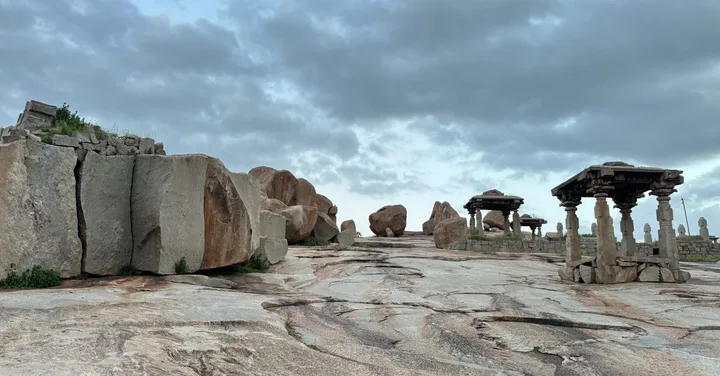
Stand in the middle of Hampi at golden hour and you'll understand why this place stops people mid-sentence. The Virupaksha Temple rises ahead of you, its gopuram glowing copper in the late afternoon light. Behind you, massive boulders the size of houses are stacked like a careless giant dropped them there. The air smells of marigold garlands, faint incense, and the dry heat of the Deccan plateau. Coracles spin lazily on the Tungabhadra river. Somewhere nearby, a priest is chanting. This is Hampi, Karnataka, and it is genuinely unlike anywhere else in India.
In This Guide
- Hampi Karnataka for Indian Travellers: What You Actually Get
- Best Time to Visit (Month-by-Month, Honest)
- Top Experiences You Can't Miss
- Safari Sutra Package Options & Prices in INR
- Getting There: Flights from India
- Visa, Vaccinations & Practical Prep
- Frequently Asked Questions
- Plan Your Hampi Karnataka Trip with Safari Sutra
Hampi Karnataka for Indian Travellers: What You Actually Get
Hampi is the ruined capital of the Vijayanagara Empire, which was, at its peak in the 15th and 16th centuries, one of the richest kingdoms in the world. When the empire fell after the Battle of Talikota in 1565, the city was destroyed over several months. What you see today is what remained: more than 1,600 monuments spread across 26 square kilometres, all recognised as a UNESCO World Heritage Site by the Incredible India tourism authority.
For Indian travellers, Hampi hits differently than it does for foreign tourists. This is your history. These are kings who built temples that made Portuguese traders write breathless letters home. The Lotus Mahal, the Elephant Stables, the Vittala Temple with its famous stone chariot and musical pillars, the Hazara Rama Temple with its detailed narrative friezes of the Ramayana: every structure tells a story you may have heard in school but never fully felt until you're standing inside it.
Beyond history, Hampi is also a place for people who like to just be somewhere. The Hippie Island (officially Virupapur Gadde) across the river has cheap guesthouses, good food, and a pace of life that encourages you to stay an extra day. Bouldering enthusiasts from across the world fly in specifically for the granite formations here. It's genuinely a place where a serious history-lover and a 25-year-old backpacker can both have a brilliant trip.
The practical reality: Hampi is affordable. It's accessible. It's doable as a long weekend from Bangalore, a 5-6 hour drive away, or as part of a wider Karnataka circuit. If you haven't been, this is the trip you keep saying you'll take.
Best Time to Visit (Month-by-Month, Honest)
October to February is the clear sweet spot. Temperatures sit between 15 and 28 degrees Celsius. The light is extraordinary in the early mornings. This is when Hampi is at its most walkable and most photogenic.
November and December are peak months, which means the Hampi Utsav festival (usually held in November) brings classical music, dance performances, and a brilliant atmosphere across the ruins. Book accommodation well in advance if you're coming during this window.
March and April are manageable if you're an early riser. Temperatures climb toward 35-38 degrees Celsius by afternoon, so most serious sightseeing happens between 7 and 11am. Not ideal, but not impossible.
May and June are the months to avoid. The heat is brutal, often touching 42 degrees, and many guesthouses on Hippie Island close down. If you have young children or elderly parents with you, just wait.
July to September (monsoon) is an interesting choice. The boulders look dramatic in the mist. The river swells and the landscape turns unexpectedly green. But the coracle service often stops, some sites get slippery, and the humidity is real. It's for travellers who prefer fewer crowds and don't mind the rain. Personally, we think late September, when the rains start to ease, is actually a hidden gem of a time to go.
Top Experiences You Can't Miss
The Vittala Temple Complex: This is the crown jewel. The stone chariot in the courtyard is India's most photographed stone structure for good reason: it's extraordinary engineering from the 1500s. The musical pillars (56 of them in the main hall) produce different musical notes when tapped lightly. Budget at least two hours here and go early.
Sunrise at Matanga Hill: A 30-minute climb up a rocky path brings you to one of the best views in all of Karnataka. The temple ruins spread out below you in every direction, the river glints in the early light, and on clear mornings you can see for miles. Wear shoes with grip and carry water.
Coracle Ride on the Tungabhadra: These round wicker boats have been in use for centuries. Cross the river to reach Virupapur Gadde, spend a few hours eating banana pancakes and reading, then cross back before sunset. It costs almost nothing and it's genuinely lovely.
Royal Enclosure and Lotus Mahal: The Queen's Bath, the Lotus Mahal, the Elephant Stables: this cluster of monuments shows the secular side of Vijayanagara architecture, blending Hindu and Islamic styles in a way that surprises most visitors. The Elephant Stables especially, with its 11 chambers, each with a different domed ceiling, is architecturally wild.
Hampi Bazaar and Virupaksha Temple: The living, functioning temple at the end of the old bazaar street is still an active place of worship. Lakshmi, the temple elephant, is something the kids will talk about for years. The bazaar itself is great for picking up stone carvings, incense, and local snacks.
Bouldering and Cycling: Rent a bicycle (about Rs. 100-150 per day) and explore the monument corridor at your own pace. If you're into rock climbing, the bouldering scene here is serious: the granite formations attract climbers from Europe and Japan. Local instructors are easy to find.
If you're planning a wider Karnataka trip, check out Explore All Destinations on Safari Sutra for ideas on combining Hampi with Badami, Aihole, and Pattadakal for a full Deccan heritage circuit.
Safari Sutra Package Options & Prices in INR
We've designed these packages for Indian travellers who want the trip to work well, not just look good on paper.
Tier 1: The Weekend Escape (2 Nights / 3 Days)
Ideal for Bangalore-based travellers or anyone wanting a quick trip. Includes comfortable hotel stay (3-star equivalent), guided tour of the main monument cluster, coracle ride, and breakfast daily. Starts from approximately Rs. 8,500 per person (twin sharing), excluding transport from your city.
Tier 2: The Deep Dive (3 Nights / 4 Days)
This is our most popular option. Covers the full monument circuit across both sides of the river, a sunrise Matanga Hill visit, the Hampi Utsav experience (during November), and a half-day trip to Anegundi, the older settlement across the river with its own fort, banana groves, and craft workshops. Starts from approximately Rs. 14,000 per person (twin sharing), including a quality guide for all site visits.
Tier 3: The Heritage Circuit (5 Nights / 6 Days)
Hampi plus Badami, Aihole, and Pattadakal. This is the full Chalukya-Vijayanagara trail that most Indian travellers have never done but absolutely should. Includes all accommodation, a private vehicle throughout, expert guide, and all monument entry fees. Starts from approximately Rs. 28,000 per person (twin sharing), excluding flights.
Tier 4: Premium Hampi (3 Nights / 4 Days)
Stay at the Evolve Back Kamalapur (formerly Orange County), which sits right on the edge of the heritage zone. This property is genuinely special: stone cottages, a curated heritage walk at dawn, and a spa. Starts from approximately Rs. 45,000 per person (twin sharing), including all meals and guided experiences.
Custom Family Packages are available on request, and we're especially good at building itineraries that work for multigenerational groups, where grandparents, parents, and kids all need different things from the same trip.
Getting There: Flights from India
By Air: The closest airport is Hubli (HBX), about 160 km from Hampi, roughly a 3-hour drive. Bengaluru's Kempegowda International Airport (BLR) is the more convenient option with far better connectivity: about 350 km away, 5.5 to 6.5 hours by road depending on traffic and route.
From Mumbai, direct flights to Bengaluru start from Rs. 2,800-5,500 one way (IndiGo, Air India, SpiceJet). Hubli is a better option from Mumbai as flight prices are similar and it cuts your road journey significantly.
From Delhi, Bengaluru is the standard connection. Flights start around Rs. 4,500 one way. Hubli has some direct Delhi connections worth checking.
From Hyderabad, it's often more practical to drive or take a train: Hampi is about 6.5 hours by road.
By Train: The nearest major railhead is Hospet Junction (Hosapete), 13 km from Hampi. Several trains connect Hospet from Bengaluru (overnight Hampi Express is the classic choice), Hyderabad, and Mumbai. From Hospet, autos and taxis reach Hampi in 20-30 minutes.
By Road: The drive from Bengaluru via NH150A through Chitradurga is straightforward and scenic in the later sections. Hiring a driver for the trip adds comfort and flexibility.
Visa, Vaccinations & Practical Prep
Hampi is within Karnataka, India, so there are no visa requirements for Indian citizens. For international travellers or NRIs coming specifically for this trip, a standard Indian tourist visa applies.
Health prep: No special vaccinations are required beyond keeping your routine shots up to date. Carry a basic medical kit with ORS packets, especially if you're visiting in the warmer months. Dehydration is the most common issue tourists face here.
Mobile connectivity: Jio and Airtel work fine in Hampi town and the main monument areas. The Hippie Island across the river has weaker signal, which is either a problem or a feature depending on who you are.
Cash: Carry it. ATMs in Hampi town work but can run out of cash on busy weekends. The Hospet town ATMs are more reliable.
Footwear: You will be entering temples frequently, which means removing shoes often. Comfortable slip-ons beat lace-ups every single time.
Dress code: Cover your shoulders and knees for temple visits. This is genuinely enforced at Virupaksha Temple.
Frequently Asked Questions
Q: How many days are enough for Hampi?
Three nights and four days gives you enough time to cover the main monument clusters without rushing, do a sunrise hike, cross the river to Hippie Island, and have a slow afternoon doing nothing in particular. Two nights is workable if you're short on time, but you'll feel like you just scratched the surface.
Q: Is Hampi suitable for families with young children?
Yes, with a bit of planning. The Vittala Temple, Lakshmi the elephant at Virupaksha, and the coracle rides are genuinely exciting for kids. The terrain is uneven and involves a lot of walking on rocky ground, so a carrier or very sturdy buggy for toddlers is essential. Older kids (7 and above) typically love the whole thing.
Q: What is the entry fee for Hampi monuments?
Most major monuments under the Archaeological Survey of India charge Rs. 40 per person for Indian citizens and Rs. 600 for foreign nationals. The Vittala Temple and Royal Enclosure are the ones with higher foot traffic and slightly different ticketing. It's always worth confirming current rates at the ASI ticket counter on arrival.
Q: Is Hampi safe for solo women travellers?
Generally yes. Hampi town is well-visited, fairly lit in the main areas, and has a strong backpacker culture that makes it comfortable for solo travellers. Standard precautions apply: don't wander isolated boulder areas alone after dark, and use reputed auto drivers or hired vehicles for movement between sites.
Q: What's the best way to get around Hampi itself?
Bicycles for the younger and fitter travellers: the flat stretches between monuments are very cycleable and it's genuinely the best way to explore. Autos are widely available for those who prefer not to cycle in the heat. During peak season, tonga rides (horse-drawn carts) along the bazaar are a fun option too.
Q: Can I combine Hampi with Goa?
Yes and it works well. Hampi to Goa is about 340 km, roughly 6 hours by road or a short flight via Bengaluru. Many travellers do Hampi for 3-4 days, then head to Goa for a beach stretch. It's a satisfying contrast: ancient stone and river calm followed by coast and coconuts.
Q: What does a Safari Sutra guide actually add to a Hampi trip?
This is the honest answer: after 12 years and 15,000+ trips, we've found the biggest difference between an average trip and a great one is guide quality and the timing of your visits. A knowledgeable guide at Vittala Temple isn't just reading you a plaque. They're explaining the engineering logic behind the stone chariot's wheels, connecting the carvings to specific epics, and making you feel what this place actually was. We get this right for every Safari Sutra Holidays client, and it's the single most consistent piece of feedback we receive.
Plan Your Hampi Karnataka Trip with Safari Sutra
Hampi is one of those places that rewards anyone who shows up with even a bit of curiosity. The ruins are extraordinary, the landscape is like nowhere else in India, and the cost of a great trip here is far lower than most people expect. Whether you're a history obsessive, a photographer chasing that boulder-and-golden-light shot, or a family looking for a trip with genuine substance, Hampi delivers.
Safari Sutra Holidays has been putting together India heritage trips for over 12 years. We know which guides bring the monuments alive, which guesthouses on Hippie Island are actually clean, and what a sunrise at Matanga Hill feels like when you've had a good cup of chai before the climb. That knowledge is what we bring to your trip.
This is the hampi karnataka detailed travel guide you'll actually want to re-read before you pack.
Ready to Plan Your Trip?
Safari Sutra Holidays — 13 years, 15,000+ trips, zero cookie-cutter itineraries.
Get Your Free Custom Quote →+91 9860415774 | hello@thesafarisutra.com

Safari Sutra Team
Travel curators with 13 years of experience planning Indian and international holidays — from safari adventures to island escapes.
View All Posts