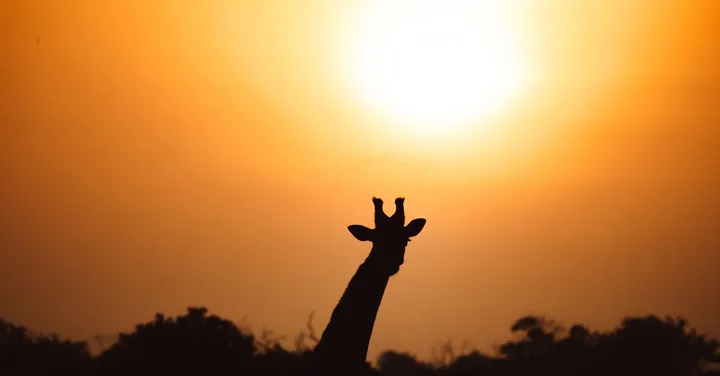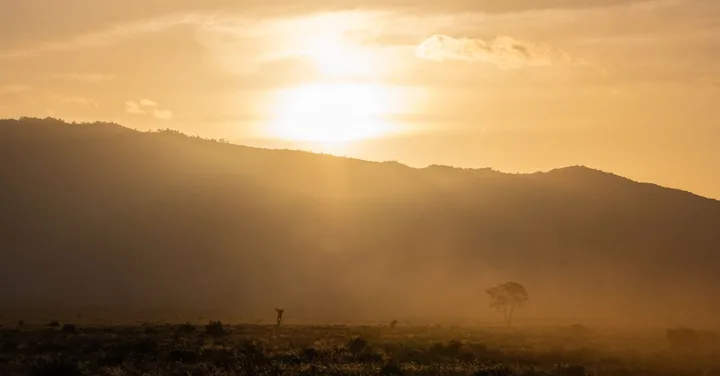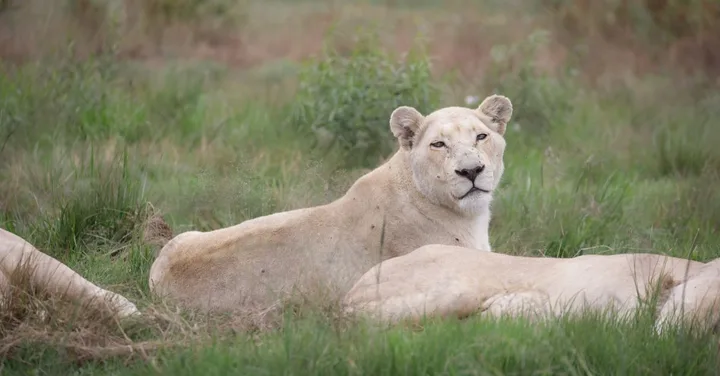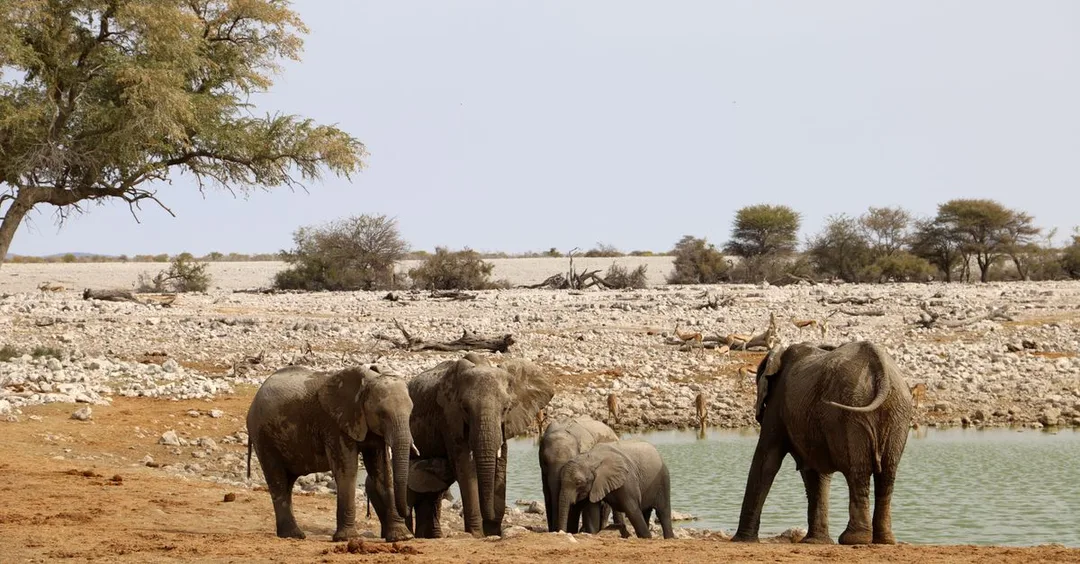
The red dunes of Sossusvlei glow like embers at sunrise. You're standing at the base of Dune 45, the cold desert air still carrying that pre-dawn bite, and ahead of you is a climb that rewards with a 360-degree view of orange ridges, white clay pans, and complete, absolute silence. No crowds, no noise, just the soft hiss of sand shifting beneath your feet. Later that same day, you'll be watching a black rhino drink from a waterhole in Etosha while a hundred metres away, a pride of lions waits in the shade. This is Namibia: a country so dramatically different from anywhere else on earth that even experienced travellers go quiet when they arrive.
In This Guide
- Namibia Safari from India 2026 for Indian Travellers: What You Actually Get
- Best Time to Visit (Month-by-Month, Honest)
- Top Experiences You Can't Miss
- Safari Sutra Package Options and Prices in INR (3-5 Tiers)
- Getting There: Flights from India
- Visa, Vaccinations and Practical Prep
- Frequently Asked Questions
- Plan Your Namibia Safari from India 2026 Trip with Safari Sutra
For Indian travellers looking at Africa beyond the well-worn Kenya-Tanzania circuit, Namibia in 2026 is the real answer.
Namibia Safari from India 2026 for Indian Travellers: What You Actually Get
Namibia is not a conventional safari destination, and that's precisely why it deserves your attention. It's one of the least densely populated countries in the world. The landscapes shift from gravel plains to ancient dunes to a fog-shrouded coastline in the space of a few hundred kilometres. Wildlife watching here works differently from East Africa: Etosha National Park's waterholes act as natural gathering points, so you sit, wait, and watch the animals come to you. It's a slower, more meditative style of game viewing, and once it clicks, it's completely addictive.
For Indian travellers, there are a few things to understand upfront. Namibia is a self-drive-friendly country with excellent roads, but most premium itineraries combine a mix of fly-in camps, lodge-to-lodge road transfers, and small-group game drives. The infrastructure is genuinely world-class in the lodges, even in the remotest areas. English is widely spoken, which makes navigation easy. The country uses the Namibian dollar, pegged to the South African rand, and Indian credit cards work at most lodges and larger towns.
The three anchor experiences of any Namibia trip are Etosha National Park, the Sossusvlei dunes in the Namib-Naukluft National Park, and the raw, desolate Skeleton Coast. Together, they cover big game, extraordinary landscapes, and a coastline unlike anything else in Africa. Pair these with a stop in the quirky colonial capital Windhoek and a night or two in Swakopmund, and you have a 10-14 day itinerary that works beautifully.
Browse our Namibia Safari Packages to see what a well-built Namibia itinerary actually looks like, from start to finish.
Best Time to Visit (Month-by-Month, Honest)
May to October is the prime window. This is the dry season, and for wildlife viewing, it's the best period by a significant margin. Water sources dry up across the country, animals concentrate around Etosha's waterholes, and game drives become genuinely spectacular. Temperatures in May and June are cool and pleasant, sometimes dropping below 10°C at night in the desert, so carry a light jacket.
July and August are peak season. Etosha is electric during these months: elephants, lions, cheetahs, black rhinos, and huge herds of zebra and wildebeest rotating through the same waterholes daily. Book your lodges 6-9 months in advance if you're targeting this window.
September and October are hotter, with daytime temperatures touching 35°C in Etosha, but the wildlife concentration is at its absolute highest. The dunes at Sossusvlei are also best photographed in September when the light is golden and the heat hasn't yet turned brutal by mid-morning.
November to April is the green season. Rains bring dramatic skies, migrant birds in numbers that birders dream about, and lush vegetation that makes the landscape look almost unrecognisably different. Wildlife viewing is harder because animals disperse, but prices drop by 20-30% and some of Namibia's most atmospheric landscapes, particularly the Namib desert in brief bloom, happen during this period. Not the right choice for a first-time visitor focused on game viewing, but excellent for returning travellers who want something different.
November and December see most Indian travellers travelling due to school holidays and long weekends. Namibia works reasonably well in December, better than you might expect, but manage expectations on game drive density compared to the dry season.
The bottom line: if this is your first Namibia trip, target June to October. Full stop.
Top Experiences You Can't Miss
Etosha National Park: The Waterhole Game
Etosha's waterholes are the reason serious wildlife photographers keep coming back. The best ones, like Okaukuejo, Klein Namutoni, and Chudop, are lit at night and accessible from the camps, meaning you can watch elephants, lions, and black rhinos after dinner with a drink in hand. During the day, game drives cover the pan's edge and the acacia woodlands surrounding it. Etosha has one of Africa's highest concentrations of black rhinos, so sightings here, while never guaranteed, are far more likely than in most other parks.
Sossusvlei and the Namib Desert
The Namib is the world's oldest desert, somewhere around 55 million years old, which puts your life in appropriate perspective. The star dunes at Sossusvlei, some reaching over 300 metres, are best experienced at first light before the heat builds. Dead Vlei, a white clay pan ringed by 900-year-old blackened camel thorn trees, is genuinely unlike anything else on the planet. Hire a guide for this section: the context about how the dunes form, how the desert sustains life, and the ancient geology makes it infinitely richer than just climbing sand.
Skeleton Coast: Where the Desert Meets the Cold Atlantic
The Skeleton Coast gets its name from the whale bones that once lined its shore, left by a brutal 19th-century whaling industry, and from the fog, rocks, and cold Benguela Current that made it a graveyard for ships. Today it's one of the most biologically productive coastal ecosystems on earth. Cape fur seal colonies number in the hundreds of thousands. Brown hyenas, desert lions, and desert-adapted elephants roam where the sand dunes meet the ocean. Access to the central and northern Skeleton Coast is restricted to a handful of small fly-in camps, which keeps it genuinely wild.
Swakopmund: The Cool Coastal Town
Namibia's beach town is a strange and wonderful thing: German colonial architecture, bakeries selling proper Brötchen, a thick Atlantic fog most mornings, and adventure activities ranging from sandboarding to quad biking on the dunes. It's also the best place for fresh Namibian oysters, which are farmed just up the coast and served cold with lemon. After days in the desert, Swakopmund feels like a reward.
Night Skies in the Desert
Namibia has some of the darkest skies in the world. The NamibRand Nature Reserve is an International Dark Sky Reserve. If you're doing a night out at Sossusvlei or a private desert camp, spend an hour outside after dinner with your head tipped back. The Milky Way here is not a subtle smudge: it's a thick, bright river of light directly overhead. Worth it.
Safari Sutra Package Options and Prices in INR (3-5 Tiers)
These are indicative prices per person for the 2026 season, based on double occupancy and flights from India. Actual pricing shifts with season, lodge availability, and group size, so treat these as honest starting points.
Essential Namibia (10 nights)
Covers Windhoek, Sossusvlei, Swakopmund, and Etosha. Mid-range lodges, shared game drives, road transfers. Best for first-timers who want to cover the highlights without overspending.
Approx INR 3,20,000 to 3,80,000 per person, including international flights
Classic Namibia (12 nights)
Adds a night or two at a private reserve outside Etosha, private game drives, and superior lodge choices with more personal service. A step up in experience without going fully luxury.
Approx INR 4,80,000 to 5,80,000 per person, including international flights
Premium Desert and Coast (13 nights)
Fly-in access to Sossusvlei, a night at a private desert camp with stargazing, a Skeleton Coast fly-in extension, and premium lodges in Etosha like Onguma or Mushara. This is where Namibia starts to feel genuinely extraordinary.
Approx INR 7,50,000 to 9,00,000 per person, including international flights
Luxury Private Namibia (14 nights)
Fully private itinerary, exclusive-use camps or suites, a Skeleton Coast fly-in safari with a top operator, and a private guide throughout. For travellers who want Namibia completely on their terms.
Approx INR 11,00,000 to 15,00,000 per person, including international flights
Honeymoon or Special Occasion Namibia (12 nights)
Built around romance and privacy: a private desert camp for two at Sossusvlei, a small luxury tented camp in Etosha, sundowners on the dune crest, and a Swakopmund seafood dinner. Memorable without being excessive.
Approx INR 8,50,000 to 11,00,000 per couple, including international flights
All packages include airport transfers, accommodation, meals as per the lodge plan, and guided activities. Visa fees, travel insurance, and optional tips are additional.
Getting There: Flights from India
There's no direct flight from India to Namibia's Hosea Kutako International Airport in Windhoek. The most common connections used by Indian travellers go through:
- Addis Ababa via Ethiopian Airlines (from Mumbai, Delhi, Bengaluru, Hyderabad). This is currently the most popular routing, with good connectivity and reasonable transit times.
- Johannesburg via South African Airways, Emirates, or Kenya Airways with a connection to Windhoek. Flying time from India to Johannesburg is roughly 10-11 hours, with a further 2-hour flight to Windhoek.
- Nairobi via Kenya Airways or Ethiopian, then onward to Windhoek.
Total travel time from India, including layovers, runs 16-24 hours depending on your routing and connection efficiency. Budget round-trip airfare from INR 65,000 to INR 1,20,000 per person in economy, and INR 2,20,000 to 3,50,000 in business class, depending on the season and how far in advance you book.
Book flights early for the June to August peak season. Seats on the Windhoek connection fill up, and prices spike significantly if you leave it late.
Visa, Vaccinations and Practical Prep
Visa: Indian passport holders require a visa to enter Namibia. The good news is that it can be obtained on arrival at Windhoek's Hosea Kutako International Airport, making it straightforward compared to some African destinations. The visa fee is currently around USD 80. Some travellers prefer to arrange it in advance through the Namibian High Commission in New Delhi for peace of mind. Check the Incredible India portal for any bilateral travel updates, or confirm directly with us before you travel.
Yellow Fever: If you're transiting through a yellow fever-endemic country (like Ethiopia), you may need a yellow fever vaccination certificate. Check your specific routing with your doctor at least 4-6 weeks before travel.
Malaria: Etosha and the Skeleton Coast have low to moderate malaria risk, higher during the rains. Most travel doctors recommend antimalarial tablets for Etosha visits, particularly between November and May. Consult your physician well in advance.
Currency: Namibian dollar (NAD), pegged to the South African rand. South African rand is also accepted everywhere. USD and Euros are accepted at most lodges. Carry some local cash for smaller purchases; ATMs in Windhoek and Swakopmund are reliable.
Connectivity: Namibia's phone coverage outside cities is patchy. Most lodges have Wi-Fi, though it can be slow. Honestly, this is a good thing. Put the phone down.
Packing: Desert days are hot, desert nights are cold, and the Skeleton Coast fog is damp and chilly. Pack layers. Neutral colours for game drives (nothing bright), good walking shoes, sunscreen, and a wide-brimmed hat. The sun here is serious.
Frequently Asked Questions
Q: Is Namibia safe for Indian travellers?
Namibia is one of the more stable and traveller-friendly countries in southern Africa. The main safety considerations are standard urban caution in Windhoek (don't flash valuables, use hotel-arranged taxis) and road awareness if you're self-driving. Violent crime targeting tourists is rare. The country is welcoming, English-speaking, and well set up for international visitors.
Q: How is Namibia different from a Kenya or Tanzania safari?
Kenya and Tanzania are about big game in abundance, open savannah, and the famous Great Migration. Namibia is about landscapes, solitude, and a more unusual wildlife experience. You'll see Africa's highest density of cheetahs, rare black rhinos, desert-adapted elephants, and an extraordinary variety of bird life, but in a desert and semi-arid context that feels totally different. Both are worth doing; they just deliver very different things.
Q: Is Namibia suitable for families with young children?
Some lodges have minimum age restrictions (often 10 or 12 years) for game drives, particularly those involving open vehicles or walking safaris. Sossusvlei and Swakopmund work well for families with children of most ages. If you're travelling with kids under 10, it's worth checking specific lodge policies with us before booking.
Q: How much Hindi or Indian food is available in Namibia?
Honest answer: very little. Namibian cuisine runs to game meat, fresh seafood, and German-influenced dishes. Windhoek has a few Indian restaurants, and Swakopmund has some international options, but in the lodges you're eating lodge food, which is typically excellent but not Indian. Pack some comfort snacks if you need them, and embrace the local flavours. The Namibian oysters alone are worth the trip.
Q: What's the ideal trip length for a first-time Namibia visitor from India?
12-14 days is the sweet spot. Namibia requires time because distances are large and you don't want to feel rushed between the major regions. A 10-day trip can work if you're tight on leave, but 12 days lets you genuinely settle into each place rather than just ticking boxes.
Q: Can we combine Namibia with another African destination?
Absolutely, and many Indian travellers do. Namibia pairs well with South Africa (Cape Town or Kruger), Botswana (Okavango Delta), or even a quick Victoria Falls stop in Zimbabwe/Zambia. The southern Africa circuit works beautifully over 18-21 days. After 12 years and 15,000+ trips, the consistent feedback we hear is that guide quality and game drive timing make or break these combinations: getting both right is something Safari Sutra Holidays takes seriously on every itinerary.
Q: What's the best way to get around within Namibia?
Self-drive is genuinely excellent in Namibia if you're comfortable with gravel roads and have a 4WD. For most Indian travellers on a first trip, a combination of lodge-arranged transfers and chartered flights between regions is easier, faster, and lets you focus on the experience rather than navigation. We can build either approach, or a hybrid, into your itinerary.
Plan Your Namibia Safari from India 2026 Trip with Safari Sutra
Namibia in 2026 is the right trip for Indian travellers who want Africa without the crowds, a landscape that genuinely stops you in your tracks, and game viewing that rewards patience and presence over ticking species off a list.
The dunes will still glow the same red-orange at dawn. The waterholes in Etosha will still draw lions and rhinos in the same quiet drama they've been performing for thousands of years. And the Skeleton Coast will still feel like the edge of the world.
What changes is how well-planned your version of this trip is. Safari Sutra Holidays has been building Africa itineraries for over 12 years, and the thing that consistently separates a great Namibia trip from a mediocre one isn't the lodges or the flights: it's the guide quality and knowing exactly when and where to be for game drives. We get that right, for every client, every time.
Take a look at our Namibia Safari Packages to see what a well-structured itinerary looks like.
Ready to Plan Your Trip?
Safari Sutra Holidays — 13 years, 15,000+ trips, zero cookie-cutter itineraries.
Get Your Free Custom Quote →+91 9860415774 | hello@thesafarisutra.com

Safari Sutra Team
Travel curators with 13 years of experience planning Indian and international holidays — from safari adventures to island escapes.
View All Posts