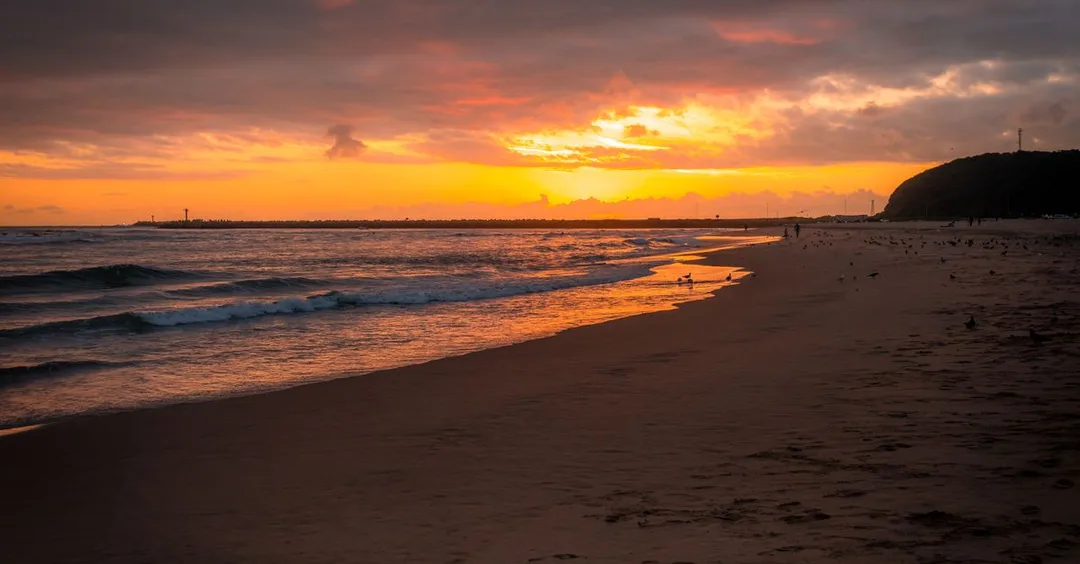
Close your eyes and picture this: you're standing on the Golden Mile in Durban, the Indian Ocean stretching out before you, warm and impossibly blue, while the smell of bunny chow, that iconic hollowed-out bread loaf stuffed with mutton curry, drifts over from a roadside stall. A temple bells somewhere behind you. Hindi film music floats out of a shop. And a surfer paddles past in the foreground. This is Durban, South Africa's most underrated city, and possibly the most Indian city outside of India itself.
In This Guide
- Durban South Africa for Indian Travellers: What You Actually Get
- Best Time to Visit (Month-by-Month, Honest)
- Top Experiences You Can't Miss
- Safari Sutra Package Options and Prices in INR
- Getting There: Flights from India
- Visa, Vaccinations and Practical Prep
- Frequently Asked Questions
- Plan Your Durban South Africa Trip with Safari Sutra
Durban South Africa for Indian Travellers: What You Actually Get
Durban sits on the east coast of South Africa, in the KwaZulu-Natal province, and it holds something no other African city can claim: a deeply rooted Indian community that's been here for over 160 years. When Indian indentured labourers arrived in the 1860s to work the sugar cane fields, they brought their temples, their spices, their languages, and their recipes. Their descendants, nearly 1.3 million strong today, have shaped the city's entire character.
For Indian travellers, this creates a genuinely strange and wonderful feeling. You'll hear Tamil and Hindi spoken in the markets. You'll find a Shree Ambalavaanar Alayam temple that looks like it belongs in Chennai. You'll eat curry that would pass muster at your mum's table. And yet, you're absolutely in Africa, with subtropical beaches, zulu culture, and some of the best wildlife reserves in the country just a short drive away.
This is not Cape Town. Durban doesn't have Table Mountain or the winelands. What it has is rawer, more surprising, and for Indian travellers specifically, more personally resonant. Think of it as the place where India and Africa actually collided, and where something entirely new was born from that collision.
If you're already planning a South Africa trip and wondering whether to add Durban to your Cape Town and Kruger itinerary, the honest answer is: it depends. Most travellers who come through South Africa Tour Packages stick to the classic Cape Town plus Kruger combination, and that's a brilliant trip. But if you have 12 to 14 days and you want something that goes beyond the postcard version of South Africa, Durban earns its place on the map.
Best Time to Visit (Month-by-Month, Honest)
Durban has one of the warmest climates in South Africa year-round, which is either a blessing or a curse depending on your tolerance for heat and humidity.
November to February is summer, and it's hot and wet. Temperatures sit around 28-32°C with high humidity and frequent afternoon thunderstorms. The beaches are packed with domestic South African tourists, and hotel prices spike over December. Not ideal for sightseeing, honestly, though the ocean is at its warmest.
March to May is the sweet spot that not enough people know about. The rains taper off, the crowds thin, the temperature settles into a comfortable 24-27°C, and prices drop. You'll see Durban at its most relaxed and liveable. This is when locals actually enjoy the city.
June to August is winter, and Durban's winter is genuinely mild. Expect 20-23°C during the day, cool evenings, and almost no rain. This is also when the Sardine Run happens along the KwaZulu-Natal coast (June-July), one of the greatest wildlife spectacles on earth, where billions of sardines move up the coastline, drawing sharks, dolphins, whales, and gannets into a feeding frenzy you can watch from the shore or from a boat.
September to October is spring, pleasant and building toward heat. A good time to visit, with wildflowers in the Drakensberg if you're combining regions.
The honest recommendation: aim for April-May or June-August for the best all-round experience.
Top Experiences You Can't Miss
The Victoria Street Market and Spice Trail
This is ground zero for the Durban Indian heritage experience, and it's everything your senses can handle at once. Stall after stall of spices, textiles, leather goods, and street food, all run by Indian South African traders whose families have been here for generations. Pick up a bag of Durban masala, which is its own distinct spice blend with a heat level that locals describe as "the only correct amount." The market sits alongside the Grey Street Mosque, one of the largest mosques in the southern hemisphere, and the whole precinct has an energy that feels like Colaba and Chandni Chowk got together and moved to Africa. South Africa Tourism lists this as one of the country's top cultural destinations, and for once, the official designation is not an overstatement.
The Bunny Chow Trail
You cannot come to Durban and not eat bunny chow. Properly. From Goundens on Grey Street, which has been serving it since 1940-something, or from Canteen on Clairwood, where the regulars look at newcomers with gentle suspicion. A quarter bunny of mutton curry costs around R45-60 (roughly ₹200-270). The etiquette: no cutlery, use the bread, and don't waste the "virgin" (the bread top you use to scoop). This dish was born from apartheid-era necessity, when Indian workers couldn't enter restaurants and needed food they could carry, and it became the symbol of an entire culture's resilience and creativity.
Shree Ambalavaanar Alayam Temple
Built in 1875, this Dravidian-style temple in Grey Street is the oldest Hindu temple in South Africa. The gopuram towers will look familiar if you've ever been to South India. Dress modestly, remove shoes, and go in the early morning when the puja rituals are happening. For any Indian traveller, there's something quietly moving about finding a piece of home this intact, this far from India.
uShaka Marine World and the Golden Mile
The waterfront beach strip in Durban is genuinely good. UShaka Marine World is a large marine theme park right on the beachfront, popular with families, with shark tank diving, dolphin shows, and water slides. The Golden Mile itself is a long promenade with safe swimming beaches, good for walking or cycling in the early morning before the heat builds.
iSimangaliso Wetland Park and Game Reserves
About two hours north of Durban, iSimangaliso is a UNESCO World Heritage Site where hippos, crocodiles, and elephants share the landscape with breeding sea turtles and 526 species of birds. You can do a boat safari on Lake St Lucia and watch hippos from genuinely close range. This is Africa at its most elemental, and it's far less crowded than Kruger. The SANParks network manages several nearby reserves, and day trips from Durban are straightforward. Alternatively, Hluhluwe-iMfolozi Park, about 2.5 hours away, is where South Africa's white rhino was brought back from near-extinction. The Big Five, minus crowds. Worth the drive.
The Drakensberg Mountains
If you extend your Durban trip by two or three days, the Drakensberg is a four-hour drive away and another world entirely. Zulu rock art, hiking trails, waterfalls, and mountain air that feels genuinely cold after Durban's coast. The Royal Natal National Park section is particularly accessible.
Safari Sutra Package Options and Prices in INR
We've structured Durban trips at a few different levels depending on how much time you have and how you want to experience it.
Durban City and Heritage, 4 nights / 5 days
Beach hotels, Victoria Street Market tour with a local guide, bunny chow trail, temple visits, uShaka Marine World. Starts around ₹55,000 per person (twin sharing), including hotel and transfers.
Durban Plus iSimangaliso, 6 nights / 7 days
All of the above, plus a two-night stay near Lake St Lucia with guided boat safaris and a bird walk. Starts around ₹95,000 per person. This is the sweet spot for first-timers who want city and wildlife.
Durban Plus Hluhluwe Big Five, 7 nights / 8 days
Adds a two-night stay at a mid-range game lodge in Hluhluwe-iMfolozi with Big Five game drives. Starts around ₹1,30,000 per person.
KwaZulu-Natal Explorer, 10 nights / 11 days
Covers Durban, iSimangaliso, Hluhluwe, and a Drakensberg add-on. For travellers who want to properly understand this province rather than just tick a city. Starts around ₹1,75,000 per person.
Durban Plus Cape Town (Best of Both), 12 nights / 13 days
Durban's Indian heritage experience combined with Cape Town's natural drama and the winelands. This is increasingly popular with families who want cultural depth AND scenery. Starts around ₹2,50,000 per person.
A quick logistical note: Cape Town and Durban are about 1,750 km apart. The drive is not practical. A domestic flight is the only sensible option, and budget roughly ₹8,000-12,000 one-way per person for that leg. Flights on FlySafair or Airlink take about two hours. This is the same logic that applies to Cape Town and Kruger: South Africa is large, and domestic flights are your friend.
Getting There: Flights from India
There are no direct flights between India and Durban at the time of writing. Your routing will be one of the following:
- Mumbai or Delhi to Johannesburg (OR Tambo), then Johannesburg to King Shaka International Airport (Durban). This is the most common route. The Johannesburg connection adds about 1.5 to 2 hours of domestic flying.
- Via Dubai or Doha, depending on which airline you're on. Emirates, Qatar Airways, and Air India connect India to Johannesburg, from where Durban is a short hop.
Total travel time from Mumbai: roughly 16-18 hours including the connection. From Delhi, similar or slightly longer depending on the routing.
Durban's King Shaka International Airport is modern, manageable, and about 35 km from the city centre. A metered taxi or pre-booked transfer takes 30-45 minutes.
Visa, Vaccinations and Practical Prep
Visa: Indian passport holders need a visa for South Africa. Apply through the South African High Commission or a registered VFS centre in India. Processing typically takes 5-10 working days for a tourist visa. Start this at least three weeks before travel. Your Safari Sutra trip manager will give you the exact checklist.
Yellow Fever: If you're arriving in South Africa from a yellow fever endemic country (which India is classified as), you technically need a yellow fever vaccination certificate. In practice, enforcement varies, but carry the certificate if you have one. The vaccine itself is available at government travel clinics across India.
Malaria: Durban city itself is considered low-risk for malaria. ISimangaliso and Hluhluwe areas carry some risk, especially in summer months. Consult a travel medicine doctor before your trip. Antimalarial medication is generally recommended if you're heading north of Durban into game reserve territory.
Currency: South African Rand (ZAR). As of 2025, roughly R1 = ₹4.5-5, which makes South Africa relatively good value for Indian travellers. ATMs are widely available. Carry some cash for markets and small restaurants.
Safety: Durban has areas that require the same common-sense awareness you'd apply in any large Indian city. Stick to tourist and business districts, don't walk alone after dark in unfamiliar areas, and use hotel-recommended transport. The tourist areas, beachfront, and heritage sites are well-managed and safe during the day.
Language: English is widely spoken and understood everywhere you'll go as a tourist. In the Indian South African community areas, you'll also hear Tamil, Hindi, and Gujarati.
Frequently Asked Questions
Q: Is Durban worth adding to a South Africa trip, or should I stick to Cape Town and Kruger?
If you have 10 days or fewer, Cape Town and Kruger will give you more visual variety and is the classic South Africa experience. If you have 12-14 days, or if Indian heritage and culture travel genuinely interests you, Durban is absolutely worth including. It's a different kind of South Africa, and for many Indian travellers, it ends up being the most personally meaningful part of the trip.
Q: Is Durban safe for Indian tourists?
Yes, with the same caveats you'd apply to Mumbai or Delhi. The tourist areas, beach promenade, and heritage districts are busy, well-lit, and safe during the day. Avoid walking alone in unfamiliar areas at night. Use your hotel's recommended transport. Thousands of Indian tourists visit Durban every year without incident.
Q: Do I need to speak Zulu or Afrikaans?
Not at all. English is the working language everywhere you'll go as a tourist, and in the Indian community areas, you may find staff who speak Tamil or Hindi. Communication is genuinely not a barrier.
Q: Can I find vegetarian Indian food in Durban?
Yes, more easily than in almost any other African city. The Indian South African community includes a significant vegetarian population, particularly in the Tamil Hindu community. You'll find vegetarian-friendly restaurants throughout Grey Street and the Indian quarter. Bunny chow, for instance, is available with bean curry (dhall bunny) which is delicious and entirely vegetarian.
Q: Is Durban good for families with children?
Very good. UShaka Marine World is excellent for kids. The beaches on the Golden Mile are safe and patrolled. The game reserves near Durban are appropriate for children aged 6 and up on game drives. The Indian heritage sites add an educational layer that kids from Indian families often find genuinely interesting.
Q: How many days should I spend in Durban?
Three to four days covers the city highlights properly. Add two to three more days if you want to include iSimangaliso or Hluhluwe. The city itself can feel repetitive after four days unless you're doing a cooking class, a township cultural tour, or something that takes you deeper.
Q: Can I combine Durban with Kruger easily?
Yes. Durban to Johannesburg by air is under two hours, and Johannesburg is your gateway to Kruger. A logical itinerary might be Durban for 3-4 nights, then fly to Johannesburg, drive to the Kruger region, and add Cape Town as a final chapter. Refer to our South Africa Tour Packages page for itineraries that combine all three.
Plan Your Durban South Africa Trip with Safari Sutra
Safari Sutra Holidays has been building South Africa trips for Indian travellers for over 12 years, and in that time we've sent thousands of families, couples, and solo travellers to every corner of this country. We know which Durban restaurants are worth the detour, which iSimangaliso guide actually knows his birds, and which game lodge near Hluhluwe gives you the best value without cutting corners on the game drive experience.
We also know the visa process, the routing quirks, the domestic flight timings, and all the small things that make the difference between a trip that works and one that doesn't. The Incredible India spirit of travel runs through everything we do, because we plan every trip the way we'd plan one for ourselves.
Durban is a city that rewards curiosity. It's not the South Africa you see on Instagram, and that's exactly why it matters. Come for the curry trail, stay for the culture, and leave with a story that most people who visit South Africa never get to tell.
Ready to Plan Your Trip?
Safari Sutra Holidays — 13 years, 15,000+ trips, zero cookie-cutter itineraries.
Get Your Free Custom Quote →+91 9860415774 | hello@thesafarisutra.com

Safari Sutra Team
Travel curators with 13 years of experience planning Indian and international holidays — from safari adventures to island escapes.
View All Posts