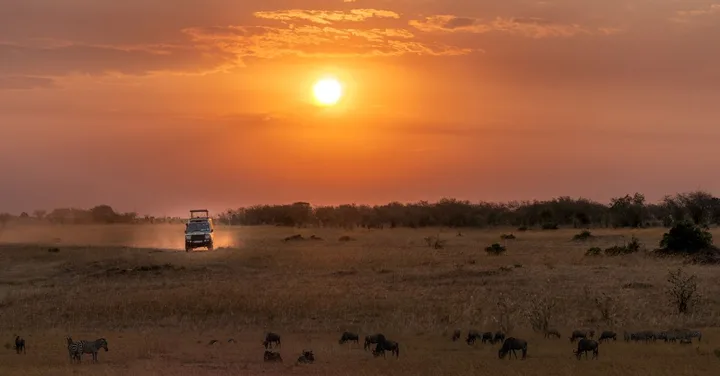
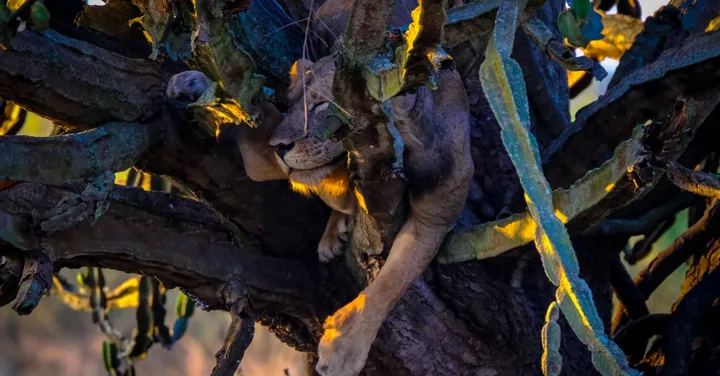
The jeep cuts through the tall grass at Kanha at 6 AM, your breath forming small clouds in the cool October air. A sambar deer freezes at the tree line, ears twitching. Your naturalist holds up one finger, kills the engine. Thirty seconds of absolute silence. Then, forty metres ahead, a tigress steps out of the sal forest, looks directly at you, and walks across the track without a care in the world. That is what a well-timed India wildlife safari feels like. Not rushed, not crowded, not lucky. Just right.
In This Guide
- India Wildlife Safari Calendar 2026 for Indian Travellers: What You Actually Get
- Best Time to Visit (Month-by-Month, Honest)
- Top Experiences You Can't Miss
- Safari Sutra Package Options & Prices in INR
- Getting There: Flights from India
- Visa, Vaccinations & Practical Prep
- Frequently Asked Questions
- Plan Your India Wildlife Safari Calendar 2026 Trip with Safari Sutra
India Wildlife Safari Calendar 2026 for Indian Travellers: What You Actually Get
India's national parks are genuinely among the best wildlife destinations in the world, and most Indian travellers are only beginning to explore them properly. Not just Ranthambore because it's closest to Delhi, and not just the park any operator can book online in five minutes. We're talking about Kanha for thick jungle atmosphere and reliable tiger sightings, Bandhavgarh for the highest tiger density in the country, Pench for leopard and wild dog sightings alongside tiger, Kabini in Karnataka for its legendary elephants and the rare black leopard, Corbett for the oldest tiger reserve and the most dramatic Himalayan foothills, and Tadoba in Maharashtra for dry-season sightings that feel almost cinematic.
Each park has its own personality, its own ecosystem, and its own sweet spot in the calendar. Getting this combination right, the right park at the right month, is where most self-planned trips go wrong.
After 12 years and 15,000+ trips, we've found the biggest difference between an average trip and a great one is guide quality and game drive timing. These are the things we get right for every Safari Sutra client. A premium jeep permit at Bandhavgarh at 6 AM with a naturalist who has spent fifteen years reading tiger pugmarks will deliver a completely different experience than a shared vehicle with a driver who found the job last season.
India's forest department, listed on Incredible India, maintains a strict permit and zone system for most tiger reserves. Permits are limited, zones rotate, and peak season slots fill fast. For 2026, especially October through March, you need to plan and book at least three to four months ahead.
Best Time to Visit (Month-by-Month, Honest)
October to November: This is the reopening window for most central Indian parks. Kanha, Bandhavgarh, Pench and Tadoba reopen after monsoon around mid-October. The jungle is green, the grass is tall (which can reduce visibility), and the animals are active but spread out. The upside is fewer tourists, slightly lower prices, and a landscape that looks absolutely alive. If you want atmosphere over guaranteed sightings, this is your window.
December to February: This is the comfort season. Temperatures in Madhya Pradesh drop to 5-10°C at dawn and rise to 22-25°C by afternoon. Animals, especially tigers, move more during daylight to warm up. Waterholes see regular traffic. This is the best time for families and first-timers. Corbett in January is spectacular, with migratory birds adding another layer to the experience.
March to May: This is sighting season. By April, the grass has dried and thinned, waterholes are the only game in town, and every animal in the jungle congregates around them. You'll hear langur alarm calls before you see the tiger. May is hot, 38-42°C in central India, but the sightings are extraordinary. Kabini in April and May is considered one of the best wildlife experiences in India, period.
June to September: Most parks close during monsoon for forest regeneration. Kabini stays open longer than most. Jim Corbett's Dhikala zone closes, but some buffer zones remain open. Avoid planning a dedicated tiger safari in this window unless you specifically know which zones are accessible.
2026 Planning Note: If you're aiming for March to May 2026, start planning by November 2025. Peak-season permits at Bandhavgarh and Kanha go fast, and the better lodges have limited inventory.
Top Experiences You Can't Miss
Tiger Safari, Bandhavgarh (February to May)
Bandhavgarh has the highest known tiger density in India. The Tala zone, the oldest and most ecologically rich, gives you sal forest drives that feel intimate rather than crowded. Morning drives here start before sunrise. In April, you might catch a tigress calling her cubs to a kill at a dry streambed. This is the benchmark experience.
Elephant and Leopard, Kabini (April to May)
Kabini, at the edge of Nagarhole National Park in Karnataka, does something no other Indian park quite manages. As the Kabini backwaters recede in summer, a sandbank emerges where herds of up to 80 elephants gather at dusk. The light is golden. The sound is remarkable. Add to this the most reliably photographed black leopard in India, spotted regularly in the Kabini buffer zone, and you have a safari experience that surprises even seasoned wildlife travellers.
Wild Dog (Dhole) Safari, Pench or Tadoba (November to February)
Dholes are the most underrated wildlife spectacle in India. A pack of 15-20 of them bringing down a sambar deer is raw, unfiltered nature. Pench and Tadoba both have active dhole packs. If you're already planning a tiger safari and you're in these parks, ask your naturalist specifically to run dhole search patterns in the buffer zones at dusk.
Bird Safari, Jim Corbett (November to January)
Corbett's Dhikala grasslands host over 600 bird species. In November and December, migratory species from Central Asia join the resident population. A jeep drive through the Bijrani zone in early morning feels like a completely different kind of safari, slower, quieter, and surprisingly moving.
Great Indian One-Horned Rhinoceros, Kaziranga (November to April)
Kaziranga in Assam is a UNESCO World Heritage Site and home to two-thirds of the world's one-horned rhino population. The park also has significant tiger density, wild buffalo, and swamp deer. It's a separate ecosystem from central India entirely. If you haven't been, put it on the 2026 list.
If you want to explore more than one region or combine a wildlife trip with other Indian or international destinations, Explore All Destinations at Safari Sutra to see how we plan multi-stop itineraries.
Safari Sutra Package Options & Prices in INR
Prices below are per person for the core safari package, based on double occupancy, and include accommodation, all game drives with naturalist, park fees, and internal transfers. Flights are separate.
Essential Tiger Safari, 4 nights / 5 days
One park, typically Ranthambore or Tadoba, staying at a forest-facing mid-tier lodge. Four game drives, two morning and two evening. Good for first-timers wanting a solid introduction.
Starting from Rs. 28,000 per person
Classic Central India Circuit, 7 nights / 8 days
Two parks, typically Kanha + Bandhavgarh or Pench + Bandhavgarh, with six game drives per park. You get the full jungle immersion, including a genuine chance at multiple tiger sightings across different habitats.
Starting from Rs. 55,000 per person
Premium Wildlife Experience, 6 nights / 7 days
One premium park (Bandhavgarh Tala zone or Kabini) with stays at a top-tier lodge, private game drives only, and a naturalist assigned exclusively to your group. This is where guide quality and timing make the biggest difference.
Starting from Rs. 90,000 per person
Best of India Wildlife, 10 nights / 11 days
Three-park circuit covering central India plus Kabini or Kaziranga. Suitable for serious wildlife enthusiasts who want diversity of ecosystems and species. Mix of private and shared drives depending on zone.
Starting from Rs. 1,40,000 per person
Signature Expedition, custom
Designed for photographers, wildlife researchers, or families with specific interests. Includes pre-trip species briefings, exclusive vehicle bookings, and specialist guides. Priced on request based on configuration.
All packages include GST. Prices vary by season and accommodation upgrade. Contact us for exact 2026 availability.
Getting There: Flights from India
The closest airports to each major park:
- Ranthambore: Fly to Jaipur (frequent flights from Delhi, Mumbai, Bengaluru) then drive 3.5 hours
- Bandhavgarh / Kanha: Fly to Jabalpur or Nagpur (both well-connected from major metros), then 2-3 hours by road
- Pench / Tadoba: Fly to Nagpur (very well connected, often the cheapest option from Mumbai and Delhi)
- Kabini: Fly to Bengaluru, then drive 4-5 hours or take a connecting flight to Mysuru
- Kaziranga: Fly to Guwahati (Lokmanya Tilak, Indira Gandhi, Kempegowda, and Rajiv Gandhi airports all have direct or one-stop options), then drive 3.5 hours
- Jim Corbett: Fly to Delhi then drive to Ramnagar, approximately 5-6 hours, or fly to Pantnagar (small airport, limited connections)
Book flights early for the October to November and February to May windows. Domestic fares on IndiGo, Air India, and Vistara spike as park season gets busy.
Visa, Vaccinations & Practical Prep
Since all these parks are within India, there are no visa requirements for Indian citizens. For foreign nationals travelling with you, standard Indian tourist visas apply and are straightforward to obtain online.
For Indian travellers, here's the practical prep list:
- Park permits book out fast. For Bandhavgarh, Kanha, and Corbett's Dhikala zone, permits for peak season (February to May 2026) should ideally be secured by November 2025
- Carry layers for early morning drives. Even in April, 5 AM in a jeep at Kanha is cold
- Neutral colours work better in the field. Avoid white or bright clothing in open jeeps
- Keep cameras charged the night before. Most camps have charging facilities in the room, not in the jeeps
- Dust and pollen are significant from March onwards. Carry antihistamines if you're sensitive
- Most premium lodges near parks have limited or no mobile connectivity. Consider this a feature
No specific vaccinations are required for most Indian wildlife destinations. If you're heading to Kaziranga or other Northeast parks, speak to your doctor about malaria prophylaxis as a precaution, particularly during early season.
Frequently Asked Questions
Q: Which park gives the best chance of seeing a tiger in 2026?
Bandhavgarh consistently has the highest tiger density and sighting frequency in India. But "best chance" also depends on when you go and who guides you. Kanha and Tadoba in April-May come very close. We'd never recommend a park solely on sighting probability without considering the season and zone.
Q: Is October too early to go, or is the park still good?
October is perfectly fine, especially from the 15th onwards when most central Indian parks reopen. Visibility in the tall post-monsoon grass is lower, which means you'll spot movement more by ear and instinct than by scanning. Some of the most atmospheric safari drives happen in October. If guaranteed sightings are the priority, February to May is more reliable.
Q: Can we do a family trip with children under 12?
Yes, and several parks are genuinely excellent for families. Kabini is particularly family-friendly because drives are smooth, the lodge spaces are comfortable, and sightings are diverse beyond just tigers. Age restrictions vary by park zone and lodge policy. We plan family safaris regularly and can advise exactly which configurations work.
Q: How many game drives per day do we typically get?
Most tiger reserves in India allow two drives per day, one in the early morning starting around 5:30-6 AM and one in the afternoon starting around 3-3:30 PM. The morning drive is generally better for tiger sightings. Both are typically 3-4 hours long.
Q: Is a 3-night trip worth it or should we plan longer?
Three nights gives you four to six game drives, which is a reasonable introduction. But five to seven nights at one or two parks gives you the statistical advantage of more drives plus the experiential advantage of settling in, learning the landscape, and building on each outing with your naturalist. Once you've done a longer trip, you won't plan a short one again.
Q: What's the difference between a shared and private jeep?
A shared jeep means up to six guests per vehicle, which is the standard park permit. A private jeep means your group alone, which allows your naturalist to drive patterns specifically for your interests, spend longer at a sighting without compromising other guests' schedules, and stop for birds, pugmarks, or behaviour that a mixed group might not care about. The cost difference is real but so is the experience difference.
Q: Are these parks accessible from international travel connections?
Yes, most work well as add-ons to an India trip. Bandhavgarh and Kanha via Nagpur connect easily to Dubai, Singapore, or London via Mumbai. Kabini connects cleanly through Bengaluru. Kaziranga works as part of a Northeast India itinerary. If you're planning an international trip that includes Indian wildlife, we can design the routing so the transfers make sense.
Plan Your India Wildlife Safari Calendar 2026 Trip with Safari Sutra
India's wildlife calendar rewards people who plan early and plan smart. The difference between standing 40 metres from a wild tiger in dappled morning light and spending three drives looking at pugmarks is often just a question of which zone, which month, and which naturalist.
Safari Sutra Holidays has been designing wildlife trips across India and beyond for over 12 years. We know the park zones that deliver in each season, the lodges worth the upgrade, and the guides whose names appear in every serious wildlife traveller's notes.
Whether you're planning your first tiger safari or building a serious multi-park expedition for 2026, let's get the details right from the start.
Ready to Plan Your Trip?
Safari Sutra Holidays — 13 years, 15,000+ trips, zero cookie-cutter itineraries.
Get Your Free Custom Quote →+91 9860415774 | hello@thesafarisutra.com

Safari Sutra Team
Travel curators with 13 years of experience planning Indian and international holidays — from safari adventures to island escapes.
View All Posts