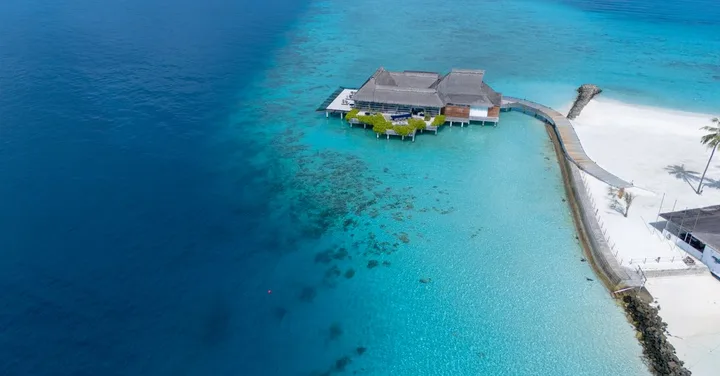
Imagine landing in Lisbon at golden hour, the smell of grilled sardines drifting up from a little restaurant on the waterfront, a glass of vinho verde in your hand, and the whole of Western Europe still ahead of you. Three weeks. Seven countries if you want them. Or maybe two countries done properly, slowly, the way travel is supposed to feel. You spent less than most people spend on a 5-night Maldives trip. This isn't a fantasy. Indian travellers are doing this right now, and doing it well.
In This Guide
- How to Plan a 3-Week International Holiday from India on a Budget: What You Actually Get
- Best Time to Visit (Month-by-Month, Honest)
- Top Experiences You Can't Miss
- Safari Sutra Package Options & Prices in INR
- Getting There: Flights from India
- Visa, Vaccinations & Practical Prep
- Frequently Asked Questions
- Plan Your 3-Week International Trip with Safari Sutra
How to Plan a 3-Week International Holiday from India on a Budget: What You Actually Get
First, let's be honest about what "budget" means here. We're not talking about hostel dorms and instant noodles. For an Indian premium traveller, budget means smart spending: good 3-star or boutique hotels, sit-down restaurants with real local food, private or semi-private transport, and not feeling squeezed at every turn.
A 3-week international trip from India, planned properly, can cost anywhere from Rs 1.5 lakh to Rs 4 lakh per person depending on where you go. Europe costs more. Southeast Asia costs less. Southern Africa sits in the middle but delivers wildlife experiences that nothing else on earth can match.
The key is choosing a destination that gives you density: many experiences packed into a relatively compact geography. Portugal and Spain together. Thailand, Cambodia, and Vietnam. South Africa and Zimbabwe. These are the combinations where 21 days feel like a month and you come back genuinely changed rather than just tired.
What you'll actually get in three weeks, done right: a mix of cities and nature, at least one slow day with no agenda, food that you'll think about for years, and the very real sense that you've seen how another part of the world actually lives. That last bit is priceless, and it doesn't cost extra.
Explore All Destinations, Safari Sutra to see the full range of regions we plan trips to, from Southeast Asia to Southern Africa to South America.
Best Time to Visit (Month-by-Month, Honest)
The best time for a 3-week international holiday from India depends entirely on where you're going. Here's the honest breakdown:
October to March is when most Indian travellers should be looking outward. The subcontinent is relatively comfortable and you're escaping nothing terrible at home, but the world opens up beautifully:
-
October-November: Europe is in post-summer mode, cheaper, less crowded, and the autumn colours in countries like Portugal, France, and Georgia are genuinely special. Southeast Asia is perfect. Southern Africa's dry season is winding down, which means lush landscapes and newborn animals.
-
December-January: Peak season almost everywhere, so prices go up. But if you book flights 3-4 months ahead and avoid the Christmas week itself, Southeast Asia, the Middle East, and East Africa offer great value. This is prime safari season in Kenya and Tanzania.
-
February-March: A hidden gem window. Europe is quiet and cheap. Bali is dry. South Africa's Kruger Park has sparse vegetation, making game viewing excellent.
April-June: This is shoulder or off-season for many destinations, which means lower prices but also honest compromises. Europe gets crowded and expensive in June. Southeast Asia's wet season begins. Southern Africa has lush greenery but fewer animals visible. Good for budget travellers willing to adapt.
July-September: Summer holidays for Indian families mean flight prices from India spike. But Europe's summer is genuinely beautiful if you can afford it. This is also the best time for Scandinavia, Iceland, and the UK.
The honest bottom line: October to March is your 3-week sweet spot from India.
Top Experiences You Can't Miss
Three weeks is enough time to go deep rather than wide. Here are the experiences worth structuring your trip around:
For wildlife and Africa: A self-drive or guided safari through South Africa's Kruger National Park followed by the Cape Winelands is a combination that covers wildlife, scenery, food, and culture in one country. Add Victoria Falls in Zimbabwe for a dramatic finale. The morning game drives at Kruger, when the light is low and a herd of elephants crosses the dirt road 20 metres ahead of you, that's what stays with you.
After 12 years and 15,000+ trips, we've found the biggest difference between an average trip and a great one is guide quality and game drive timing. These are things we get right for every Safari Sutra client, and the feedback we hear most often is "I can't believe how much we saw in just two days at the right camp."
For culture and history: Combine Portugal and Morocco. Spend 10 days in Lisbon, Porto, and the Algarve, then cross into Marrakech, the Atlas Mountains, and the Sahara. The contrast between these two countries, separated by just a short flight or ferry, is electric. The medina of Fes smells of tanneries and spice, the light in the Sintra hills is soft and forgiving, and the silence of the Sahara at night will stop you mid-sentence.
For beaches and temples: Thailand, Cambodia, and Vietnam in three weeks is one of the best value routes in global travel. Bangkok for energy and street food, Siem Reap for Angkor Wat at sunrise (worth the 4am wake-up, genuinely), Hanoi for French-colonial architecture and pho, then down to Da Nang or Phu Quoc for beaches. Budget travellers can do this on Rs 1.5-2 lakh per person including flights; mid-range travellers on Rs 2.5-3 lakh get substantially nicer hotels.
For offbeat and underrated: Georgia (the country, not the state) is what Europe looked like before mass tourism. Tbilisi has a food scene that will surprise you, the Caucasus mountains are dramatic, and wine tourism here is legitimate fun. From India, direct flights make it easy and the costs are among the lowest of any European-adjacent destination.
Safari Sutra Package Options & Prices in INR
We keep pricing transparent so you can plan without guesswork. These are approximate per-person costs for the 3-week trips we design most often, based on double occupancy and excluding international flights from India.
1. Southeast Asia Triple (Thailand + Cambodia + Vietnam)
- Budget tier: Rs 85,000-1,10,000 per person (3-star hotels, shared transfers, group experiences)
- Mid-range: Rs 1,40,000-1,80,000 per person (boutique hotels, private transfers, guided Angkor tour)
2. South Africa & Zimbabwe (Safari + Victoria Falls)
- Mid-range: Rs 2,20,000-2,80,000 per person (2 nights Kruger mid-range lodge, Cape Town boutique hotel, Victoria Falls)
- Premium: Rs 3,50,000-4,50,000 per person (luxury tented camps, private game drives, scenic flight over the falls)
3. Portugal & Morocco
- Mid-range: Rs 1,60,000-2,10,000 per person (3-4 star hotels, riad in Marrakech, guided tours in Fes)
- Premium: Rs 2,80,000-3,20,000 per person (design hotels in Lisbon, private Morocco itinerary, Sahara desert camp)
4. Georgia + Armenia (The Offbeat Caucasus)
- Budget-mid: Rs 90,000-1,30,000 per person (excellent value, great food, wine tours, mountain hikes)
5. East Africa Safari (Kenya + Tanzania)
- Premium: Rs 4,00,000-5,50,000 per person (Masai Mara Great Migration timing, Serengeti, Ngorongoro Crater)
All Safari Sutra Holidays packages include on-ground support, 24/7 WhatsApp assistance, and hand-picked accommodation that we've personally vetted.
Getting There: Flights from India
Here's where smart planning pays off most. Flights typically account for 30-40% of your total trip cost.
Book 3-4 months ahead. This is the single most impactful thing you can do. A Mumbai to Lisbon return ticket bought 4 months out can cost Rs 45,000-55,000 per person. The same ticket bought 3 weeks out? Easily Rs 80,000-1,00,000.
Use connecting hubs smartly. Delhi and Mumbai have the best international connectivity. For Africa, routes via Dubai (Emirates), Abu Dhabi (Etihad), or Nairobi (Kenya Airways) offer competitive pricing. For Southeast Asia, Air Asia, IndiGo's international routes, and Singapore Airlines via Singapore are your go-to options.
For Europe, Turkish Airlines via Istanbul is consistently one of the best-value options from multiple Indian cities. Qatar Airways via Doha is premium but often price-competitive on sales.
Consider open-jaw tickets. Flying into one city and out of another saves on backtracking and often costs the same. Fly into Bangkok, fly out of Ho Chi Minh City. Fly into Lisbon, out of Marrakech. This is smart routing, not complexity.
Set Google Flights price alerts for your dates and check both the origin city (Mumbai, Delhi, Bengaluru, Chennai, Hyderabad) since prices vary significantly from different airports.
Visa, Vaccinations & Practical Prep
Visas: This is where Indian passport holders need honest advice. Some destinations are easy; others need planning.
- Southeast Asia: Thailand is visa-free for Indians (30 days). Vietnam requires an e-visa (simple, done online in 3-5 days). Cambodia offers visa on arrival.
- Europe: Schengen visa is required. Apply at the embassy of the country where you spend the most nights. Allow 4-6 weeks for processing. Portugal and France are generally faster than some others.
- South Africa: Visa required. Apply through the South African High Commission. Takes 2-4 weeks.
- Morocco: Visa-free for Indian passport holders. One of the easiest entries in the world.
- Georgia: Visa-free for Indians. Another reason to love this destination.
Vaccinations: Check the Incredible India portal for outbound travel advisories, and consult your physician at least 6 weeks before departure. For Africa, hepatitis A and typhoid are standard advice. Yellow fever vaccination is mandatory for some African countries if arriving from certain regions. Malaria prophylaxis tablets are worth discussing with a doctor for safari destinations.
Travel Insurance: Non-negotiable. Get comprehensive cover that includes medical evacuation. For a 3-week international trip, expect to spend Rs 3,000-6,000 per person for decent cover. Some credit cards include basic travel insurance; check the fine print.
Money: A forex card loaded with your destination currency is the cleanest option. Niyo Global or BookMyForex offer competitive rates. Inform your Indian bank about your travel dates to avoid card blocks.
Frequently Asked Questions
Q: Is 3 weeks realistic for a first international trip from India?
Three weeks is actually ideal for a first long international trip. It's enough time to settle in, slow down, and actually enjoy places rather than just photograph them. The first 2-3 days usually involve jet lag adjustment, so having three weeks means you're not wasting half your trip feeling foggy.
Q: How much should I budget overall for a 3-week international holiday, including flights?
For a comfortable but not extravagant trip, budget Rs 2 lakh to Rs 3.5 lakh per person all-in for Southeast Asia or Europe. Africa and East Africa will run Rs 3.5 lakh to Rs 6 lakh per person depending on lodge choices. These numbers include international flights, on-ground transport, accommodation, food, and activities.
Q: Is it safe to travel as a couple or family with kids on a 3-week trip?
Families travel 3-week itineraries with us regularly. The key is building rest days into the schedule, especially if children are under 10. Southeast Asia is particularly family-friendly: the food is approachable, the distances between cities are manageable, and there's a good mix of beach and culture. South Africa with a safari is also excellent for older kids (most lodges accept children 6+).
Q: Can I do a 3-week trip solo as an Indian traveller?
Absolutely, and more Indian solo travellers are doing this than ever. Portugal, Georgia, Thailand, and Vietnam all have strong solo travel infrastructure. Solo travellers do pay a single supplement on package costs (typically 20-30% extra), which we always disclose upfront.
Q: When should I start planning a 3-week international trip?
Start 4-6 months before your intended travel date. This gives you time to get visas sorted, book flights at reasonable prices, and secure accommodation at popular destinations that fill up. For peak season travel (December, summer school holidays), 6 months minimum is smart.
Q: Do I need a travel agent or can I DIY a 3-week international trip?
You can DIY it, and for simple single-country trips, many travellers do. But for multi-country 3-week itineraries, the value of a specialist is in the details: the right airport transfer that meets you even if your flight is delayed, the lodge that's 40 minutes closer to the game reserve, the tour guide who makes Angkor Wat actually come alive rather than just being hot and crowded. These details don't cost dramatically more to get right, and they make the difference between a trip you enjoyed and one you genuinely loved.
Q: What's the biggest mistake Indian travellers make on 3-week international trips?
Packing too many countries. Three countries in 21 days is usually the maximum for a relaxed trip. More than that and you spend a disproportionate amount of time in airports and transit rather than actually being somewhere. Depth beats breadth, every time.
Plan Your 3-Week International Trip with Safari Sutra
A 3-week international holiday from India on a budget is not about compromise. It's about choosing well: the right destination for your interests and travel style, the right season, and the right people helping you on the ground. Safari Sutra Holidays has been planning trips like this for over 12 years, and the best moments in every great trip come down to decisions made well before you land.
The research is fun. The planning can feel overwhelming. That's where we come in.
Ready to Plan Your Trip?
Safari Sutra Holidays — 13 years, 15,000+ trips, zero cookie-cutter itineraries.
Get Your Free Custom Quote →+91 9860415774 | hello@thesafarisutra.com

Safari Sutra Team
Travel curators with 13 years of experience planning Indian and international holidays — from safari adventures to island escapes.
View All Posts