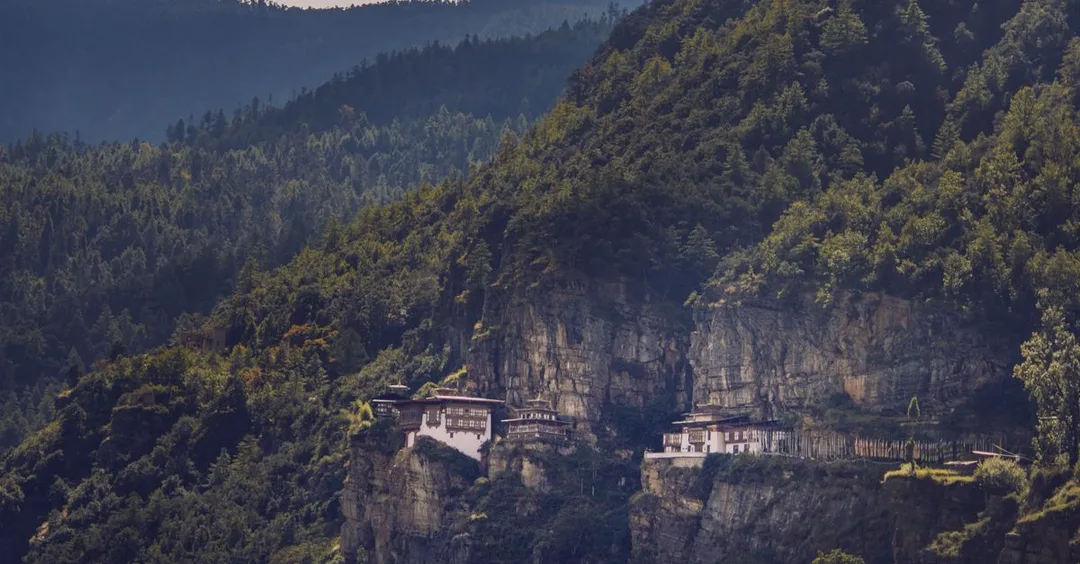
The moment the plane drops below the clouds on final approach into Paro, you'll grip your armrest a little tighter. The runway appears between two forested ridges with barely any margin on either side, and pine-covered mountains fill every window. Then you land, step out into air that smells like wood smoke and rhododendron, and a monk in saffron robes walks past like it's the most ordinary Tuesday in the world. That's Bhutan. It doesn't ease you in. It just is, immediately and completely, one of the most quietly powerful places you've ever set foot in.
In This Guide
- Bhutan Tour from India 2026 for Indian Travellers: What You Actually Get
- Best Time to Visit (Month-by-Month, Honest)
- Top Experiences You Can't Miss
- Safari Sutra Package Options & Prices in INR
- Getting There: Flights from India
- Visa, Vaccinations & Practical Prep
- Frequently Asked Questions
- Plan Your Bhutan Tour from India 2026 Trip with Safari Sutra
Bhutan Tour from India 2026 for Indian Travellers: What You Actually Get
Bhutan is one of the few destinations left that actively manages how many people visit, and for Indian travellers, it's a genuinely accessible escape that feels like a world apart.
The good news first: Indian, Bangladeshi, and Maldivian citizens do not need a visa to enter Bhutan. You travel on your passport or a valid voter ID card, which makes Bhutan one of the simplest international trips an Indian traveller can plan. That said, Bhutan is not free to travel independently. Every visitor must hire a licensed Bhutanese tour operator or travel through an accredited partner (like Safari Sutra) to plan and book their trip. This isn't a hurdle; it's actually what keeps Bhutan from becoming another overcrowded hotspot.
What you're paying for when you book a Bhutan tour is genuine depth. Unlike a standard package holiday where you rush through a checklist, Bhutan rewards slow travel. You'll spend time in dzongs (fortress-monasteries that double as administrative centres), walk apple orchards in Paro Valley, eat ema datshi (chilli and cheese stew, the national dish and genuinely addictive), and sit in a hot stone bath fed by a wood fire after a day's hike. The country runs on Gross National Happiness as an official policy, and somehow, you feel it.
For a Bhutan Himalayan Kingdom Tour, five to seven nights is the sweet spot. Less than that and you're skimming the surface. More than ten nights and you'll want to be a serious trekker or cultural researcher. Most Indian families and couples find a six-night trip covers Paro, Thimphu, and Punakha beautifully.
Best Time to Visit (Month-by-Month, Honest)
March to May (Spring): This is peak season for good reason. Rhododendrons bloom across the hills in red, pink, and white. The weather is clear, the skies are sharp, and you can see Himalayan peaks from certain viewpoints. The Paro Tsechu festival usually falls in spring (March/April), drawing masked dancers and enormous thangka displays to the dzong. Book early for these dates because accommodation fills up fast.
June to August (Monsoon): Bhutan gets heavy rainfall, especially in the south and central valleys. But the north is drier, and the landscapes turn an almost aggressive shade of green. Fewer tourists, lower prices, and misty mountain mornings that feel straight out of a painting. If you don't mind occasional rain and some muddy trails, this is genuinely a beautiful time to go.
September to November (Autumn): Arguably the finest window for first-timers. The air clears after monsoon, visibility is at its best for mountain views, and temperatures are comfortable across all elevations. The Thimphu Tsechu festival happens in September or October. Colours are warm, harvest is underway, and the rice fields in Punakha turn golden. This is when Safari Sutra sends the most clients, and the feedback is consistently excellent.
December to February (Winter): Cold, especially at altitude, but strikingly clear. Snow dusts the higher passes. The Black-Necked Crane Festival in Phobjikha Valley (November/December) is one of Bhutan's most moving experiences. Thimphu and Paro remain accessible, but Bumthang and central Bhutan get genuinely cold. Bring proper layers if you go this route.
The honest answer: visit in spring or autumn. But don't let monsoon or winter put you off if those are the dates you have.
Top Experiences You Can't Miss
The Tiger's Nest Hike (Taktsang Monastery)
This is Bhutan's defining image: a monastery clinging to a sheer cliff face 900 metres above the Paro Valley floor. The hike takes two to three hours up, through pine forest and past prayer flags. When you arrive and look back at the drop below you, the effort makes complete sense. This isn't a tourist tick-box. It's a genuinely moving place. Pack water, wear good shoes, and start early before the sun gets high.
Punakha Dzong
The confluence of the Mo Chhu and Pho Chhu rivers, with a fortress-monastery that dates from 1637 sitting right at the water's edge. In spring, jacaranda trees turn the approach purple. Bhutan's kings were crowned here. The interior is all painted wood beams, courtyards, and monks going about their day. It's one of the most beautiful buildings in Asia, and most visitors have it almost to themselves.
Phobjikha Valley
A glacial valley in central Bhutan, home to the endangered Black-Necked Cranes that winter here from Tibet. Even without the cranes, the valley is something special: open farmland, traditional farmhouses, and a pace of life that feels untouched. The walk around the valley floor takes about two hours and passes through villages where farmers wave from their fields.
Hot Stone Baths (Dotsho)
Traditional Bhutanese hot stone baths use a wooden tub filled with river water, heated by fire-scorched stones loaded in through a side channel. Medicinal herbs float in the water. After a day of hiking, there is nothing better. Most lodges above three-star can arrange this for you. Don't skip it.
Local Food, Properly
Ema datshi is the national dish and it will surprise you with its heat. Red rice (firmer and nuttier than basmati) is the staple. Jasha maroo is a spiced chicken stew. Phaksha paa is pork with dried chillies. Bhutanese food is not mild, and it's completely delicious once you lean into it. Ask your guide to take you to a local restaurant in Thimphu rather than eating only at your hotel. The gap in experience is significant.
Safari Sutra Package Options & Prices in INR
All prices are per person on twin sharing and include accommodation, all meals, guide, transport, and permit fees as applicable. Flights are separate.
Tier 1: Essential Bhutan (5 Nights)
Covering: Paro, Thimphu, Punakha
Accommodation: Comfortable 3-star hotels, traditional-style
Includes: Tiger's Nest hike, Punakha Dzong, city walks, all meals
Price: From INR 65,000 per person
Good for first-timers who want a solid introduction without stretching the budget too far. You get the core of Bhutan done well.
Tier 2: Classic Bhutan (7 Nights)
Covering: Paro, Thimphu, Punakha, Gangtey/Phobjikha
Accommodation: 4-star boutique hotels
Includes: Everything in Tier 1 plus Phobjikha Valley, hot stone bath, local cooking experience
Price: From INR 95,000 per person
This is the most popular option with Safari Sutra travellers. Seven nights gives you room to breathe, and Phobjikha adds a completely different dimension to the trip.
Tier 3: Premium Bhutan (7 Nights)
Covering: Paro, Thimphu, Punakha, Gangtey
Accommodation: 5-star luxury resorts (Amankora, Six Senses, or equivalent)
Includes: Full board, private guide, spa treatments, cultural workshops
Price: From INR 2,20,000 per person
Bhutan's luxury lodges are genuinely among the finest in Asia. If you're celebrating an anniversary, honeymoon, or simply want zero compromise, this tier delivers something special. The Six Senses Paro, for instance, sits above the valley in a heritage village and has rooms you won't want to leave.
Tier 4: Festival Bhutan (6 Nights)
Covering: Paro or Thimphu Tsechu dates
Accommodation: 4-star boutique hotels
Includes: Front-row festival access, masked dance performances, local guide briefings, monk interaction
Price: From INR 1,10,000 per person (festival premium applies)
Timing your visit around a tsechu transforms the trip. Prices are higher during peak festival weeks, but the experience justifies it completely.
Tier 5: Family Bhutan (7 Nights, 2 Adults + 2 Children)
Covering: Paro, Thimphu, Punakha with child-friendly pacing
Accommodation: Family rooms, 4-star hotels
Includes: Easy-grade hikes, archery lesson, farm visit, children's cultural activities
Price: From INR 2,60,000 for a family of four
Bhutan is an exceptional destination for families with children aged 8 and above. It's safe, clean, easy to navigate, and genuinely fascinating for curious kids. Younger children can enjoy the lower-altitude portions without the steeper hikes.
All packages can be adjusted. These are starting frameworks, not rigid boxes.
Getting There: Flights from India
Druk Air and Bhutan Airlines are the only two carriers that fly into Paro International Airport, which sits at 2,235 metres altitude. Direct flights operate from Delhi, Mumbai, Kolkata, Bagdogra, Guwahati, and a few other Indian cities.
From Delhi: Direct flights with Druk Air, roughly 2 hours. Delhi is the most convenient gateway.
From Mumbai: Direct Druk Air flights are available on select days. Otherwise, connect via Kolkata or Delhi. Mumbai to Paro with a connection is typically a 6 to 8 hour journey.
From Kolkata: Shortest flight time from India, around 1.5 hours. Kolkata is the closest major Indian city to Bhutan.
From Northeast India: Bagdogra and Guwahati have direct connections and are great options if you're combining Bhutan with a Northeast India trip.
Prices fluctuate significantly. Budget INR 15,000 to 35,000 per person return depending on the origin city and season. Book at least 6 to 8 weeks in advance for decent fares. Druk Air tends to fill up during spring and autumn festival season.
One practical note: Paro is one of the most challenging airports in the world for landings and only specially certified pilots fly the approach. Only Druk Air and Bhutan Airlines are certified. There's no workaround, and no, that's not a problem in practice. Thousands of flights land there safely every year.
Visa, Vaccinations & Practical Prep
Entry for Indian Nationals
Indian citizens do not need a visa for Bhutan. You need either:
- A valid Indian passport (with at least 6 months validity)
- A valid Indian voter ID card
Carry both if you have them. At the Paro border crossing or airport, you'll receive a permit that allows movement within designated tourist zones. Your guide and operator handle this. If you want to visit restricted areas (like Haa Valley), an additional permit is needed, which your tour operator arranges in advance.
Sustainable Development Fee (SDF)
This is the bit that confuses people. Bhutan charges a Sustainable Development Fee (SDF) to international tourists. As of 2024-2025, the rate for Indian, Bangladeshi, and Maldivian nationals is INR 1,200 per person per night (approximately USD 15). This fee supports Bhutan's healthcare, education, and conservation systems, and it's included when you book through a licensed operator.
This is separate from your package cost and is paid per night in the country. For a 6-night trip, that's INR 7,200 per person.
Vaccinations
No vaccinations are mandatory for Indian travellers entering from India. However, make sure your routine vaccinations are up to date. If you're visiting during monsoon, carry a standard travel medical kit. Altitude sickness is a consideration if you're pushing into higher terrain (Chelela Pass at 3,988 metres, for instance). Take it slow on arrival day.
Currency and Payments
The Bhutanese Ngultrum (BTN) is pegged 1:1 with the Indian Rupee, and Indian Rupees are accepted almost everywhere. Carry cash as ATMs are limited outside Paro and Thimphu. Credit cards work in larger hotels and restaurants.
Connectivity
Mobile data in Bhutan is available through a local SIM (pick one up at the airport for a few hundred rupees). Coverage is good in Paro, Thimphu, and Punakha, patchier in Phobjikha and remote valleys. Download your maps and reading material before you head out each morning.
Frequently Asked Questions
Q: Do Indian travellers need a visa for Bhutan in 2026?
No, Indian citizens do not need a visa to visit Bhutan. A valid passport or voter ID card is sufficient for entry. You will receive a tourist permit at the entry point, which is managed by your tour operator. What you do need is a licensed Bhutanese guide and tour itinerary booked in advance through an approved operator. Travelling independently without a guide is not permitted for tourists.
Q: What is the Sustainable Development Fee and do Indians have to pay it?
Yes, Indian travellers pay the SDF, currently set at INR 1,200 per person per night. The fee was introduced as a revised tourism policy and replaced the older high-value, low-volume pricing model for SAARC nationals. Think of it as a direct contribution to Bhutan's free healthcare and education system. For a standard 6-night trip, it works out to INR 7,200 per person and is included in your package when you book through Safari Sutra.
Q: Is Bhutan safe for solo women travellers?
Bhutan is consistently ranked among the safest travel destinations in Asia. Crime rates are extremely low, and the culture is respectful and non-intrusive. Solo women travellers, including Indian women travelling alone, report very comfortable experiences. As with any trip, basic common sense applies, especially in remote areas at night. Your guide is always contactable and most operators provide 24-hour support.
Q: What is the best duration for a first trip to Bhutan?
Six to seven nights is the right length for a first visit. This gives you enough time to cover Paro (including the Tiger's Nest hike), Thimphu, Punakha, and ideally Phobjikha Valley, without rushing. Five nights is workable but tight. Anything less than five nights means you're spending a disproportionate amount of time on transfers.
Q: Can I combine Bhutan with another destination?
Absolutely. Bhutan pairs exceptionally well with Northeast India (Assam, Meghalaya, Arunachal Pradesh), Nepal, or Sikkim. A 12 to 14 day trip combining Bhutan with Assam's Kaziranga National Park, for instance, gives you both the cultural richness of Bhutan and a proper wildlife experience. After 12 years and 15,000+ trips, we've found the biggest difference between an average trip and a great one is guide quality and timing, and these are things we get right for every Safari Sutra client, whether you're on a multi-country itinerary or focused entirely on Bhutan.
Q: What should I pack for Bhutan?
Pack in layers regardless of season. Even in spring and autumn, mountain evenings get cold. A light down jacket, waterproof outer layer, good walking shoes (proper ankle support for the Tiger's Nest hike), sunscreen, and lip balm for the dry mountain air. Dress modestly when visiting dzongs and monasteries, covering shoulders and knees. A small daypack is more useful than a large wheeled suitcase given the nature of the terrain.
Q: Is Bhutan worth the cost compared to other Himalayan destinations like Nepal or Sikkim?
That's a fair question. Bhutan is more expensive than either Nepal or Sikkim, primarily because of the SDF and the requirement to book through an operator. But the experience is categorically different. Bhutan is less crowded, more pristine, and has a cultural depth that comes from centuries of deliberate preservation. The infrastructure is clean and well-managed. If you've already done Nepal or Darjeeling and want something that genuinely surprises you, Bhutan is worth every rupee. It's also endorsed as a travel destination by Incredible India for Indian travellers looking to explore their broader subcontinent. If budget is a real constraint, go for a 5-night essential package and stretch the value there.
Plan Your Bhutan Tour from India 2026 Trip with Safari Sutra
Bhutan is the kind of place that stays with you long after you're back home, sitting in traffic somewhere, thinking about pine-scented air and prayer wheels spinning in the wind. The planning doesn't need to be complicated.
At Safari Sutra Holidays, our Bhutan specialists have been building trips to the Kingdom for years, and we know the difference between a hotel that looks good in photos and one that actually delivers on the ground. We handle permits, SDF arrangements, guide selection, and festival timing so you don't have to piece it together yourself.
Whether you want a straightforward five-night introduction, a festival-timed cultural trip, or a luxury honeymoon with no corners cut, we'll build it around what you actually want. All you need to do is tell us your dates and who's travelling.
Ready to Plan Your Trip?
Safari Sutra Holidays — 13 years, 15,000+ trips, zero cookie-cutter itineraries.
Get Your Free Custom Quote →+91 9860415774 | hello@thesafarisutra.com

Safari Sutra Team
Travel curators with 13 years of experience planning Indian and international holidays — from safari adventures to island escapes.
View All Posts