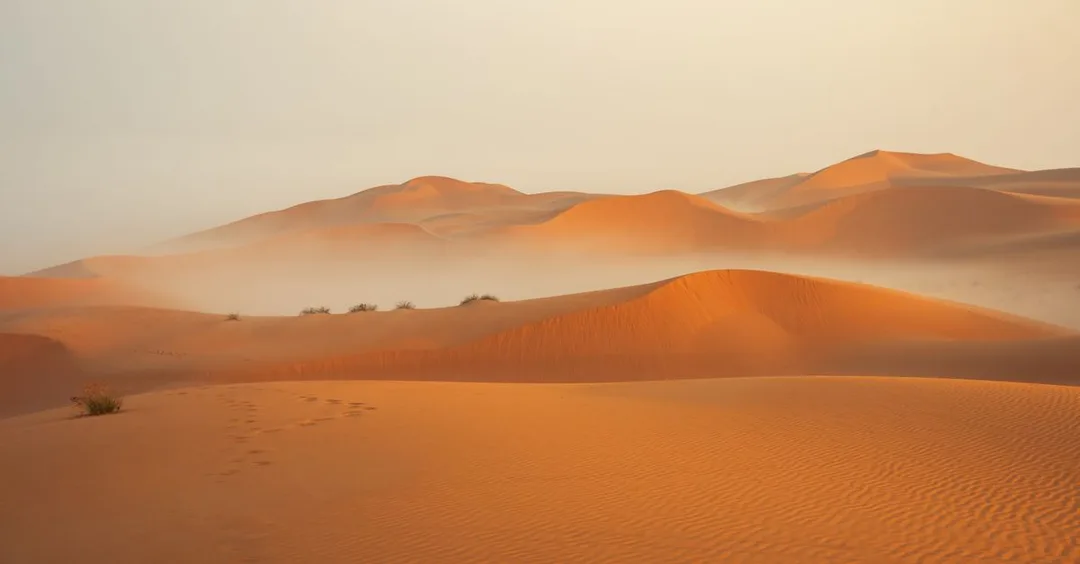
The alarm goes off at 4:30am. It's dark, cold, and your breath fogs in the desert air. You step out of your lodge into a silence so complete it feels almost physical. Then the sky starts to shift, from black to deep purple to that first slash of orange along the horizon, and the dunes begin to glow. Not just red, but a specific, impossible shade of burnt apricot that no photograph has ever quite captured. Dune 45 stands 170 metres tall beside you. The shadows carve the sand into sculpture. Nobody else is here yet. This, yaar, is why you came to Sossusvlei.
In This Guide
- Sossusvlei Dunes Namibia for Indian Travellers: What You Actually Get
- Best Time to Visit (Month-by-Month, Honest)
- Top Experiences You Can't Miss
- Safari Sutra Package Options & Prices in INR
- Getting There: Flights from India
- Visa, Vaccinations & Practical Prep
- Frequently Asked Questions
- Plan Your Sossusvlei Dunes Namibia Trip with Safari Sutra
Sossusvlei Dunes Namibia for Indian Travellers: What You Actually Get
Most Indian travellers discover Namibia almost by accident, usually after doing Kenya or South Africa and wondering what comes next. And then Sossusvlei completely rewires their sense of what travel can be.
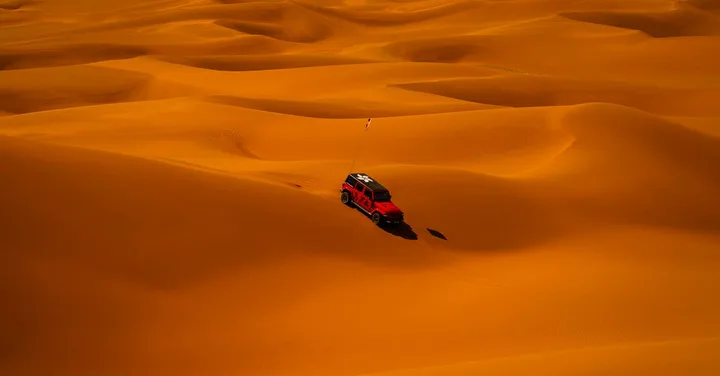
The Sossusvlei dunes sit inside the Namib-Naukluft National Park, about 360 kilometres south of Windhoek. The Namib Desert is one of the oldest deserts on the planet, roughly 55 million years old, and the dunes here have been shaped by winds and time into something that feels genuinely otherworldly. The sand is red because of iron oxide coating each grain, and the older the dune, the deeper the red. Dune 7, Dune 45, and the legendary Big Daddy are the ones you'll climb, photograph, and remember for years.
But Sossusvlei isn't only dunes. Deadvlei, a white clay pan surrounded by dead camel thorn trees that have stood skeletal for over 700 years, is one of the most photographed landscapes in all of Africa. The contrast of white clay, black dead trees, red sand, and blue sky is exactly as dramatic in real life as it looks online.
For Indian travellers, the appeal goes beyond the scenery. Namibia is extraordinarily well-organised, English-speaking, and genuinely safe. It has a population of just 3 million across a country twice the size of California. You will feel space here in a way that Mumbai or Delhi rarely allows. The roads are good, the game lodges are excellent, and the whole country feels like a well-kept secret that the world hasn't fully discovered yet.
Explore our Namibia Safari Packages to see how we structure a full Namibia trip around the dunes.
Best Time to Visit (Month-by-Month, Honest)
The short answer: May through September is the sweet spot. Here's the honest breakdown.
May to August (Dry, Cool, Ideal)
This is peak season for good reason. Daytime temperatures at the dunes hover between 18°C and 28°C, which is genuinely comfortable for climbing. Mornings are crisp, sometimes cold enough for a light jacket, and the sunrise light is at its most dramatic. Wildlife in the wider Namibia itinerary is easier to spot because animals gather around water sources. This is when you want to be here.
September to October (Hot but Doable)
Temperatures start climbing toward 35°C and beyond. Sunrise visits are still worth it because the heat hasn't built by 6am, but midday at the dunes becomes punishing. If May-August is booked out or pricier, September works well if you plan your days sensibly.
November to April (Summer, Rain Possible)
The Namib receives very little rainfall even in summer, typically under 25mm annually, but when rain does come in December to March, the pan at Sossusvlei fills with water and turns into a mirror. It's spectacular and rarely seen. Temperatures are high, 38°C to 42°C by afternoon, so this is strictly an early-morning-only destination in summer. Some lodges drop prices significantly.
For most Indian families and couples flying from Mumbai or Delhi, the May-to-August window offers the most rewarding conditions. Book at least four to six months ahead for this period.
Top Experiences You Can't Miss
Sunrise at Dune 45
The park gate opens at sunrise and closes at sunset. To beat the crowds and catch the absolute best light, you need to be at the gate the moment it opens. Your guide drives you in, positions you at Dune 45, and you watch the light change in real time. It lasts maybe 40 minutes. It's worth the 4:30am wake-up call.
Climbing Big Daddy
Standing at 325 metres, Big Daddy is the tallest dune in the Sossusvlei area. The climb takes 45 minutes to an hour and is genuinely challenging in the soft sand, but the view from the top over Deadvlei is the one you'll use as your phone wallpaper for the next two years. Go early, carry water, and take your time.
Walking Deadvlei
You walk the last kilometre into Deadvlei, as vehicles can't cross the clay. The dead trees are estimated to be 700 to 900 years old, killed when the dunes blocked the river and the water stopped flowing. They're still standing because the climate is too dry for them to decompose. It's eerie and beautiful and unlike anything else on the continent.
Hot Air Balloon Over the Namib
This is the splurge that Indian travellers consistently say was their highlight. A sunrise balloon flight over the Namib dune sea, followed by a champagne breakfast in the desert, costs roughly USD 450 to 600 per person. It's not cheap, but seeing those red dunes from 300 metres above, with no sound except wind, rearranges something in your brain.
Sesriem Canyon at Sunset
Just seven kilometres from the Sossusvlei gate, Sesriem Canyon is carved by the Tsauchab River through 30 metres of ancient rock. Most visitors skip it because they're focused on the dunes. Don't. It takes an hour to walk and the late afternoon light turns the rock walls gold.
Safari Sutra Package Options & Prices in INR
After 12 years and 15,000+ trips, we've found the biggest difference between an average trip and a great one is guide quality and game drive timing. These are the things Safari Sutra Holidays gets right for every client, and nowhere does this matter more than at Sossusvlei, where arriving two minutes after sunrise means two minutes of wrong light.
Here are realistic package tiers for Indian travellers. All prices are per person, based on double occupancy, and include the international return airfare from India unless stated.
Essential Namibia Dunes Package (5 Nights / 6 Days)
Windhoek arrival, two nights at a solid mid-range lodge near Sesriem, one night in Windhoek, guided Sossusvlei and Deadvlei visits, park fees included. Approximate cost: INR 1,85,000 to 2,20,000 per person.
Classic Namibia Package (8 Nights / 9 Days)
Adds Etosha National Park game drives to the dunes experience. Three nights Sossusvlei area, three nights Etosha, one night Windhoek. Comfortable lodges, guided throughout. Approximate cost: INR 2,80,000 to 3,40,000 per person.
Premium Red Dunes & Wild Coast (10 Nights / 11 Days)
Sossusvlei, Etosha, and either the Skeleton Coast or a Zambezi region extension. Four-star lodges throughout, dedicated English-speaking guide, hot air balloon experience included. Approximate cost: INR 4,20,000 to 5,20,000 per person.
Luxury Private Namibia (10-14 Nights, Fully Private)
Private vehicle and guide throughout, five-star lodge selection including camps inside national park concessions, small aircraft transfers between regions (which saves a full day of driving), sundowner setups in the dunes. This is genuinely one of the finest private desert journeys in the world. Approximate cost: INR 7,50,000 to 12,00,000 per person.
Honeymoon / Couples Namibia (7 Nights / 8 Days)
Romantic desert lodges, private sunrise dune experience, candlelit dinner under the Milky Way (the night skies here are remarkable), hot air balloon flight. Priced for two on a shareable basis. Approximate cost: INR 3,80,000 to 4,80,000 per couple.
Prices vary with season, lodge category, and specific travel dates. Contact us for a tailored quote.
Getting There: Flights from India
There's no direct flight from India to Windhoek (Hosea Kutako International Airport, WDH). The most common connections for Indian travellers are:
- Via Addis Ababa: Ethiopian Airlines from Mumbai, Delhi, or Bengaluru to Windhoek. One of the better-priced options and relatively efficient connections. Total travel time around 14 to 17 hours.
- Via Johannesburg: South African Airways or FlySafair from Delhi/Mumbai to Joburg (O.R. Tambo), then a 2.5-hour connection to Windhoek. Very reliable routing, good frequency.
- Via Nairobi: Kenya Airways, particularly useful if you're combining Namibia with a Kenya safari.
- Via Dubai or Doha: Emirates or Qatar Airways to Joburg, then onward to Windhoek. Often the most fare-competitive option.
Return fares from Delhi or Mumbai to Windhoek typically range from INR 65,000 to 1,10,000 in economy depending on season and how far in advance you book. Business class runs INR 2,20,000 to 3,50,000 return.
Plan for at least three days minimum at Sossusvlei to do it justice, and ideally combine it with a wider Namibia circuit.
Visa, Vaccinations & Practical Prep
Visa: Indian passport holders require a visa for Namibia. The good news is that Namibia offers a visa on arrival at Windhoek airport for Indian nationals, valid for 30 days. There's also the option of applying in advance through the Namibian High Commission. The fee is modest, around USD 80 to 100, and the process is straightforward. Allow at least three to four weeks if you're applying in advance.
Yellow Fever: If you're transiting through certain African countries, a yellow fever vaccination certificate may be required. Check requirements based on your routing. For most India-to-Windhoek routings via Joburg or Addis Ababa, it isn't mandatory but carrying the certificate is sensible if you're doing a multi-country trip.
Other vaccinations: Hepatitis A, typhoid, and ensuring your routine vaccinations are current is the standard advice. Malaria risk in Sossusvlei itself is very low; the desert isn't hospitable to mosquitoes. If you're adding Etosha or the Caprivi Strip, antimalarial medication becomes relevant.
Currency: The Namibian Dollar (NAD) is pegged 1:1 to the South African Rand, and South African Rand is accepted everywhere in Namibia. USD is widely accepted at lodges. Cards work well in Windhoek and at most lodges.
Weather gear: Bring layers. Desert mornings are genuinely cold, sometimes under 5°C in winter. By 10am it'll be 28°C. Light, packable layers are the answer.
Photography: A DSLR or a good mirrorless camera makes a real difference here. The light conditions at sunrise and sunset are extraordinary, but they're high-contrast. A circular polarising filter helps. For smartphone shooters, the Pro or RAW mode on modern iPhones and Android flagships handles the dunes surprisingly well.
India's own tourism board, Incredible India, has useful information on Indian travel abroad and documentation resources for Indian passport holders planning international trips.
Frequently Asked Questions
Q: Is Sossusvlei worth visiting if I've already done Kenya or Tanzania?
Absolutely, and for completely different reasons. East African safaris are about wildlife density and the Great Migration. Namibia, and Sossusvlei specifically, is about landscape, space, and silence. You'll see far fewer animals but experience something that feels more remote, more elemental. Indian travellers who've done both consistently rate Namibia as their more emotionally affecting trip.
Q: How physically demanding is climbing the dunes?
Climbing Dune 45 is moderate; most reasonably fit adults manage it in 20 to 30 minutes. Big Daddy is a proper workout, steep and soft underfoot, and takes 45 to 60 minutes. You don't have to climb to the top of either one to have a great experience. Plenty of people sit halfway up and watch the light change, which is equally rewarding.
Q: Can I do Sossusvlei as part of a broader Africa trip?
Yes, and this is exactly how most Indian travellers structure it. Namibia pairs brilliantly with Botswana (Okavango Delta and Chobe), South Africa (Cape Town and Kruger), or even a Kenyan safari. We regularly build 14 to 18 day southern and east Africa itineraries that include the dunes as a centrepiece.
Q: Is Namibia safe for Indian families travelling with children?
Namibia has a very good safety record compared to many African destinations. Windhoek requires the same sensible urban precautions you'd apply anywhere, but the national parks and lodge areas are extremely safe. Children over seven or eight years old generally have a wonderful time at the dunes; it's essentially a giant sandpit with extraordinary scenery. Smaller children need careful supervision near steep dune faces.
Q: What should I eat in Namibia? Is vegetarian food available?
Namibian cuisine leans heavily on meat, particularly game meat like oryx, kudu, and springbok. Most lodges accommodate vegetarian and even vegan requests with advance notice. The lodges catering to international travellers are experienced with dietary preferences. If you're strictly vegetarian, just flag it when booking and we'll confirm lodge arrangements.
Q: Is the INR to NAD exchange rate favourable?
At current rates, 1 INR equals roughly 0.22 to 0.25 NAD, meaning 1 NAD costs about 4 to 4.5 INR. Namibia isn't a budget destination, but it's also not Europe-expensive. Lodge rates are the main cost; food and local activities are reasonable once you're there.
Q: How many days should I budget specifically for Sossusvlei?
A minimum of two full days and two nights at a lodge near Sesriem gives you time for two sunrise visits, Deadvlei, a dune climb, and Sesriem Canyon. Three nights is more relaxed and allows for a balloon flight. Most itineraries we build include three nights in this area.
Plan Your Sossusvlei Dunes Namibia Trip with Safari Sutra
Namibia is the kind of trip that Indians who've taken it tell other Indians about at every dinner party for the next three years. The dunes, the silence, the extraordinary skies, and the sense of standing somewhere genuinely untouched; it gets into you.
Safari Sutra Holidays has been building Africa and safari trips for Indian travellers for over 12 years. We know the dune lodges that get you earliest access to the gate. We know the guides who can read the morning light and position you perfectly on Dune 45. And we know how to build a wider Namibia itinerary that doesn't waste a single day of your leave.
Ready to Plan Your Trip?
Safari Sutra Holidays — 13 years, 15,000+ trips, zero cookie-cutter itineraries.
Get Your Free Custom Quote →+91 9860415774 | hello@thesafarisutra.com

Safari Sutra Team
Travel curators with 13 years of experience planning Indian and international holidays — from safari adventures to island escapes.
View All Posts