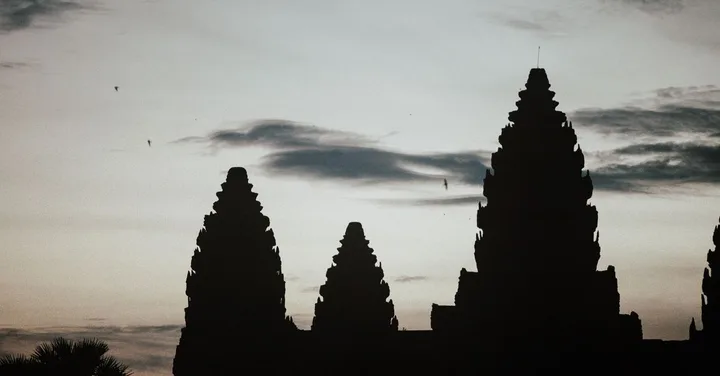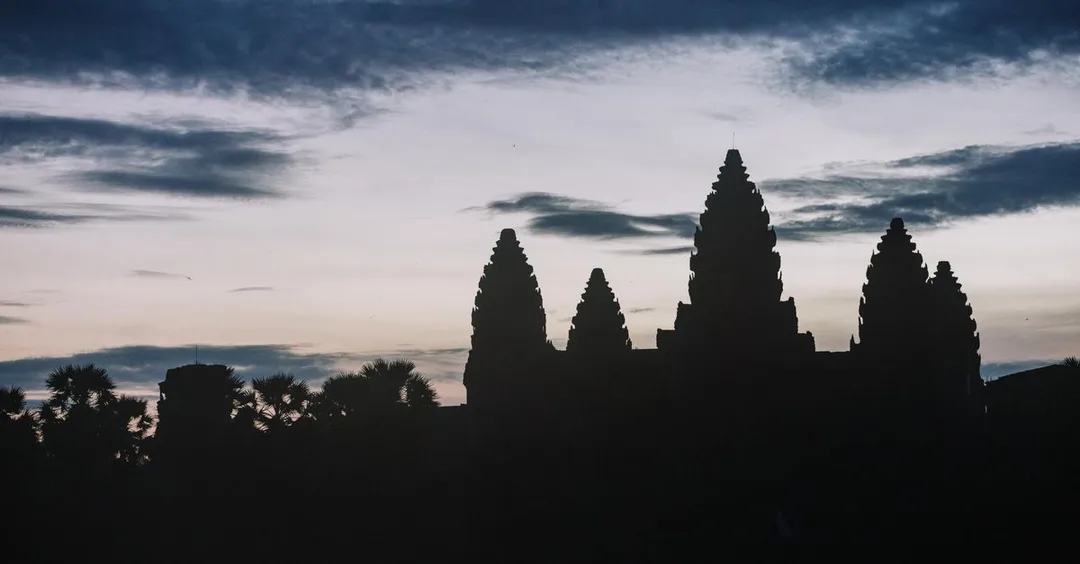
The air at 4:30 AM in Siem Reap smells like jasmine incense and damp stone. You're standing at the edge of the main reflecting pool, torch switched off, surrounded by maybe a hundred other early risers who all had the same idea. Then the sky behind the five towers shifts from black to deep violet to a burning amber, and the entire structure mirrors itself perfectly in the water below. Nobody talks. Someone's phone camera clicks. And you realise that no photograph, no travel reel, no friend's description ever quite prepares you for what Angkor Wat actually looks like at first light.
In This Guide
- Angkor Wat Complete Guide for Indian Travellers: What You Actually Get
- Best Time to Visit (Month-by-Month, Honest)
- Top Experiences You Can't Miss
- Safari Sutra Package Options and Prices in INR
- Getting There: Flights from India
- Visa, Vaccinations and Practical Prep
- Frequently Asked Questions
- Plan Your Angkor Wat Complete Guide Trip with Safari Sutra
This is what you come for.
Angkor Wat Complete Guide for Indian Travellers: What You Actually Get
Angkor Wat is not just one temple. This is the single biggest misconception Indian travellers arrive with, and it shapes everything from how many days you book to how tired you feel on day two.
The Angkor Archaeological Park covers roughly 400 square kilometres around Siem Reap in northwestern Cambodia. Inside that park are over a thousand temple structures, ranging from the iconic Angkor Wat itself (the world's largest religious monument) to jungle-swallowed ruins where tree roots have cracked open stone towers over centuries. The three-day temple pass, which most visitors buy, barely scratches the surface of what is here.
For Indian travellers specifically, Angkor carries a deep resonance that many people don't expect until they arrive. The temples were built between the 9th and 15th centuries by the Khmer Empire, and the Hindu and Buddhist iconography is immediately familiar. You'll recognise depictions of the Churning of the Ocean of Milk (Samudra Manthan), the Ramayana carved across entire gallery walls, and statues of Vishnu, Shiva, and Brahma. Walking through Angkor Wat's western gallery with a guide who explains the stories behind the bas-reliefs feels less like foreign history and more like coming home to something ancient and shared.
Beyond the temples, Siem Reap itself has transformed into a genuinely good food and culture destination. The old French colonial quarter, Pub Street, night markets, and silk-weaving villages offer a full week of experiences if you want them. This is not just a "see the temples and leave" trip anymore.
If you're looking at Cambodia Heritage Tour Packages for the first time, plan for a minimum of four nights. Three nights is manageable, but you'll feel rushed.
Best Time to Visit (Month-by-Month, Honest)
November to February is the sweet spot, and yes, this IS the best time. Temperatures hover around 26-30°C, humidity is manageable, and the skies are clear for sunrise photography. January and February are peak months, which means crowds at the main temple and slightly higher hotel rates, but the weather is simply perfect. Book 3-4 months in advance for this window.
March and April heat up significantly. Temperatures can hit 38-40°C, and the afternoon light is harsh. Sunrise visits are still excellent because it's cool at 4 AM, but by 10 AM you'll want to retreat. Not ideal if you have kids or older parents travelling with you.
May to September is wet season. The dramatic cloud formations make for incredible photography, jungle temples like Ta Prohm look their most atmospheric with mist and greenery, and tourist numbers drop significantly. Prices drop too. If you're a seasoned traveller who doesn't mind occasional heavy rain (usually afternoon showers rather than all-day downpours), this window offers real value. The moats around Angkor Wat also fill up and look spectacular.
October is transitional. Flooding can affect some outer temple roads in peak monsoon years, but conditions improve through the month. Worth checking closer to your travel date.
For most Indian families and couples planning a first visit, November to early January is the recommendation we give consistently.
Top Experiences You Can't Miss
Angkor Wat Sunrise
Wake up at 4 AM. Eat something light. Arrive at the park gates by 5 AM, walk the causeway in the dark, and position yourself on the left side of the reflecting pool for the classic composition. The sunrise itself lasts about 45 minutes and changes colour the entire time. After the crowds thin by 7:30 AM, go inside and explore the galleries while the light is still golden and soft.
Angkor Thom and the Bayon
Many people leave feeling that the Bayon, the temple at the centre of Angkor Thom city, affected them more than Angkor Wat. The 216 massive stone faces that stare serenely in every direction have this quality of watching you as you walk between the towers. It's genuinely surreal. Combine this with a walk along the Elephant Terrace and the Terrace of the Leper King next door.
Ta Prohm (the "Tomb Raider Temple")
Famous for the strangler fig and silk-cotton trees growing directly through the stone walls, Ta Prohm was intentionally left partially unrestored so visitors could experience what the entire site looked like when French archaeologists rediscovered it in the 1800s. Go early or just before closing to avoid the worst of the crowds.
Banteay Srei
About 25 kilometres from the main complex, Banteay Srei is a smaller temple built almost entirely from pink sandstone and covered in extraordinarily detailed carvings. The craftsmanship is on another level compared to the main temples. Many guides consider it the finest example of classical Khmer art. The detail in the devatas (female divine figures) and the decorative foliage is something you'll spend a long time photographing.
Preah Khan by Late Afternoon
Most visitors skip Preah Khan because they're templed-out by day two. Don't make this mistake. Built by Jayavarman VII in the late 12th century, it has long corridors of light and shadow, a circular structure that appears nowhere else in the park, and almost no crowds after 3 PM. The golden light in those corridors in the late afternoon is genuinely beautiful.
Phare, the Cambodian Circus
Every evening in Siem Reap, Phare puts on a 55-minute performance combining acrobatics, contemporary dance, live music, and storytelling drawn from Cambodian history and folklore. It's run by a social enterprise that trains young performers from disadvantaged backgrounds. Book tickets in advance. It rounds out the temple-heavy days beautifully.
Safari Sutra Package Options and Prices in INR
These are representative price ranges based on double occupancy from major Indian cities. Actual quotes depend on travel dates, flight choices, and group size.
Essential Angkor (4 nights, 3 days temples)
Covers three-day temple pass, guided sunrise visit, comfortable 3-star hotel in Siem Reap, airport transfers, and a half-day Siem Reap town experience. Approximately INR 55,000 to 70,000 per person, flights excluded.
Classic Angkor with Tonle Sap (5 nights)
Everything in the Essential package plus a sunset boat cruise on Tonle Sap Lake (Southeast Asia's largest freshwater lake, which expands to five times its dry-season size during monsoon), a cooking class, and a visit to Banteay Srei. Comfortable 4-star hotel. Approximately INR 80,000 to 1,05,000 per person, flights excluded.
Cambodia Explorer (7 nights, Siem Reap + Phnom Penh)
Full Angkor temple circuit, day trip to the floating villages, Phnom Penh city tour including the Royal Palace, and an evening at Phare Circus. Mix of 4-star properties. Approximately INR 1,20,000 to 1,55,000 per person, flights excluded.
Family Heritage Tour (6 nights, family of 4)
Designed around families with children aged 8 and above or senior-friendly pacing. Includes a private guide for all temple visits, a tuk-tuk for the first two days (kids love this), a Khmer cooking class, and flexible itinerary based on energy levels. Price on request, typically in the INR 3,50,000 to 4,50,000 range for a family of four.
Luxury Angkor (5 nights)
5-star property (Raffles Grand Hotel d'Angkor or equivalent), private car and guide throughout, exclusive early-morning temple access before general opening, helicopter flight over the complex, and private boat on Tonle Sap. Approximately INR 2,50,000 to 3,50,000 per person, flights excluded.
All packages can be adjusted. Tell us what matters to you and we'll build around it.
Getting There: Flights from India
There are no direct flights from India to Siem Reap's Angkor International Airport. Most Indian travellers connect through Bangkok (Suvarnabhumi), Kuala Lumpur, or Singapore.
From Delhi: Indigo and Air India fly to Bangkok, with onward connections on Bangkok Airways or AirAsia to Siem Reap. Total travel time around 7-9 hours including connection. Return fares typically INR 22,000 to 40,000 depending on season and advance booking.
From Mumbai: Similar routing via Bangkok or Singapore. Return fares in the INR 25,000 to 42,000 range.
From Chennai or Bengaluru: Connections via Bangkok or Kuala Lumpur work well. Air Asia's KL hub has good onward connections to Siem Reap.
Pro tip: Bangkok Airways operates a near-monopoly on the Bangkok-Siem Reap route and prices accordingly. Book this sector early. Alternatively, fly into Phnom Penh (more competition, often cheaper) and take the bus or internal flight to Siem Reap if you're doing the Explorer itinerary.
Visa, Vaccinations and Practical Prep
Visa: Indian passport holders can get an e-visa for Cambodia online at the official Incredible India-recommended travel portal or directly at evisa.gov.kh. The tourist e-visa costs USD 36, takes 3 working days, and is valid for 30 days. You can also get a visa on arrival at Siem Reap airport for USD 30, but the e-visa queue is shorter and more convenient. Just carry a printed copy.
Vaccinations: No mandatory vaccinations are required for Indian travellers to Cambodia. Hepatitis A, Typhoid, and a general check-up are recommended by most travel doctors. Consult your physician at least four weeks before departure.
Currency: The Cambodian Riel exists, but USD is accepted almost everywhere in Siem Reap, from temple ticket counters to restaurants. Carry USD in small denominations (ones and fives are very useful). ATMs are available in Siem Reap. Inform your bank before travel.
Weather prep: Pack light cotton clothing, a hat, a small umbrella (for both rain and sun), sunscreen SPF 50+, and insect repellent. Modest clothing that covers your shoulders and knees is required to enter most temples.
Health: Tap water is not safe to drink. Bottled water is cheap and available everywhere. Be cautious with street food the first day while your stomach adjusts.
SIM card: Pick up a local SIM at the airport. Smart or Cellcard offer good data packages for under USD 5 for a week.
Frequently Asked Questions
Q: Is Angkor Wat safe for solo Indian women travellers?
Siem Reap is one of the safest cities in Southeast Asia for solo travellers of any gender. The tourist infrastructure is well developed, tuk-tuk drivers are licensed and generally reliable, and the local population is extremely friendly. Standard urban precautions apply, especially around crowded market areas. Most solo female travellers report feeling completely comfortable here.
Q: How many days do I actually need at Angkor?
Three days in the park is the sweet spot. Day one covers the main Angkor Wat circuit with sunrise. Day two covers Angkor Thom, Bayon, Ta Prohm, and Ta Keo. Day three lets you go deeper with Banteay Srei, Preah Khan, and some of the outer temples. Budget a day in Siem Reap itself for the town, markets, and Phare. So four nights total is the minimum we recommend.
Q: What is the best way to get around the temples?
Tuk-tuks are the most popular option and are great fun. You agree on a route and price with the driver the evening before (typically USD 15-25 per day). Private cars are more comfortable in extreme heat and work well for families or older travellers. Bicycles are a beautiful option in the cooler months for the inner temples. E-bikes are available for longer distances.
Q: Can vegetarians eat well in Siem Reap?
Yes, surprisingly well. Khmer cuisine uses a lot of vegetables, rice, and noodles, and there's a strong awareness of vegetarian needs in a city used to international tourists. Amok, the classic Cambodian coconut-based curry, has good vegetarian versions. Indian restaurants also exist near the old market area if you need a dal-rice reset mid-trip.
Q: What's the Angkor Wat temple pass and how does it work?
You buy a pass at the official ticket counter before entering the park. A one-day pass is USD 37, a three-day pass is USD 62, and a seven-day pass is USD 72. Your photo is taken at the counter and printed on the pass. Rangers check it at every temple entrance. Do not buy passes from anyone other than the official booth, which is on the road to the main temples.
Q: Is Angkor good for children?
Genuinely yes, for children aged 7 and above. The tuk-tuk rides, climbing the steep temple stairs (some temples allow it, others don't), spotting monkeys in the grounds, and the sheer scale of the place tend to captivate kids. Younger children may tire quickly in the heat. Build in afternoon rest breaks and keep temple time to mornings.
Q: How is Angkor Wat different from visiting other Asian heritage sites like Hampi or Ajanta?
Scale and context are the main differences. Hampi and Ajanta are profound, but Angkor is a functioning archaeological city spread across hundreds of kilometres, with dozens of major temples and hundreds of minor ones still being documented. The Hindu and Buddhist iconography will feel familiar, but the Khmer interpretation has its own aesthetic that is distinct from anything you'll see in India. Most Indian travellers who've done both say Angkor surprised them with how emotionally affecting it was.
Plan Your Angkor Wat Complete Guide Trip with Safari Sutra
After 12 years and 15,000+ trips, the team at Safari Sutra Holidays has found that the biggest difference between an average trip and a great one comes down to guide quality and timing. That holds as true in Angkor as it does anywhere else. The right guide turns a walk through stone galleries into a living story. The right timing means you're at Ta Prohm before the tour buses, at the Bayon when the light catches those stone faces at the perfect angle, and at Banteay Srei with the space to actually look.
What we handle: flights, visa paperwork, hotels, temple pass logistics, guide selection, airport transfers, and all the small things that eat up your time and mental energy before a trip. What you handle: showing up and paying attention.
Whether you're planning a couple's trip for your anniversary, a family holiday with parents and children, or a solo deep-explore Khmer history, we'll put together something that fits your pace and your priorities.
Ready to Plan Your Trip?
Safari Sutra Holidays — 13 years, 15,000+ trips, zero cookie-cutter itineraries.
Get Your Free Custom Quote →+91 9860415774 | hello@thesafarisutra.com

Safari Sutra Team
Travel curators with 13 years of experience planning Indian and international holidays — from safari adventures to island escapes.
View All Posts