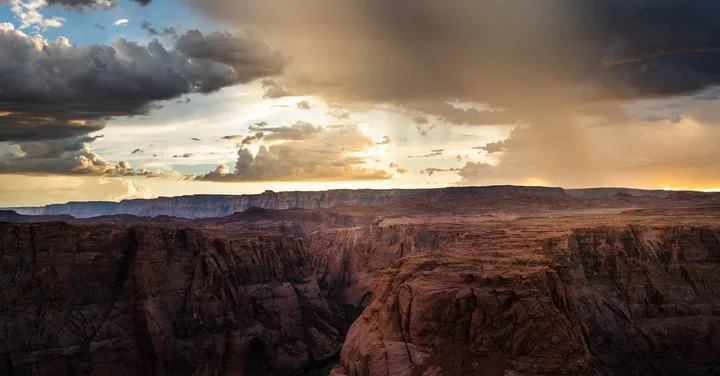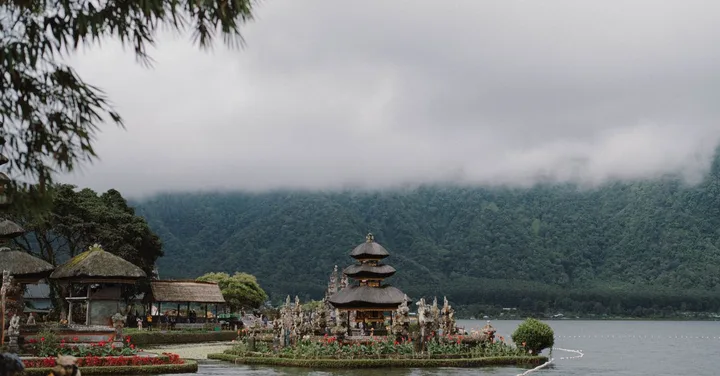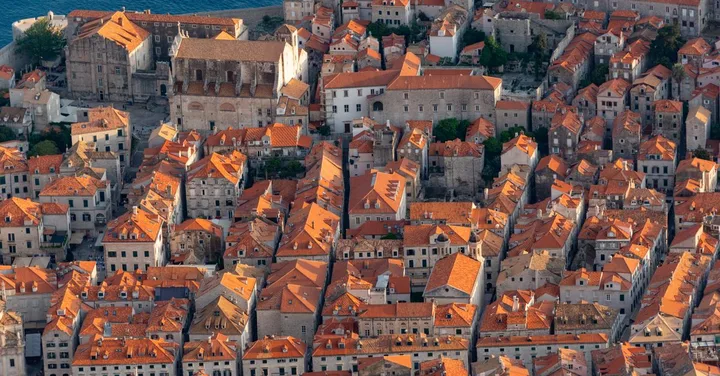
You're standing at the rim of the Rann of Kutch at 6 AM, the salt flats stretching white and endless in every direction, and the light is doing something you've never seen before, it's pink, then gold, then almost copper, shifting every few minutes like someone is slowly turning a dial. Your phone camera is already out. So is everyone else's. But the person next to you with a DSLR and a proper tripod? They've been here since 5:30. They knew.
In This Guide
- Travel Photography Guide for Indian Tourists: What You Actually Get
- Best Time to Visit (Month-by-Month, Honest)
- Top Experiences You Can't Miss (and How to Photograph Them)
- Safari Sutra Package Options & Prices in INR
- Getting There: Flights from India
- Visa, Vaccinations & Practical Prep
- Frequently Asked Questions
- Plan Your Travel Photography Guide for Indian Tourists Trip with Safari Sutra
That's the difference between travelling and travelling photographically. This guide is for Indian travellers who want both: the experience and the frame. Whether you're shooting on a flagship Android, a mirrorless Sony, or a proper camera kit you bought specifically for this trip, knowing where to be and when to show up changes everything.
Travel Photography Guide for Indian Tourists: What You Actually Get
India and the wider world are full of iconic images you've seen a thousand times on Instagram. What you actually get when you show up, though, is more complicated, more real, and honestly, more interesting to photograph.
The Taj Mahal at sunrise genuinely looks the way it does in those photos, but only for about 45 minutes before the tourist crowds arrive and the light flattens. Rajasthan's blue city of Jodhpur is more chaotic and colourful than any photo conveys. The Masai Mara in Kenya doesn't look like a wildlife documentary until your guide positions the jeep at exactly the right angle at exactly the right hour. That last part is something we've learned deeply over 12 years and 15,000+ trips: the biggest difference between an average trip and a great one is guide quality and timing on the ground. These are the things Safari Sutra Holidays gets right for every client.
For photography specifically, this matters enormously. A guide who knows where the lions were last evening, who understands the light, who takes you to the waterhole just before dusk, is worth more than any lens upgrade.
The destinations in this guide span domestic India gems and international adventures, because the Indian traveller today is genuinely global. You might be photographing Varanasi's ghats in February and Patagonia in October. Both require different prep, different gear considerations, and different timing knowledge.
Best Time to Visit (Month-by-Month, Honest)
Photography is almost entirely about light, and light is seasonal. Here's how to plan your trips around the best of it.
October to February is the golden window for most of India. Rajasthan is at its best: clear skies, golden-hour light that lasts, and the desert air is sharp and clean. Kerala's backwaters are lush and calm. Wildlife in Indian national parks like Ranthambore and Kanha peaks from November onwards as animals gather near water sources and vegetation thins out.
March and April are transition months. Parts of Rajasthan get hazy, but Northeast India, Sikkim, and Meghalaya are spectacular. The living root bridges of Meghalaya and the terraced fields near Ziro in Arunachal Pradesh photograph beautifully in the clear pre-monsoon air.
May to September is the African photography season, with the Kenya-Tanzania migration peaking from July to October. If you want that image of wildebeest crossing the Mara River, fly into Nairobi in August. Europe's golden hour in summer stretches till nearly 10 PM in Scandinavia, making June and July extraordinary for landscape photography in Iceland, Norway, and Scotland.
December and January are ideal for Rann of Kutch (the Rann Utsav runs from November to February), Sri Lanka's east coast, and Bhutan, which is dry, clear, and relatively uncrowded.
The Incredible India tourism portal has updated seasonal calendars for individual states that are genuinely useful when you're planning region-specific trips.
Top Experiences You Can't Miss (and How to Photograph Them)
Varanasi's Ghats at Dawn
Arrive by boat on the Ganges before 5:30 AM. The aarti from the night before has left marigolds floating on the water. The light goes from dark blue to amber in about 20 minutes, and the ghats fill with bathers, priests, and smoke from the distant funeral pyres at Manikarnika. This is one of the most photographically dense places on earth. Use a wide lens to capture scale, then zoom in for individual faces and rituals. Ask before you photograph, always.
Rann of Kutch Salt Flats
Full moon nights here are famous for a reason. The salt reflects moonlight so completely that you genuinely cannot tell where the ground ends and the sky begins. Star trails, wide-angle milky way shots, and silhouettes against the horizon all work here. Bring a tripod. This is non-negotiable.
Masai Mara and Serengeti, Kenya/Tanzania
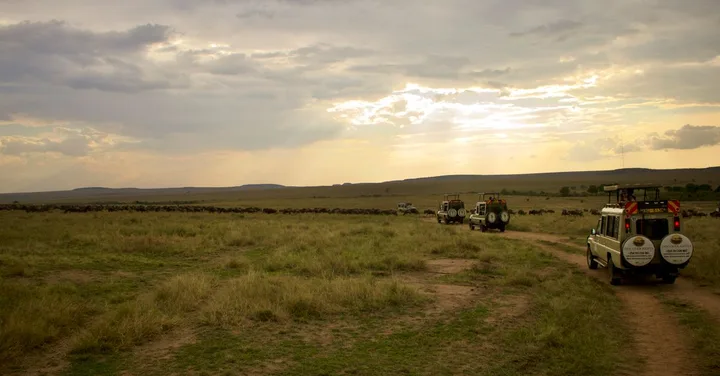
Early morning game drives, starting before sunrise, give you the best light and the most active animals. Predators hunt at dawn. The low, warm light at 6:30 AM turns even a grazing giraffe into a work of art. A good guide who knows animal behaviour patterns will position your vehicle so the light is always on the animal's face, not behind it.
Ladakh's Pangong Lake
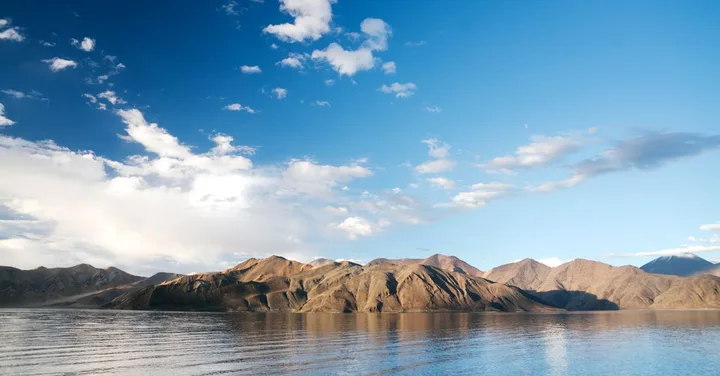
The blue shifts through at least six distinct shades between 7 AM and noon. Get there at dawn for the stillest water and the cleanest reflections. The surrounding mountains turn orange before the sky turns blue, which gives you a brief window of extraordinary colour contrast.
Santorini, Greece / Amalfi Coast, Italy
These are genuinely as photogenic as advertised, but every serious photographer knows to go in May or September, not July. Crowds in summer are overwhelming, and the midday Mediterranean light is harsh. Come in shoulder season, stay in a cliffside property with a private terrace, and shoot during the two golden hours.
You can see the full range of destinations Safari Sutra covers by browsing Explore All Destinations, Safari Sutra, from African wildlife parks to Southeast Asian coasts to European highlights.
Safari Sutra Package Options & Prices in INR
Prices below are per person for double occupancy, including flights from Delhi or Mumbai unless noted.
Tier 1 - India Photography Weekender (3-4 nights)
Rajasthan (Jodhpur + Jaisalmer) or Rann of Kutch. Land-only, includes heritage hotel stays and guided sunrise/sunset drives. Starting from INR 35,000 per person.
Tier 2 - India Deep-Dive Photography Tour (7-8 nights)
Varanasi + Prayagraj + Orchha, or Ladakh + Nubra + Pangong. Includes all transport, stays, and a local photography guide for two full days. Starting from INR 85,000 per person.
Tier 3 - Africa Wildlife Photography (7-10 nights)
Kenya Masai Mara or Tanzania Serengeti, including flights from Delhi, game lodge stays, and full-day game drives. Starting from INR 2,20,000 per person.
Tier 4 - Europe Photography Tour (10-12 nights)
Iceland in June-July for midnight sun and waterfalls, or Amalfi Coast in May with a photography walk included. Flights from Mumbai, premium accommodation. Starting from INR 3,50,000 per person.
Tier 5 - Multi-Continent Photography Expedition (custom)
Designed for serious photography enthusiasts who want to combine destinations, like Rajasthan in January and Kenya in August in a single planning package. Pricing on request, typically starting from INR 5,00,000 per person for international legs.
Getting There: Flights from India
For domestic destinations, IndiGo, Air India, and SpiceJet cover most major hubs. Jodhpur, Jaisalmer (via Jodhpur), Leh, and Bhuj (for Rann of Kutch) all have direct or single-stop connections from Delhi and Mumbai.
For Africa, the most convenient options fly from Delhi or Mumbai via Emirates (Dubai hub), Ethiopian Airlines (Addis Ababa), or Kenya Airways into Nairobi. Budget roughly INR 55,000 to INR 80,000 for return economy flights depending on the season and booking window. Book at least three months ahead for peak July-September season.
For Europe, direct flights from Mumbai and Delhi into Rome, Athens, or Reykjavik are available on Air India and Lufthansa. Prices range from INR 70,000 to INR 1,20,000 return in economy, depending on how early you book.
Visa, Vaccinations & Practical Prep
Domestic India: No visa needed. Carry a valid government ID. For Ladakh and Arunachal Pradesh, Indian nationals need an Inner Line Permit, which can be obtained online or at entry checkpoints.
Kenya/Tanzania: Indian passport holders need a visa. The East Africa Tourist Visa (covers Kenya, Uganda, and Rwanda) costs USD 100 and can be applied for online before travel. Yellow fever vaccination is required for entry into Kenya if arriving from certain countries. Check the current requirements about 6 weeks before travel.
Europe (Schengen): Indian passport holders need a Schengen visa, applied for at the relevant country's consulate in India. Processing takes 2-5 weeks. Apply early. Travel insurance is mandatory for the application.
Photography gear note: If you're carrying expensive camera equipment internationally, keep your original purchase receipts. Customs officials occasionally ask for proof of purchase on re-entry into India for high-value equipment.
Frequently Asked Questions
Q: What camera gear should I carry as a first-time travel photographer?
You don't need to invest in a DSLR before your first photography-focused trip. A modern flagship smartphone (iPhone 15 Pro or Samsung S24 Ultra) handles most travel photography beautifully. If you want to go beyond that, a mirrorless camera like the Sony ZV-E10 or Fujifilm X-T30 is compact, excellent in low light, and won't make airport security nervous. For wildlife, a 100-400mm telephoto lens makes a real difference.
Q: Is it safe to photograph people in rural India or on safari?
In India, always ask before photographing individuals, especially in religious settings and rural villages. A smile and a gesture go a long way. Most people are happy to be photographed and often want to see the photo after. On safari, you photograph animals, not local communities, so that's generally straightforward.
Q: What are the best photography spots in Rajasthan specifically?
Jodhpur's Mehrangarh Fort for blue city rooftop views, Jaisalmer's Sam Sand Dunes at sunrise and sunset, Pushkar's ghats during Kartik Purnima, and the step wells (baolis) in Abhaneri near Jaipur for geometric architecture shots. The light in Rajasthan between October and February is consistently warm and soft in the mornings.
Q: How do I handle long flights and keep camera gear safe?
Always carry camera bodies and lenses in your cabin bag. Checked luggage is too risky for anything fragile or valuable. A well-padded camera insert that fits inside a regular backpack is the cleanest solution. Don't put batteries in checked luggage either as most airlines restrict lithium batteries in the hold.
Q: Can I get good wildlife photos without a professional photography tour?
Yes, absolutely. The key is early morning game drives, a patient and knowledgeable guide, and sitting still long enough for animals to forget you're there. You don't need a specialist photography tour for good results. You need good timing and the right person driving.
Q: What about photography permissions at monuments like Taj Mahal or Hampi?
The Taj Mahal has no extra camera fee for personal photography. Professional or commercial shoots require prior permission from ASI (Archaeological Survey of India). Hampi's ruins are photogenic and largely open access. Some temple interiors in Tamil Nadu and Kerala do restrict photography, so follow local signage.
Q: Is travel insurance worth it for photography trips specifically?
100% yes, and look specifically for a policy that covers equipment loss or damage. Standard travel insurance often excludes cameras or caps the claim at a low limit. Check the fine print and if needed, buy a separate camera equipment insurance policy before you travel.
Plan Your Travel Photography Guide for Indian Tourists Trip with Safari Sutra
The right trip doesn't just happen. It comes from knowing which month to go, which lodge has the best light, and which guide understands what you're actually trying to capture. Safari Sutra Holidays has spent 12 years building those relationships and putting that knowledge to work for travellers who want more than just a holiday snapshot.
Start with a destination that excites you, and we'll work backwards from there, matching the best time of year, the right stays, and the practical details that make the difference between a good trip and a great set of photos.
Ready to Plan Your Trip?
Safari Sutra Holidays — 13 years, 15,000+ trips, zero cookie-cutter itineraries.
Get Your Free Custom Quote →+91 9860415774 | hello@thesafarisutra.com

Safari Sutra Team
Travel curators with 13 years of experience planning Indian and international holidays — from safari adventures to island escapes.
View All Posts