India doesn't do festivals quietly. When this country celebrates, it does so with fire, colour, music, devotion, and enough street food to feed a small city. But here's the thing: with hundreds of festivals happening across the country every year, knowing which ones to actually travel for, the ones that genuinely move you rather than just filling your camera roll, is the real question.
This list isn't about the most Instagrammed moments. It's about the festivals where you feel something shift inside you. Where you're standing in a crowd of thousands and realise you're witnessing something that has been happening for centuries, and somehow you're part of it now. We've pulled together ten festivals that are genuinely worth booking flights, taking leave, and planning a proper trip around. Whether you're a first-time festival traveller or you've already done Holi in Mathura and want to go deeper, there's something here for you.
By the end of this post, you'll know exactly which festival suits your travel style, the best time to go, and how to build a real trip around it.
1. Pushkar Camel Fair, Rajasthan (October-November)
Pushkar is a small, sacred town most of the year. Then November arrives, the camels come in from the desert, and suddenly 200,000 people descend on this little Rajasthani town for one of the most extraordinary gatherings on earth.
The fair runs for about five days around the Kartik Purnima full moon, and the sheer scale of it hits you immediately. Thousands of camels, horses, and cattle are traded on the sandy grounds just outside town. Turbaned traders haggle in the dust. Folk musicians play by firelight. The smell of wood smoke, dung, spice, and marigold all hit at once. It's a lot, in the best possible way.
Stay in one of the luxury tented camps on the outskirts for the full desert experience. Waking up at 5am to watch the mist roll over the ghats while the fair slowly comes alive around you is the kind of morning you'll still be thinking about years later.
2. Hornbill Festival, Nagaland (December)
Most Indian travellers haven't been to Nagaland, which is exactly why you should go. The Hornbill Festival, held every year in the first week of December at Kisama Heritage Village near Kohima, brings together all 16 Naga tribes in one place for ten days of traditional dance, music, warrior games, and food that you've almost certainly never tasted before.
Each tribe has its own morungs (traditional morung huts), where you can sit with community members, try smoked pork with bamboo shoots, and watch performances that aren't choreographed for tourists. They're the real thing. The Nagas are proud of their culture and genuinely happy to share it.
Getting there involves a flight to Dimapur from Kolkata, Delhi, or Guwahati, followed by a two-hour drive to Kohima. Book accommodation early because the good guesthouses fill up fast once the dates are announced. The Incredible India portal has updated registration details closer to the festival season.
3. Rann Utsav, Gujarat (November to February)
The Rann of Kutch is already one of India's most surreal landscapes: a vast white salt desert that stretches to the horizon and reflects the sky like a mirror. Now add a full moon, folk music floating across the flats, and a tent city that the Gujarat Tourism Department sets up every winter, and you have Rann Utsav.
This isn't a single-day event. It runs from November through February, so you have flexibility around your schedule. The best time to go is around the full moon nights, when the white Rann glows silver under moonlight and the air is sharp and cold and completely silent except for the music. Bhavai dancers, Rabari folk singers, and puppet shows happen nightly at the festival grounds.
Beyond the festival itself, use this trip to explore Dholavira (one of the world's oldest planned cities), Bhuj's craft traditions, and the incredible embroidery villages of Kutch. This region rewards slow travel.
4. Thrissur Pooram, Kerala (April-May)
If you think you've seen a procession before, wait until you see Thrissur Pooram. Held annually at the Vadakkunnathan Temple in Thrissur, this is widely considered the most spectacular temple festival in Kerala, and that's saying something in a state famous for its temple traditions.
Picture thirty-six caparisoned elephants lined up in two rows facing each other, their foreheads painted gold, each carrying a nobleman holding a jewelled parasol. The parasols are twirled in perfect rhythm while a percussion ensemble of over 200 musicians plays Panchavadyam at full intensity. The sound alone is something you feel in your chest. Then come the fireworks at dawn, and Thrissur turns completely electric.
The whole event happens over 36 hours. Go for the Madhyahna Pooram in the afternoon when the elephants face off and the atmosphere is at its peak. This festival is free to attend, but do plan your accommodation well in advance since Thrissur hotels fill up completely.
5. Hemis Festival, Ladakh (June-July)
Hemis is the largest monastery in Ladakh, and its annual festival celebrates the birth of Guru Padmasambhava, the founder of Tibetan Buddhism. Monks in elaborate silk costumes and painted masks perform Cham dances in the monastery courtyard, and the sound of long horns, cymbals, and drums fills the thin mountain air.
What makes Hemis special beyond the ceremony itself is the setting. You're at 3,500 metres, surrounded by the stark brown-and-ochre mountains of the Himalayas, watching something that has happened here for centuries. The festival draws Tibetan Buddhist pilgrims from across the region, and watching people who have travelled days on foot to be here adds a layer of reverence to the whole experience.
June and July are also the best months to be in Ladakh weather-wise, with clear skies and accessible mountain roads. If you're flying in from Delhi, budget about two to three days of acclimatisation before the festival so you can actually enjoy it.
6. Durga Puja, Kolkata (September-October)
Kolkata during Durga Puja is a city that becomes art. For five days around October, every neighbourhood builds a pandal, an elaborate themed structure housing a sculpted idol of Goddess Durga. Some pandals take months to build and cost lakhs. The themes range from recreations of ancient temples to commentary on climate change to miniature versions of famous world landmarks.
Pandal-hopping is the local sport. You walk through streets that are lit up like daytime at midnight, eating rolls from Nizam's, stopping for mishti doi at every second stall, and joining massive queues to see the most talked-about pandals of the year. The mood is pure joy.
Fly into Kolkata a day before Shashti (the sixth day) so you have time to orient yourself. If you want a guide who knows the top pandals and can navigate the crowds efficiently, it's worth arranging one in advance. After 12 years and 15,000+ trips, we at Safari Sutra Holidays have found the biggest difference between an average trip and a great one is exactly this kind of local knowledge and planning detail, and we get that right for every client.
7. Gangaur, Rajasthan (March-April)
Gangaur is Rajasthan's festival for women, celebrated 18 days after Holi in honour of Goddess Gauri. Women fast, dress in their finest traditional clothes, and carry beautifully decorated idols in a procession through the old city. In Jaipur and Udaipur, the royal families still participate, and the procession includes palanquins, camels, folk musicians, and dancers, all moving through streets lined with onlookers.
The Udaipur version is particularly moving. The idols are taken to the lake by boat at dusk, and the reflection of the lights on the water while music plays from the ghats creates a mood that no photograph quite captures.
This is a festival that Indian travellers who love culture and miss the older, slower rituals of India genuinely fall for. It's not internationally famous, which means it's still about the tradition rather than the spectacle.
8. Hampi Utsav, Karnataka (November)
Hampi, the ruined capital of the Vijayanagara Empire, is extraordinary at any time of year. But the Hampi Utsav, held over three days in November, brings it to life in a way that makes the ruins feel inhabited again.
Classical dance performances happen against the backdrop of temple ruins lit with torches. Folk music plays at the ghat. Puppeteers, street theatre groups, and classical musicians from across Karnataka perform across the heritage site. The city isn't frozen in time during this festival, it breathes.
If you're planning a Karnataka trip, combining Hampi Utsav with Pattadakal, Badami, and Aihole creates one of the richest cultural routes in South India. These three sites together are a UNESCO World Heritage trail and take about three to four days to explore properly.
9. Lathmar Holi, Barsana and Nandgaon, Uttar Pradesh (February-March)
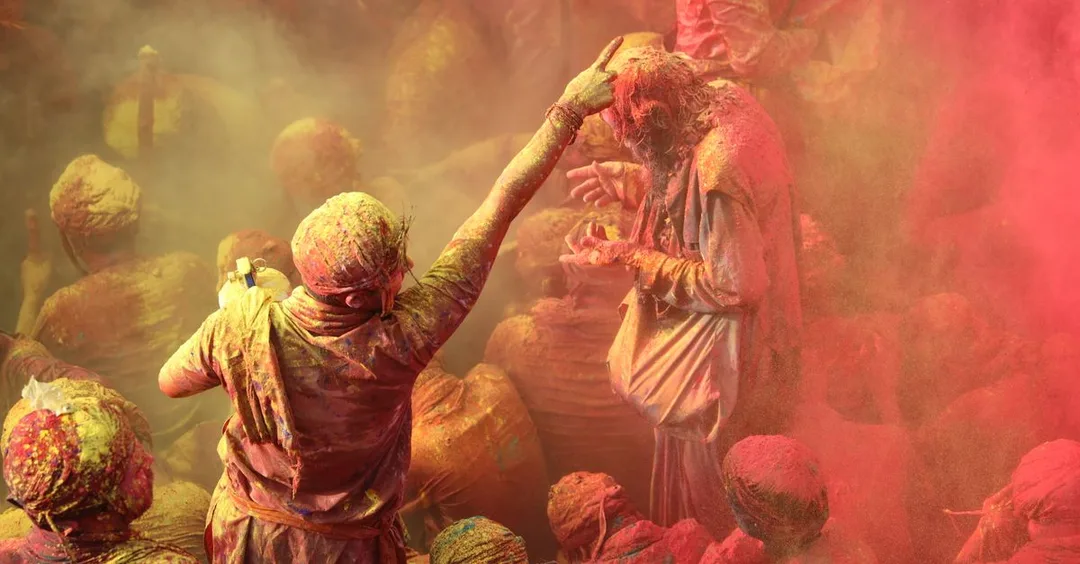
You've probably done Holi in some form. Lathmar Holi is its own thing entirely. In Barsana and Nandgaon, the two villages associated with Radha and Krishna's story, the women beat the men with sticks (lathis) while the men try to shield themselves and sing. It's playful, chaotic, loud, and rooted in a tradition that goes back centuries.
This happens a week before the main Holi date, so you can do Lathmar Holi in Barsana and then catch the full Holi celebrations in Mathura and Vrindavan. The streets run with colour, the temples open for special pujas, and the energy is completely different from the more commercialised Holi parties in big cities.
Stay in Mathura or Agra and day-trip into Barsana. Go early because the celebrations start around 11am and the crowds get thick by noon. Wear white, protect your camera in a zip-lock bag, and leave your expensive shoes at the hotel.
10. Ziro Festival of Music, Arunachal Pradesh (September)
Ziro is a small valley in Arunachal Pradesh where the Apatani tribe has lived for generations, growing rice in terraced fields and maintaining traditions that have barely changed in centuries. In late September, the valley hosts the Ziro Festival of Music, an outdoor music festival that brings independent Indian musicians together in a setting that has no business being this beautiful.
Think camping in a pine forest, local Apatani women in traditional dress walking through the festival grounds, fireflies at night, and musicians from across India playing acoustic sets on open stages. It's earthy and unpretentious and nothing like any festival experience you've had before.
Getting here requires a flight to Itanagar (or Guwahati), followed by a road trip. The journey is part of the experience. Permits are required for Arunachal Pradesh and need to be arranged at least a couple of weeks in advance. If you want help sorting logistics for Northeast India travel, the team at Safari Sutra Holidays handles this regularly.
How to See All of These in One Trip
Honestly? You can't do all ten in one trip without losing your mind, and that's okay. India's festivals are spread across the entire calendar year, so a better approach is to build two or three dedicated festival trips, ideally tied to seasons and regions.
A solid Northeast circuit would combine Hornbill Festival in Nagaland (December) with Ziro Festival of Music in Arunachal (September), using a longer holiday to explore both states. A Rajasthan winter circuit can cover Rann Utsav, Pushkar Camel Fair, and Gangaur across two separate trips (November and March-April). And a short-break approach works perfectly for Kerala's Thrissur Pooram (fly to Kochi, done in a long weekend), Kolkata's Durga Puja (four to five days), or Lathmar Holi in Mathura (a quick Delhi add-on).
The key is matching the festival dates to your leave window and building the itinerary outward from there rather than starting with the destination.
What This Trip Costs from India
Costs vary significantly depending on the festival, the accommodation style you want, and where you're flying from. Here's a practical range:
-
Budget tier: Rs 15,000 to Rs 30,000 per person for domestic festivals that involve train or short-haul flights, budget guesthouses, and self-managed itineraries (Lathmar Holi, Gangaur)
-
Mid-range tier: Rs 40,000 to Rs 80,000 per person for festivals with premium accommodation options like tented camps at Pushkar, lake-view properties in Udaipur during Gangaur, or good guesthouses in Kohima during Hornbill
-
Premium tier: Rs 1,00,000 and above for Northeast India trips (Nagaland, Arunachal), Ladakh during Hemis, or premium tent stays at Rann Utsav where the Gujarat Tourism tented city is the highlight
Flights from Delhi or Mumbai to Dimapur, Kohima, Guwahati, or Leh add Rs 6,000 to Rs 15,000 per person return, depending on how early you book. Domestic festival seasons mean hotels price up fast, so booking 6 to 8 weeks ahead is the minimum. Some festivals like Pushkar require booking 3 to 4 months in advance for the better properties.
You can Plan Your Trip with Safari Sutra and get a clear, itemised quote once you decide which festivals are on your list.
Frequently Asked Questions
Q: Which cultural festivals in India are best for first-time travellers?
Start with something accessible but genuinely extraordinary. Thrissur Pooram, Durga Puja in Kolkata, or Rann Utsav are all logistically manageable, don't require special permits, and deliver on the experience completely. Pushkar Camel Fair is also excellent for first-timers since it has good infrastructure and a range of accommodation options.
Q: Do I need special permits for any of these festivals?
Yes, for Arunachal Pradesh (Ziro Festival) and Nagaland (Hornbill Festival), you'll need Inner Line Permits. These are obtainable online through the respective state government portals but take a couple of weeks to process. Plan this well in advance. For all other festivals on this list, no special permits are required beyond standard domestic travel.
Q: Are these festivals family-friendly with kids?
Most of them are genuinely great for families. Rann Utsav, Hornbill Festival, and Durga Puja in Kolkata especially work well with children since there's so much to see and the environments are festive rather than intense. Thrissur Pooram involves very large crowds and can be overwhelming for young kids. Lathmar Holi, while fun, involves chaotic crowds and colour, so use your judgement on age-appropriateness.
Q: What's the best festival for someone interested in tribal culture specifically?
Hornbill Festival in Nagaland and Ziro Festival of Music in Arunachal Pradesh are both exceptional for experiencing tribal traditions. Hornbill is more structured and easier to attend; Ziro requires more planning but offers a more immersive experience since you're staying in a tribal valley rather than a festival compound.
Q: Can I combine any of these festivals with an international trip?
Morocco is an interesting add-on if you're thinking about cultural travel beyond India. Festivals like the Fes Sacred Music Festival or the Saharan cultural gatherings in Merzouga have a similar spirit of immersive tradition. Safari Sutra Holidays runs Morocco Tour Packages that pair beautifully with a broader cultural travel calendar.
Q: How far in advance should I book for these festivals?
For Pushkar Camel Fair, Hemis Festival, and Rann Utsav, book accommodation 3 to 4 months ahead. For Durga Puja in Kolkata and Thrissur Pooram, 6 to 8 weeks is usually fine for most categories. For Hornbill and Ziro, start planning 2 to 3 months out because flights and permits both need lead time.
Q: Are these festivals religious? Do non-Hindus or foreigners feel welcome?
India's festival culture is generally inclusive and welcoming to all visitors regardless of background. Most of the festivals on this list are community celebrations that welcome observers warmly. Thrissur Pooram is a temple festival with some restricted inner areas, but the main spectacle is fully accessible to all. The tribal festivals in Northeast India are specifically designed to share culture with visitors, so you'll feel welcomed rather than like an outsider looking in.
Ready to Tick These Off Your List?
India's festivals aren't just events on a calendar. They're the country showing you who it really is: spiritual, joyful, diverse, and deeply alive. Each one on this list is worth a proper trip built around it, not just a side note on some generic tour.
If you want help putting together a festival trip that actually works, with the right timing, the right places to stay, and the local knowledge to make the most of every day, Contact Safari Sutra Holidays and we'll build a trip around exactly what you want to see.

Safari Sutra Team
Travel curators with 13 years of experience planning Indian and international holidays — from safari adventures to island escapes.
View All Posts