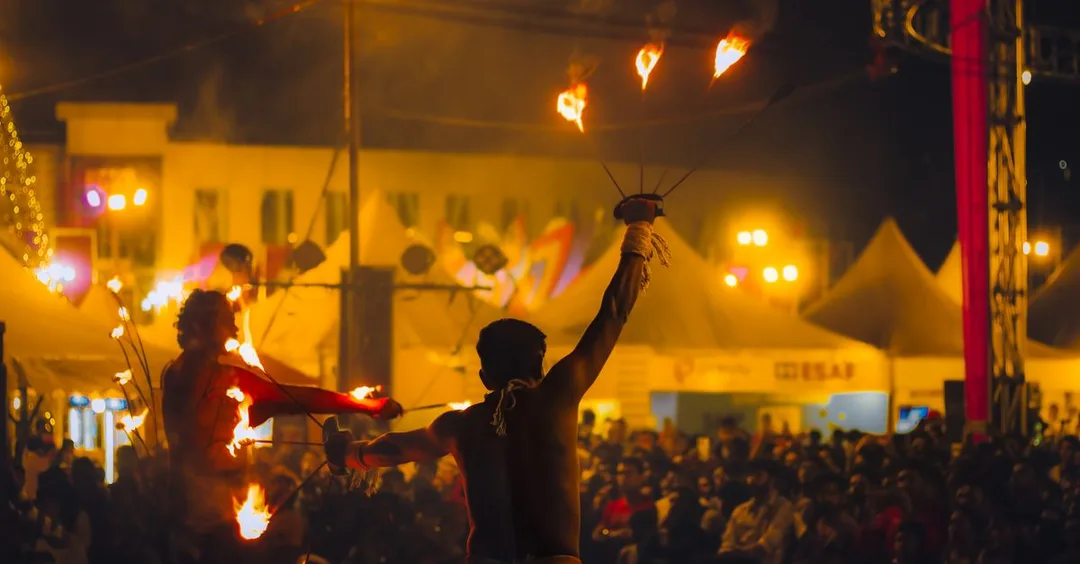
Imagine waking up at dawn in Kisama village, just 12 kilometres outside Kohima, with wood smoke drifting through cold mountain air and the distant sound of log drums already beating. By the time you've had your morning chai, warriors in full ceremonial dress are gathering at the heritage village, their hornbill feather headdresses catching the pale winter light. Dozens of Naga tribes have come together in one place, each with their own language, songs, dances, and food. There is nothing else quite like this in India. Not Pushkar, not Onam, not Hornbill's closest rival. This is Nagaland's soul on full display, and December 2026 is your chance to be right in the middle of it.
Hornbill Festival Nagaland 2026 for Indian Travellers: What You Actually Get
The Hornbill Festival runs every year from December 1 to 10, and 2026 is shaping up to be especially big. The festival is named after the great Indian hornbill, a bird revered across Naga culture as a symbol of beauty and strength. It was launched in 2000 by the Nagaland government to celebrate and preserve the state's extraordinary tribal diversity. Today it draws visitors from across India and the world.
But here is what most travel blogs won't tell you. The festival is not a performance staged for tourists. The Angami, Ao, Konyak, Lotha, Sumi, Chakhesang, Chang, Khiamniungan, Zeliang, Phom, Rengma, Sangtam, and Yimchunger tribes all show up as themselves, competing in traditional games, showcasing crafts, performing music, and cooking food that most outsiders have never seen before. There are around 16 major Naga tribes, and almost all of them are represented at Kisama Heritage Village over those ten days.
For Indian travellers, there is a particular thrill here. This is your own country, but it feels like a completely different world. The architecture, the cuisine, the languages, the customs, even the climate all feel foreign in the best possible way. You are not flying to another country. You are discovering a part of India that most Indians have never properly seen.
The festival grounds at Kisama include a large outdoor arena for performances, rows of tribal morungs (traditional clan houses) where each tribe sets up their stall, a food court with Naga cuisine from across the state, a crafts bazaar, music stages running into the night, and a dedicated area for traditional sports like wrestling, archery, and spear throwing. The Incredible India portal has detailed information on the official schedule if you want to plan around specific performances.
Best Time to Visit (Month-by-Month, Honest)
December 1-10: The festival window itself. This is when you come. Temperatures in Kohima sit between 4°C and 16°C during the day, cold enough for layers but never brutal. Pack a proper jacket, a fleece, and comfortable walking shoes because you will cover a lot of ground on foot each day.
First weekend (Dec 1-3): The opening ceremony is spectacular and genuinely crowded. If you want to see the inaugural parade and the full gathering of all tribes, this is the time. Accommodation gets booked out months in advance, so plan early.
Mid-festival (Dec 4-7): This is the sweet spot. The initial rush thins slightly, the tribes have settled into their rhythm, and the spontaneous moments start happening. You are more likely to have an actual conversation with a Naga warrior who will happily explain the significance of his tattoos or his tribe's history. This is the window Safari Sutra Holidays recommends most strongly for travellers who want depth over spectacle.
Final days (Dec 8-10): The closing ceremony brings a second wave of energy. There is often a celebrity concert in the evenings, and the Naga heritage market is in full swing. Good for those who want the music scene alongside the culture.
Before December: Nagaland is genuinely beautiful in October and November. The hills are green, the weather is mild, and you can explore Kohima, Dimapur, and the countryside without crowds. But if the festival is your goal, there is no substitute for being there during the actual event.
Top Experiences You Can't Miss
The tribal morungs at Kisama
Each tribe builds a traditional morung at the heritage village, and walking through them is like flipping through the pages of an encyclopedia that somehow came alive. The Konyak morungs often display traditional tattooing artefacts and hunting trophies. The Ao tribe's morung has its own architectural style completely different from its neighbours. Spend at least a full morning just walking these, talking to the tribal representatives, and photographing the details.
The log drum ceremony
The log drum is central to Naga culture. These massive hollowed-out tree trunks produce a sound that travels across entire valleys. When multiple tribes play together during the ceremony, you feel it in your chest. No speaker system, no amplification, just the resonance of ancient wood and rhythm. It's one of those rare moments where you understand why some things have survived for centuries.
Traditional Naga food
This alone is worth the trip. Smoked pork with bamboo shoot is the standout dish, and yes, it tastes exactly as rich and smoky as it sounds. Anishi curry, made from dried yam leaves, has a depth of flavour that's unlike anything in mainstream Indian cooking. Axone, a fermented soybean condiment, divides first-timers, but by your second day you'll be putting it on everything. The food stalls stay open late, and the variety across tribes is genuinely impressive.
The warrior dances
Each tribe performs their traditional war dance with full regalia: spears, shields, woven shawls, jewellery made from bone, metal, and stone, and those iconic hornbill headdresses. The choreography varies completely by tribe. The Konyak headhunters' dance is particularly intense. The Zeliang women's group dances have a grace that's hard to put into words. You'll want good camera settings here because the colours and movement are exceptional.
Night concerts at the festival grounds
Every evening, the open-air stage hosts contemporary acts alongside traditional performers. Nagaland has a thriving music scene, particularly in rock and folk fusion. Bands from across the Northeast perform, and the crowd is young, enthusiastic, and welcoming. This is where the festival surprises people who came only expecting traditional culture.
Day trip to Kohima War Cemetery
About 12 kilometres from Kisama, the Kohima War Cemetery is one of the most moving war memorials in Asia. The Battle of Kohima in 1944 was a turning point in World War II. Rows of white headstones on a steep hillside, surrounded by quiet gardens, with the famous inscription: "When you go home, tell them of us and say, for your tomorrow, we gave our today." It takes about 90 minutes to walk through properly, and most visitors leave in silence.
Safari Sutra Package Options & Prices in INR
We keep our packages straightforward. Here is what's on offer for Hornbill Festival 2026.
Basic Explorer (5 nights, Kohima) - from INR 45,000 per person
Comfortable 3-star accommodation in Kohima, daily transfers to and from Kisama, festival entry tickets, a local guide for two days, and airport pickup and drop from Dimapur.
Festival Immersion (6 nights) - from INR 75,000 per person
This is our most popular package. Better-located boutique hotel or heritage stay in Kohima, daily guided access across all ten days of the festival, a dedicated local cultural expert who speaks the tribal languages, the Kohima War Cemetery visit, one guided village walk outside the festival grounds, and all meals on festival days from the tribal food stalls with your guide explaining what you're eating.
Premium Nagaland (8 nights) - from INR 1,20,000 per person
Everything in the Festival Immersion package plus pre-festival days exploring Dzukou Valley or Japfu Peak, a day trip to a traditional Naga village for a home-cooked lunch with a local family, premium accommodation throughout, and a private vehicle for all transfers.
Group & Family Package (10 nights, minimum 6 people) - from INR 90,000 per person
Designed for families or friend groups who want the complete experience without per-person premium pricing. Includes all festival access, two regional day trips, family-friendly accommodation, a dedicated group guide, and flexible meal options for those with dietary preferences.
Custom Itinerary - pricing on request
If none of the above fits, just tell us what you want. We've been building custom trips across India and the world for 12 years and have handled 15,000+ trips, so there's very little we can't put together. Plan Your Trip with us at Safari Sutra and we'll design something around your dates, budget, and travel style.
Getting There: Flights from India
Nagaland's main entry point is Dimapur Airport, which connects to Kolkata, Delhi, and a few other cities. The most common routing for travellers from Mumbai or Delhi is via Kolkata or Guwahati.
From Delhi: Fly IndiGo or Air India to Dimapur, usually with a stop in Kolkata. Total travel time is around 5 to 6 hours including the layover. Expect fares of INR 8,000 to INR 15,000 return, depending on how early you book. December is high season, so book at least four months ahead.
From Mumbai: Similar routing via Kolkata. Dimapur is roughly 6 to 7 hours door to door. Fares are comparable.
From Kolkata: The most convenient origin for Northeast travel. Direct flights to Dimapur run in about an hour. Budget INR 4,000 to INR 8,000 return.
From Dimapur airport, Kohima is about 3 hours by road. The drive is scenic once you're past the outskirts of Dimapur, with the hills rising as you approach Kohima. Our packages include this transfer, so you don't need to worry about arranging it on arrival.
Alternatively, you can fly into Guwahati and take a road journey into Nagaland. This adds time but lets you see a bit more of the Northeast en route, which is worth considering if you have a day to spare.
Visa, Vaccinations & Practical Prep
Inner Line Permit (ILP)
This is the most important thing to sort before you go. Nagaland requires Indian citizens to carry an Inner Line Permit. It is easy to obtain online through the Nagaland government portal, or at permit offices in Dimapur, Kohima, and a few other locations. During the festival, there are usually dedicated ILP counters set up for visitors. Cost is minimal, around INR 120 for Indian nationals for a 15-day permit. Foreign nationals have a separate process through the Nagaland government.
Get your ILP sorted before you land. We handle this as part of our documentation support for all Safari Sutra Holidays clients, so you won't need to figure it out alone.
Vaccinations
No specific vaccinations are mandated for travel to Nagaland. Standard hygiene precautions apply. If you are extending your Northeast trip to include parts of rural Assam or Arunachal, check with your doctor about hepatitis A and typhoid vaccines, as you would for any rural India travel.
What to pack
December in Kohima is genuinely cold. Nights drop to 4°C or below. A down jacket or heavy wool layer is essential. Comfortable walking shoes are a must because Kisama Heritage Village involves a lot of uneven ground and hillside walking. A small daypack is useful for carrying water, snacks, and a camera. Power banks are handy since you'll be out all day.
Cash and connectivity
ATMs exist in Kohima but can run dry during the festival when footfall spikes. Carry enough cash for food and shopping at the bazaar. Mobile data works on Jio and Airtel in most parts of Kohima, though it can be patchy at the festival grounds. Download offline maps before you go.
Respectful behaviour
The tribes at Hornbill are proud custodians of their culture. Ask before photographing people up close. Don't touch ceremonial objects or costumes without being invited. If someone offers you food or drink, accept graciously. These are small things that make a big difference.
Frequently Asked Questions
Q: Is Hornbill Festival safe for solo travellers or women travelling alone?
Nagaland is consistently rated among the safer states in India, and the festival itself is very well organised with security personnel throughout the grounds. Solo women travellers do visit and have positive experiences. The local population is generally friendly and respectful of visitors. That said, standard common sense applies: stay with the crowds after dark, keep your group informed of your whereabouts, and use reliable transport rather than unknown vehicles.
Q: I've never tried Naga food. Will I find things I can eat?
Absolutely. The food stalls at Kisama cater to a wide range of tastes. If you eat pork, you'll be in heaven. If you're vegetarian, options are more limited but not impossible. Rice-based dishes, local greens, and some vegetarian preparations are available. If you have strict dietary requirements, let us know when booking and we'll plan your meal arrangements accordingly.
Q: How far in advance should I book for Hornbill Festival 2026?
For the first week of December specifically, accommodation in Kohima gets booked out fast. Good hotels and homestays start filling up by June or July of the same year. We'd recommend locking in your plans by April or May 2026 at the latest to get good options. The festival itself does not require advance ticketing in most cases, but entry processes change year to year, so check closer to the date.
Q: Is this a good trip to take with children?
Yes, with some caveats. Older children (10 and above) tend to find the festival fascinating. The performances are visually dramatic, the food is an adventure, and the cultural exposure is genuinely educational. For very young children, the crowd levels on peak days and the cold can be challenging. Families with toddlers might prefer the mid-festival days when it's slightly less packed.
Q: Can I extend my trip to see more of the Northeast?
This is something we actively encourage. Nagaland pairs beautifully with Meghalaya (living root bridges, clean river villages, stunning hills), Assam (Kaziranga wildlife, Majuli island, Brahmaputra river), and Arunachal Pradesh (Tawang monastery, tribal villages). If you're coming all the way from Mumbai or Delhi, it makes sense to spend at least 12 to 15 days exploring the region. We offer combined Northeast itineraries and can build one around the festival dates. And if you're thinking about how else we can surprise you with India's lesser-known corners, our Morocco Tour Packages show you the kind of depth we bring to international cultural experiences too.
Q: Do I need a guide, or can I explore Kisama independently?
You can walk around independently, and many people do. But having a knowledgeable local guide genuinely changes the experience. After 12 years and 15,000+ trips, we've found the biggest difference between an average trip and a great one is guide quality. Someone who can tell you which tribe's dance you're watching, translate a conversation with a Konyak elder, or explain the significance of a specific pattern on a shawl takes you from tourist to participant. These are things we get right for every Safari Sutra client.
Q: What is the best way to handle the Kohima-Kisama commute during the festival?
The road between Kohima town and Kisama village gets congested during peak festival hours, typically 10 AM to 2 PM. Our packages include timed transfers that work around the traffic. If you're arranging your own transport, go early (leave by 8:30 AM) and plan to return either before noon or after 4 PM. Shared cabs and local taxis run the route regularly.
Plan Your Hornbill Festival Nagaland 2026 Trip with Safari Sutra
Hornbill is not a festival you observe from a distance. It pulls you in. By day two, you'll know the difference between an Angami dance and a Sumi one, you'll have tried smoked pork at least three times, and you'll probably have exchanged numbers with a Naga family who insisted you come back.
The Northeast is one of those parts of India that stays with people. It is green, dramatic, culturally rich, and genuinely warm in the way that places with real pride in their identity tend to be. It is also a corner of the country that deserves more attention from Indian travellers who often jump on a flight to Thailand or Dubai without realising what is sitting in their own backyard.
If you're the kind of traveller who wants something real, something that adds a new layer to how you understand India, this is your trip.
Ready to start planning? Contact Safari Sutra Holidays and we'll handle everything.

Safari Sutra Team
Travel curators with 13 years of experience planning Indian and international holidays — from safari adventures to island escapes.
View All Posts