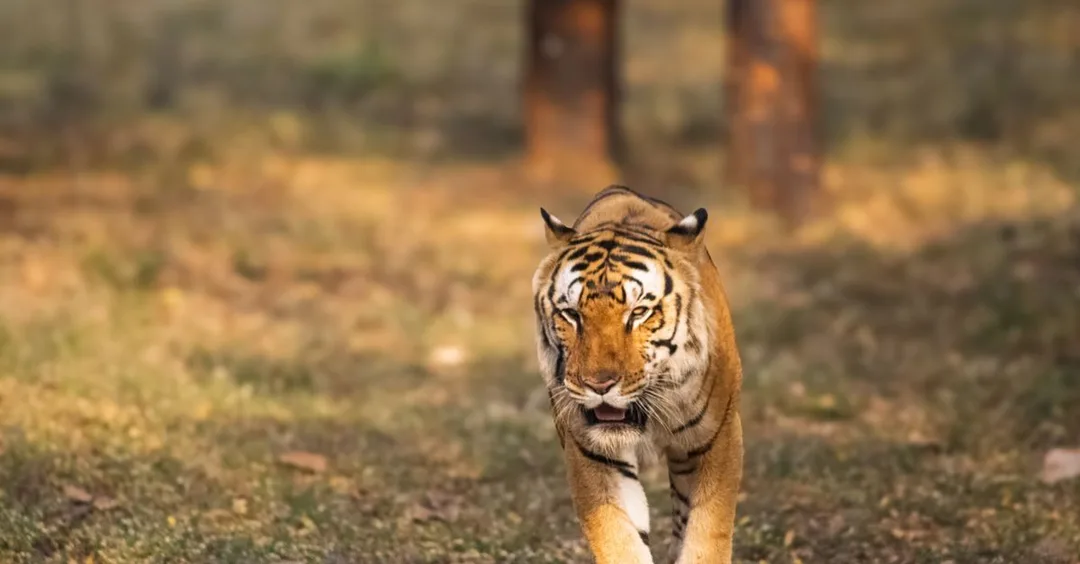
India is one of the last places on earth where you can watch a tiger cross a forest road at dawn, hear elephants trumpet through tall grass at dusk, and then sleep in a luxury tent with a cold Kingfisher in your hand. Yet most Indian travellers still haven't seen their own country's wildlife properly. They've done Ranthambore once, maybe, from a government jeep with twelve other people. That's not the real thing.
In This Guide
- 1. Ranthambore National Park, Rajasthan
- 2. Bandhavgarh National Park, Madhya Pradesh
- 3. Kanha National Park, Madhya Pradesh
- 4. Pench National Park, Madhya Pradesh and Maharashtra
- 5. Tadoba Andhari Tiger Reserve, Maharashtra
- 6. Jim Corbett National Park, Uttarakhand
- 7. Kaziranga National Park, Assam
- 8. Sundarban Tiger Reserve, West Bengal
- 9. Nagarhole (Rajiv Gandhi) National Park, Karnataka
- 10. Periyar Tiger Reserve, Kerala
- 11. Satpura Tiger Reserve, Madhya Pradesh
- 12. Gir National Park, Gujarat
- How to See All of These in One Trip
- What This Trip Costs from India
- Frequently Asked Questions
- Ready to Tick These Off Your List?
This list exists to change that. Whether you're planning a long weekend, a winter family trip, or a proper wildlife circuit across multiple zones, these are the parks that actually deliver in 2026 - the ones where the sightings are consistent, the lodges are worth the money, and the experience goes well beyond ticking a tiger off a list. Explore All Destinations on the Safari Sutra website to see how these parks fit into a broader India itinerary.
1. Ranthambore National Park, Rajasthan
Ranthambore is where most Indian wildlife travellers start, and for good reason. The park sits in a dramatic landscape of dry deciduous forest, ancient ruins, and rocky ridges that feel like a film set. Tigers here are unusually bold. They've grown up around vehicles and don't particularly mind being watched, which means sightings are often long, close, and spectacular.
The park is divided into zones, and this matters a lot. Zones 1 to 5 cover the core area around Ranthambore Fort and Padam Talao lake - these are the money zones. Zones 6 to 10 are buffer areas with lower entry fees but genuinely lower tiger sighting rates. Book the core zones, always.
October to April is the best season. December and January mornings are cold enough for a jacket, which keeps the tigers active longer. Drive out from Delhi or fly into Jaipur and reach Ranthambore in about two and a half hours by road.
2. Bandhavgarh National Park, Madhya Pradesh
If tiger density is your measure, Bandhavgarh wins. It has one of the highest tiger-to-area ratios of any park in India, and the forest is compact enough that guides know exactly which individuals are active in which range. The result is a park where a serious wildlife photographer can spend four days and come away with material that would take weeks to capture elsewhere.
Beyond tigers, the white-rumped vulture colony here is remarkable - one of the few healthy breeding populations left in central India. The ancient fort ruins inside the park add a strange, atmospheric quality to the landscape. You're watching wildlife move through history.
Fly into Jabalpur or Umaria and transfer to one of the excellent lodges along the park boundary. This is also one of the parks where staying at the right property makes a real difference - some operators have naturalists on-site who brief you the night before each drive, which completely changes how much you understand and notice.
3. Kanha National Park, Madhya Pradesh
Kanha is where Rudyard Kipling's imagination ran free. The real forest, though, is better than the book. Wide sal and bamboo meadows, called maidans, open up between forest blocks, and these clearings are where you'll see barasingha (swamp deer), which exist in significant numbers here and almost nowhere else. Kanha is credited with saving this species from extinction.
Tigers here tend to use the meadows at dawn, and a good drive through the Kanha or Kisli zones in the golden hour light is something you'll want a decent camera for. The park is large, which means less crowding compared to Bandhavgarh, and the lodges are spread out enough that you rarely feel like you're sharing the experience with a hundred other people.
The best time to visit is February to May. May sounds counterintuitive - it's hot - but the water sources dry up, wildlife concentrates, and sighting rates go through the roof.
4. Pench National Park, Madhya Pradesh and Maharashtra
Pench straddles the MP-Maharashtra border and deserves more attention than it gets. It's quieter than Kanha and Bandhavgarh, which means if you visit between January and April, you'll often have drives that feel genuinely private. Tiger sightings here are less guaranteed than in Bandhavgarh, but the overall wildlife experience - leopard, wild dog, gaur, sloth bear, a stunning variety of birds - is consistently rewarding.
The open riverine forest along the Pench River is beautiful in a calm, unhurried way. This is a park for people who want to sit with the forest, not rush through it. If you're combining it with Kanha or Tadoba, add two nights here and you'll be glad you did.
5. Tadoba Andhari Tiger Reserve, Maharashtra
Tadoba is Maharashtra's answer to Ranthambore - bold tigers, high sighting rates, and a growing lodge scene that now includes some genuinely excellent properties. Because it's the closest major tiger reserve to Mumbai (about seven to eight hours by road, or fly to Nagpur and drive three hours), it's become the go-to option for Mumbai-based travellers who want a proper wildlife fix without a complex itinerary.
The Tadoba lake at the centre of the park is a focal point for wildlife. Tigers come to drink, mugger crocodiles line the banks, and spotted deer graze the edges while painted storks pick through the shallows. A morning game drive that starts at the lake and works through the teak forest is as complete a wildlife experience as you'll find in peninsular India.
6. Jim Corbett National Park, Uttarakhand
India's oldest national park, established in 1936, still holds its own. Corbett is also one of the few tiger reserves where you can stay inside the park boundary - at the famous Dhikala Forest Rest House - which gives you access to the grasslands at a time when day visitors have already left. If you can get a Dhikala booking, prioritise it above everything else here.
The Ramganga reservoir runs through the park and creates an ecosystem that attracts an enormous variety of birdlife alongside the usual tigers, elephants, and leopards. It's a two-hour drive from Ramnagar, which is well connected by train from Delhi. This is a genuinely excellent weekend option for Delhi travellers.
7. Kaziranga National Park, Assam
If you haven't seen a one-horned rhinoceros in the wild, Kaziranga is non-negotiable. The park holds more than 2,600 rhinos, which is roughly 70% of the world's entire population, and they're everywhere - grazing the short grasslands beside the highway, cooling off in the marshes, occasionally wandering across the road. It's one of those sights that hits differently in person than in any documentary.
Kaziranga also has a healthy elephant population and is a stronghold for wild buffalo. The park is best accessed from Guwahati - fly in from any major Indian city and reach the park in about four hours by road. The eastern zone, called Agoratoli, is the quietest and best for rhino photography. February and March are ideal before the monsoon floods roll in.
The Incredible India tourism board has good information on Kaziranga permits and forest department bookings, which are required in advance.
8. Sundarban Tiger Reserve, West Bengal
Sundarban is unlike any other park on this list. There are no game drives. You navigate the mangrove delta by boat, watching for tigers moving along the muddy creek banks, crocodiles basking in the sun, and Irrawaddy dolphins surfacing beside you. It's wild in a way that most Indian parks aren't - genuinely, almost uncomfortably wild.
Tiger sightings here are unpredictable, which is part of the point. You're watching an apex predator in an environment where it is genuinely in charge. The boat-based experience also means this works well for travellers who aren't up for early morning jeep drives. Fly into Kolkata and transfer to the delta; most trips run two to three nights on a houseboat.
9. Nagarhole (Rajiv Gandhi) National Park, Karnataka
Nagarhole and its adjacent Kabini reservoir create one of south India's finest wildlife corridors. The big draw is the elephant gatherings at Kabini during summer, when hundreds of elephants come to drink and bathe in the reservoir, and sometimes cross it in formation at dusk. It's a scene that genuinely stops you mid-sentence.
Leopard sightings are also excellent here, better than almost anywhere in the country because the dry forest edges near the reservoir give cats fewer places to hide. Fly into Bangalore or Mysore and reach Kabini in about three hours. The lodges on the Kabini riverbank are some of the most atmospheric in India - worth booking well in advance for the October to March season.
10. Periyar Tiger Reserve, Kerala
Periyar is the wild card on this list. It's not primarily a tiger park in the sense that your entire trip revolves around a sighting. Instead, it offers something different: a boat ride across the Periyar Lake inside the reserve, surrounded by forest, with elephants and bison coming down to the water's edge and otters playing in the shallows.
The forest here is evergreen and wet, which means birding is exceptional year-round. The surrounding Cardamom Hills add a sensory layer that other parks don't have - the air smells of spice and rain, the tea estates blur into the treeline, and the whole experience feels distinctly Keralan. Good for families, good for people who want wildlife alongside landscape.
11. Satpura Tiger Reserve, Madhya Pradesh
Satpura is where serious wildlife travellers go when they want something off the standard circuit. The park allows walking safaris alongside jeep drives, which is rare and genuinely changes the experience. Walking through the sal forest at dawn with a naturalist, reading animal tracks in the mud and stopping to listen to the forest, is a completely different relationship with the landscape.
Tiger sightings here are less predictable than at Bandhavgarh or Ranthambore, but leopard, sloth bear, wolf, and wild dog sightings more than compensate. The rugged Denwa basin is especially beautiful. Fly into Bhopal and drive three hours to reach the park.
12. Gir National Park, Gujarat
The last place on earth where you can see Asiatic lions in the wild. That fact alone makes Gir worth the trip. These lions are genetically distinct from their African cousins, slightly smaller with a distinct belly fold, and they live in a dry, scrubby forest that feels nothing like the Serengeti. You'll hear them before you see them - the call carries an enormous distance in the early morning quiet.
Gir is best combined with the Sasan Gir village experience and a side trip to the Gir Interpretation Zone. Fly into Rajkot or take the overnight train from Ahmedabad. The best time to visit is December to March.
How to See All of These in One Trip
You can't do all twelve in one go - that would be a logistics marathon, not a holiday. But you can build smart circuits.
The Central India Circuit (12-14 nights): Ranthambore plus Bandhavgarh plus Kanha, with Pench as an optional add-on. This works well October through March and covers the classic tiger heartland.
The Northeast + South Circuit (10-12 nights): Kaziranga for rhinos and then fly south to Kabini for elephants and leopards, finishing in Periyar. Genuinely varied and satisfying.
The Weekend Escapes: Corbett from Delhi, Tadoba from Mumbai, Nagarhole from Bangalore. All within a short flight or drive, all worth two or three nights.
The key is not to rush. Two or three nights per park gives you four to six game drives, which is when the magic actually happens. One night anywhere is barely a taster.
What This Trip Costs from India
Wildlife trips in India range widely depending on the lodge and season. Here's an honest breakdown.
Budget range: Rs. 8,000 to Rs. 12,000 per person per night at mid-range forest lodges with meals and two game drives included. Corbett and Ranthambore have solid options in this bracket.
Premium range: Rs. 18,000 to Rs. 35,000 per person per night at properties like Evolve Back Kabini, Sher Bagh in Ranthambore, or Kings Lodge in Bandhavgarh. These include private naturalists, limited game drives, and an overall step up in experience that is noticeable.
A 7-night Central India circuit (Ranthambore plus Bandhavgarh, premium lodges, flights from Mumbai or Delhi, park fees included) typically runs Rs. 1.2 to 1.8 lakhs per person depending on the property and season. That's roughly the cost of a mid-range international holiday, but the sightings can genuinely match anything you'd see abroad.
Park entry fees are separate and vary by reserve, running from Rs. 200 to Rs. 600 per person for Indian nationals, with jeep and guide costs on top.
After 12 years and 15,000+ trips, the Safari Sutra Holidays team has found that the biggest difference between an average wildlife trip and a genuinely great one comes down to two things: guide quality and game drive timing. The guide who knows this forest, who recognises individual tigers by pugmark, who positions the jeep before the action happens rather than after - that person changes everything. We make sure every Safari Sutra client has exactly that.
Frequently Asked Questions
Q: Which is the best park for a first-time wildlife traveller in India?
Ranthambore or Tadoba are the two strongest choices for beginners. Both have high tiger sighting rates, well-established lodge ecosystems, and are easy to reach from Delhi and Mumbai respectively. Ranthambore's dramatic backdrop also makes the whole experience feel extra cinematic.
Q: Can I visit these parks with kids?
Yes, and it's often even more impactful for children than adults. Most parks allow children aged five and above on game drives. Kabini and Periyar are particularly good for families because the boat-based elements add variety. Jim Corbett is also very family-friendly with a range of activity options.
Q: What is the best season for wildlife sightings across India?
February to May is peak season for sightings across most central and north Indian parks. The dry heat concentrates wildlife around water sources and strips the vegetation, making animals easier to spot. October to January is more comfortable temperature-wise and still very good. Most parks close during the monsoon (June to September), though a few, like Kabini, remain partially open.
Q: Do I need to book game drives in advance?
For popular parks like Ranthambore, Bandhavgarh, and Corbett, advance booking for forest department jeeps is essential, especially for peak zones during peak months. The booking windows open 90 to 120 days in advance and core zone slots fill up fast. Staying at a good lodge that handles your bookings for you removes this headache entirely.
Q: Is wildlife tourism in India sustainable and ethical?
India's Project Tiger programme, launched in 1973, has genuinely worked. Tiger numbers have more than doubled since the low point in the early 2000s. The forest department strictly controls vehicle numbers per zone, and the best lodges actively contribute to local community employment and anti-poaching efforts. Visiting a park is one of the most direct ways to support its conservation. The Incredible India portal also lists official responsible tourism guidelines for each reserve.
Q: How is wildlife tourism in India different from an African safari?
The forest density is much higher, which means sightings require patience and sharp eyes rather than scanning open plains. But when you find a tiger in Indian forest, the encounter is often closer, more intense, and more visceral than anything on an open grassland. India also offers extraordinary diversity - rhinos, lions, elephants, and tigers all in one country, all in genuinely wild habitats.
Q: Can Safari Sutra Holidays handle the full trip including flights and hotels?
Yes. Safari Sutra handles everything from flight bookings and park permit applications to lodge reservations and private transfers. You don't need to chase five different vendors. Plan your wildlife trip with Safari Sutra and get a single itinerary that holds together properly.
Ready to Tick These Off Your List?
Ready to Plan Your Trip?
Safari Sutra Holidays — 13 years, 15,000+ trips, zero cookie-cutter itineraries.
Get Your Free Custom Quote →+91 9860415774 | hello@thesafarisutra.com

Safari Sutra Team
Travel curators with 13 years of experience planning Indian and international holidays — from safari adventures to island escapes.
View All Posts