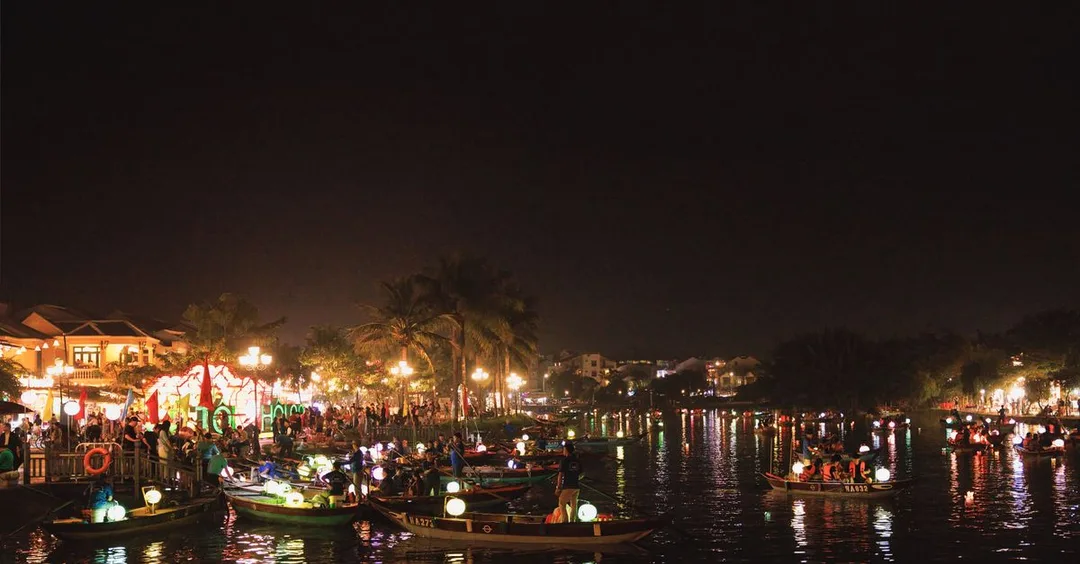
Picture this: it's 6pm, the light is going golden, and you're standing on a wooden bridge above a slow canal. On either side, silk lanterns in red, yellow, and orange are starting to glow as shopkeepers light them one by one. The smell of white rose dumplings drifts from a kitchen somewhere nearby. Motorbikes are conspicuously absent. Someone is playing a dan bau string instrument two streets away. And you're thinking, yaar, this is exactly what travel is supposed to feel like.
In This Guide
- Hoi An Vietnam for Indian Travellers: What You Actually Get
- Best Time to Visit (Month-by-Month, Honest)
- Top Experiences You Can't Miss
- Safari Sutra Package Options and Prices in INR
- Getting There: Flights from India
- Visa, Vaccinations and Practical Prep
- Frequently Asked Questions
- Plan Your Hoi An Vietnam Trip with Safari Sutra
That's Hoi An. No hype, no exaggeration. Just one of those places that actually delivers.
Hoi An Vietnam for Indian Travellers: What You Actually Get
Hoi An is a UNESCO World Heritage-listed ancient town on Vietnam's central coast, about 30km south of Da Nang. But the label "ancient town" doesn't quite capture it. This is a living, breathing, beautifully preserved trading port that saw Chinese, Japanese, and European merchants pass through for centuries, and somehow managed to hold onto all of it.
For Indian travellers especially, Hoi An hits differently. It's photogenic without being performative. It's cultural without being overwhelming. And it sits right next to An Bang Beach and Cua Dai Beach, so you can do a heritage morning and a beach afternoon without getting on another flight.
The Ancient Town itself is compact enough to walk in an afternoon, but rich enough to keep you busy for two or three days. The 400-year-old Japanese Covered Bridge is the postcard image, but the real magic is in the side streets: tailors who can make a suit or a dress in 24 hours, open-fronted restaurants with plastic stools, night markets where everything costs less than you'd expect, and lantern shops where you can pick your colour and hang one over the canal.
For Indian travellers looking at Vietnam tour packages that go beyond beaches, Hoi An is the stop that tends to produce the most photos, the most food memories, and the loudest "we have to come back."
The food alone is reason enough. Hoi An has its own dishes that you won't find elsewhere in Vietnam: cao lau (thick noodles in a smoky broth, made only with water from a specific local well), white rose dumplings (look up steamed prawn dumplings shaped like flowers), and banh mi from Phuong's on Phan Chau Trinh Street, which some people call the best banh mi in the world. They might be right.
Best Time to Visit (Month-by-Month, Honest)
Hoi An's central Vietnam location means it has its own weather rhythm, different from Hanoi in the north or Ho Chi Minh City in the south. Get this wrong and you'll be watching the lanterns through a rain-streaked window.
February to August is the best window for Hoi An. Dry skies, warm temperatures around 28-32°C, and the kind of light that makes every photo look edited. March to May is particularly good: fewer crowds than peak European holiday season, pleasant heat, and the sea is calm enough for swimming.
September to November is typhoon season for central Vietnam. This is not a risk worth taking. Flooding in the Ancient Town is a real phenomenon, and some years the water level rises high enough to close the lower streets entirely. It's atmospheric in a way, but not what you're booking a trip for.
December and January bring cooler, mistier conditions. Not unpleasant, but pack a layer for evenings. If your dates fall here, the north (Hanoi, Ha Long Bay) actually has better conditions around this time.
The short answer for most Indian travellers flying from Delhi or Mumbai: plan Hoi An between March and June for the best combination of weather, crowd levels, and value. You can check the Vietnam Tourism official site for real-time weather and festival calendars before you book.
Top Experiences You Can't Miss
Walk the Ancient Town at dusk. Not at noon. The golden hour between 5pm and 7pm is when Hoi An becomes itself. Get a table at one of the canal-facing restaurants, order a bia hoi (local draught beer, costs almost nothing), and just watch the lanterns come on.
Get something made by a tailor. This is not a tourist gimmick. Hoi An has hundreds of tailors, and the good ones are genuinely skilled. A well-fitted linen shirt or a kurta-style Vietnamese tunic can be made in 24 to 48 hours. Yung Tailors and Bebe Tailors are well-regarded, but walk around and look at sample work before you commit. Budget around $30-60 USD for a well-made garment.
Cycle through the rice paddies. Rent a bicycle (about 50,000 VND a day, roughly ₹160) and head out of town toward Tra Que vegetable village or along the Thu Bon River. The flat terrain is easy, the scenery is genuinely gorgeous, and you'll feel like you've earned your lunch.
Take a cooking class. Morning market visit, boat ride to a farm, cooking lesson: this half-day format is a Hoi An classic and works brilliantly for families and couples alike. You'll learn to make fresh spring rolls and a proper Vietnamese dipping sauce from scratch.
Day trip to My Son Sanctuary. About 40km from Hoi An, these are 4th to 14th-century Hindu-influenced Cham towers in a jungle valley. Yes, Hindu-influenced. For Indian travellers, the visual and spiritual echoes of Khmer and South Indian temple architecture here are genuinely moving. The site was heavily bombed during the Vietnam War, but what remains is still striking.
An Bang Beach. Fifteen minutes by bicycle or grab bike from the Ancient Town, An Bang is low-key, clean, and lined with laid-back beach bars. Order a fresh coconut, plant yourself in a rattan chair, and go absolutely nowhere for a few hours.
Safari Sutra Package Options and Prices in INR
A Vietnam trip with Hoi An included typically runs 6 to 8 nights, combining the north and central or south regions for the full range of the country. Here's how Safari Sutra Holidays structures it:
Vietnam Highlights: 6 Nights / 7 Days (Hanoi, Ha Long Bay, Hoi An)
Covers Hanoi's Old Quarter, an overnight Ha Long Bay cruise on a traditional junk boat, and 2 nights in Hoi An with guided Ancient Town walk and cooking class.
From approximately ₹75,000 per person (twin sharing, flights extra)
Central Vietnam Focus: 5 Nights / 6 Days (Da Nang, Hoi An, Hue)
Perfect if you've already seen Hanoi or prefer a slower pace. Includes the Golden Bridge at Ba Na Hills, 3 nights in Hoi An, and a day in Hue visiting the Imperial Citadel.
From approximately ₹65,000 per person (twin sharing, flights extra)
Vietnam Complete: 8 Nights / 9 Days (Hanoi, Ha Long, Hoi An, Ho Chi Minh City)
The full north-to-south run. Best for first-timers who want to see it all and won't be back again soon. Internal flights included between regions.
From approximately ₹95,000 per person (twin sharing, international flights extra)
Family Package: 7 Nights / 8 Days
Designed specifically around families with children. Slower pace, kid-friendly activities like lantern-making and cooking classes, beach time built in.
From approximately ₹85,000 per person (twin sharing, flights extra)
All packages include accommodation, transfers, most meals, and guided experiences. You can get in touch to customise based on group size, travel dates, and budget.
Getting There: Flights from India
Ready to Plan Your Trip?
Safari Sutra Holidays — 13 years, 15,000+ trips, zero cookie-cutter itineraries.
Get Your Free Custom Quote →+91 9860415774 | hello@thesafarisutra.com

Safari Sutra Team
Travel curators with 13 years of experience planning Indian and international holidays — from safari adventures to island escapes.
View All Posts