Mumbai is extraordinary. But if Mumbai is all you see of Maharashtra, you've missed about 90% of what this state is actually about.
In This Guide
- 1. Ajanta and Ellora Caves, Aurangabad
- 2. Lonar Crater Lake
- 3. Tadoba Andhari Tiger Reserve, Chandrapur
- 4. Matheran Hill Station
- 5. Raigad Fort
- 6. Konkan Coast: Dapoli and Harihareshwar
- 7. Nashik and the Wine Country
- 8. Pench Tiger Reserve
- 9. Alibag and the Coastal Forts
- 10. Wardha and Sevagram
- 11. Lonavala and Karla Caves (Done Properly)
- How to See All of These in One Trip
- What This Trip Costs from India
- Frequently Asked Questions
- Ready to Tick These Off Your List?
Maharashtra is India's second-largest state by area, and it holds a genuinely wild range of landscapes, history, and food cultures, from fortress-topped Sahyadri cliffs to ancient rock-cut caves to the flat, hot plains of Vidarbha where tigers still roam. Most Indian travellers from Delhi or Bengaluru fly into Mumbai and stay there. The ones who venture further come back with the better stories.
This list is built for 2026 travellers who want to go deeper. By the end, you'll know exactly which parts of Maharashtra are worth the detour, how to string them together logically, and what to budget before you book.
1. Ajanta and Ellora Caves, Aurangabad
These two cave complexes are among the most significant archaeological sites in the world, and most Indians have still never visited. That's a genuine shame.
Ajanta is older, carved between the 2nd century BCE and 5th century CE, and it's the paintings that stop you cold. Jataka tales unfold across cave walls in pigments made from minerals, plant matter, and even lapis lazuli imported from Afghanistan. Stand inside Cave 1 in the right light and the bodhisattva Padmapani seems to breathe. Ellora is different in character, bigger in ambition, with 34 caves spanning Buddhist, Hindu, and Jain traditions. The Kailasa Temple at Ellora, a monolithic structure carved downward into a single basalt cliff, is not a temple built from stone. It is the stone, excavated by hand over centuries.
Fly into Aurangabad (now officially renamed Chhatrapati Sambhajinagar) from Mumbai in under an hour, or take the overnight train from Pune. Give yourself two full days minimum, one per complex, and go early to beat the heat and the crowds. The Incredible India tourism portal has good entry details and timings if you want to plan the logistics.
2. Lonar Crater Lake
Most people have never heard of Lonar, which is exactly why it deserves to be on this list. About 50,000 years ago, a meteorite hit the Buldhana district of Maharashtra and left behind a saltwater crater lake that's still there, still alkaline, and still surrounded by some of the oldest temples in the Deccan.
The lake changes colour with the seasons, from blue-green to pink to red depending on the algae and salinity levels. You walk the crater rim through forest, past ancient Vishnu and Shiva temples that pre-date the medieval period, listening to absolutely nothing except birds. The village nearby is small, the tourist infrastructure is minimal, and that's completely the point.
Getting here requires effort: fly to Aurangabad and drive about two hours. But if you're already doing Ajanta-Ellora, Lonar makes a logical extension. It's the kind of place where you realise Maharashtra has barely scratched the surface of its own tourism potential.
3. Tadoba Andhari Tiger Reserve, Chandrapur
This is Maharashtra's answer to Ranthambhore, except with better sightings and fewer tourists. Tadoba consistently ranks among India's top three tiger reserves for big cat visibility, and for good reason: the landscape is dry deciduous forest with relatively open teak corridors that make spotting both tigers and leopards far easier than in dense jungle terrain.
The Tadoba tigers are habituated to jeeps, which means they go about their business even with vehicles nearby. You'll hear alarm calls from sambar and langurs, follow pug marks through the dust, and then suddenly there's a tiger in the dry grass, not hiding, just existing. Mornings in Tadoba are especially raw: mist over the lake at Tadoba village, the smell of dried teak, and that particular silence before the jungle wakes up.
After 12 years and 15,000+ trips, we've found the biggest difference between an average wildlife trip and a great one is guide quality and game drive timing. These are things we get right for every Safari Sutra client. In Tadoba especially, a knowledgeable naturalist guide who knows tiger territories makes the difference between a sighting and just a drive.
4. Matheran Hill Station
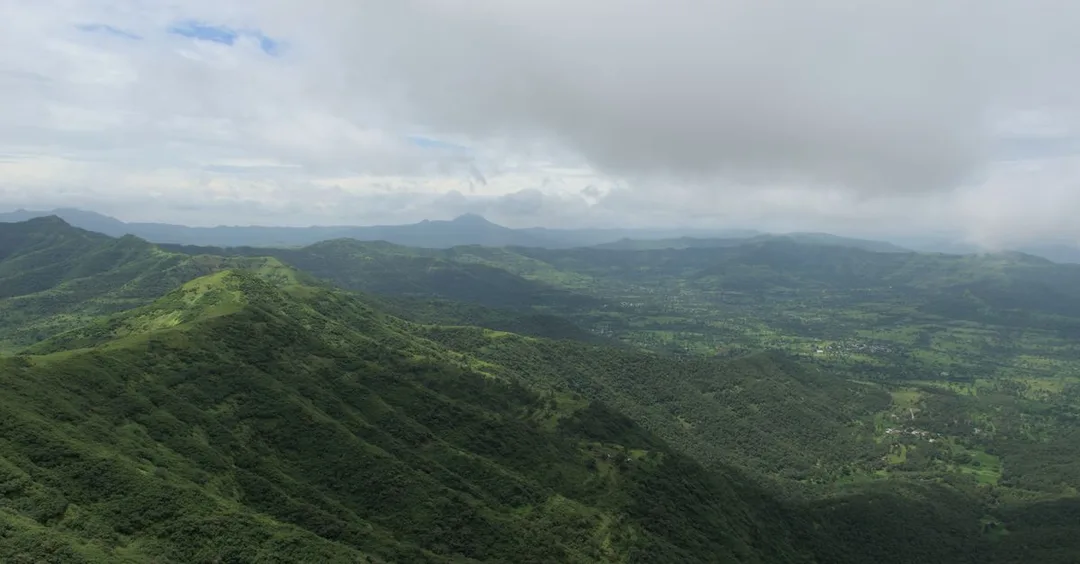
Matheran sits about 800 metres above sea level in the Sahyadri range and has a rule that makes it unlike almost every other hill station in India: no motor vehicles allowed inside. You arrive at Neral station at the base and either take the toy train up (narrow gauge, slow, beautiful), hire a horse, or walk. Then for however long you're there, it's footpaths and silence and the smell of red earth after rain.
The viewpoints, Charlotte Lake, Panorama Point, Echo Point, all look out over the Konkan plains and on a clear day you can see the Arabian Sea. The town itself is small enough to walk end to end in 20 minutes, with small hotels, chaat stalls, and a pace of life that feels like it hasn't moved since 1900. This is a 2-3 night escape rather than a full holiday, but it's genuinely restorative in a way that Lonavala or Mahabaleshwar, both more commercialised, currently aren't.
5. Raigad Fort
Raigad is where Chhatrapati Shivaji Maharaj was crowned in 1674, and it remains one of the most powerfully atmospheric forts in the Sahyadri range. The fort sits 820 metres above sea level on a steep basalt cliff that was genuinely impregnable in its time.
You take a ropeway up (or trek, if you're committed) and emerge onto a plateau with the ruins of a palace, market, gates, and the samadhi of Shivaji himself. The scale only hits you when you stand at the Takmak Tok cliff edge and look straight down. Maharashtra has hundreds of forts, but Raigad carries a particular historical weight that even non-history people feel. It's accessible from Pune in about three hours and pairs well with the Konkan coast below.
6. Konkan Coast: Dapoli and Harihareshwar
The Konkan coastline south of Mumbai has been a favourite of Pune and Mumbai families for decades, but it's been quietly discovered by premium travellers in the last few years. Dapoli and Harihareshwar are the sweet spot, before the infrastructure gets too commercialised.
The beaches here are different from Goa. They're narrower, wilder, often empty on weekdays, backed by coconut palms and small fishing villages. You eat fresh surmai thali at a local joint, watch catamarans pull in before dawn, and sleep to the sound of sea wind. The Harihareshwar temple sits right on a rocky promontory with waves crashing below it on three sides. The landscape is dramatic in a quiet way. A good boutique property here costs significantly less than a Goa beach resort, and the experience is actually more local and honest.
7. Nashik and the Wine Country
Nashik surprised a lot of people over the last decade by becoming India's most serious wine-producing region. Sula Vineyards is the headline name but there are now dozens of estates producing good Sauvignon Blanc, Shiraz, and rosé across the Nashik plateau.
But the food and culture around Nashik are just as interesting. The ghats at Panchavati along the Godavari are genuinely atmospheric, especially in the early morning. The temple town vibe, the smell of marigolds and incense, the old lanes around Ram Kund: it's very different from the vineyards 20 minutes away, and both are worth your time. Nashik is also the gateway to the Sahyadri wine circuit, which now has proper wine resort accommodation, cycling routes, and harvest tours between October and February.
8. Pench Tiger Reserve
Pench straddles the Maharashtra-Madhya Pradesh border, and the Maharashtra side is often quieter and more affordable than the MP gates while offering the same forest. This is the jungle that inspired Kipling's The Jungle Book, and the wolf country around here still feels mythic at dusk.
The landscape is more varied than Tadoba: mixed teak and bamboo with a river running through, and prey density that keeps predators coming back. Leopards, wild dogs, sloth bears, and tigers are all realistic sightings here. If you want a wildlife experience that combines genuine naturalist learning with comfortable camp accommodation, Pench works very well for families, especially with older kids who can handle 6am game drives.
9. Alibag and the Coastal Forts
Alibag is only 90 minutes from Mumbai by ferry across the bay, and that proximity is both its advantage and its weakness. On weekends it gets loud. But the fortifications along this stretch of coast tell a story of Maratha naval power that most history books underplay.
Kolaba Fort sits in the sea just off Alibag beach and is accessible on foot during low tide. Murud-Janjira, further down the coast, is a fully intact island fort that the Maratha navy, the Mughals, the Portuguese, and the British all tried and failed to capture. Standing on the ferry approaching Janjira's massive walls rising straight from the water, you understand why. This is also excellent for a 2-night quick escape from Mumbai, where you combine a coastal drive, seafood, and real history without flying anywhere.
10. Wardha and Sevagram
For a certain kind of Indian traveller, Sevagram is deeply meaningful. This is where Mahatma Gandhi established his ashram in 1936 and lived until 1946. It's quiet, well-maintained, and absolutely unspectacular by tourist standards, which is entirely the point. Gandhi chose Wardha deliberately: far from major cities, in the cotton-farming heartland, close to the people whose lives he wanted to understand.
The ashram preserves his living quarters exactly as he left them. You walk through slowly. The village around it still grows cotton. There's a quality of stillness here that's hard to describe without sounding precious about it, but most visitors feel it. Wardha connects naturally to Nagpur and a Tadoba itinerary, adding a cultural-historical layer to what's otherwise a wildlife-focused journey through Vidarbha.
11. Lonavala and Karla Caves (Done Properly)
Lonavala gets a bad reputation because most people do it as a one-day Mumbai day trip: traffic, fudge shops, two viewpoints, and back. But done properly, with a couple of nights and some intent, it's actually worthwhile.
The Karla and Bhaja Buddhist caves near Lonavala are rock-cut monuments from the 2nd century BCE, smaller than Ajanta but easier to access and with an intimacy that bigger sites don't have. The Bhaja caves especially, perched on a cliff with carved dagobas and a monsoon waterfall nearby, are genuinely moving. The Sahyadri landscape around Lonavala during and just after monsoon (June to September) is as green and dramatic as anywhere in India. Stay at a property with actual forest views rather than the main road, and you'll leave with a very different impression.
How to See All of These in One Trip
Realistically, Maharashtra is too big to cover in one go. But here's how to think about building itineraries around clusters.
Western Maharashtra Circuit (7-9 nights): Mumbai as base, then Nashik (2 nights) heading northeast, across to Aurangabad for Ajanta-Ellora (3 nights) with a Lonar detour, and back via Pune with a night in Lonavala. This works as a road trip or a mix of trains and short drives.
Konkan and Coastal Circuit (5-7 nights): Mumbai to Alibag by ferry, road south through Murud-Janjira, Dapoli, Harihareshwar, with a night at Raigad fort on the way back. Best from October through February.
Vidarbha Wildlife Circuit (6-8 nights): Fly to Nagpur, drive to Tadoba (3-4 nights), then across to Pench (2 nights), with Wardha and Sevagram as a one-night add-on. This is the trip for serious wildlife and nature travellers.
Explore All Destinations at Safari Sutra if you want to see how these circuits pair with other India itineraries.
What This Trip Costs from India
Maharashtra is genuinely accessible across budget levels, and here's what premium travel here actually looks like.
Accommodation per night:
- Heritage homestays and boutique properties (Konkan, Nashik): Rs 4,000 to Rs 9,000 per room
- Premium wildlife lodges (Tadoba, Pench): Rs 15,000 to Rs 35,000 per person per night (includes safaris, meals)
- Comfortable mid-range city hotels (Aurangabad, Nashik): Rs 3,500 to Rs 7,000 per room
Travel within Maharashtra:
- Mumbai to Aurangabad by IndiGo or Air India: Rs 2,500 to Rs 6,000 one-way
- Mumbai to Nagpur (for Tadoba): Rs 3,000 to Rs 8,000 one-way
- Hired cab for road circuits: Rs 12,000 to Rs 18,000 per day for a comfortable vehicle
A 10-night Vidarbha and Western Maharashtra premium circuit for a couple, including flights, accommodation, safaris, and ground transport, typically runs between Rs 1.2 lakh and Rs 2.2 lakh depending on lodge choices. You can plan your trip with Safari Sutra to get a detailed quote built around your specific dates and preferences.
Frequently Asked Questions
Ready to Plan Your Trip?
Safari Sutra Holidays — 13 years, 15,000+ trips, zero cookie-cutter itineraries.
Get Your Free Custom Quote →+91 9860415774 | hello@thesafarisutra.com

Safari Sutra Team
Travel curators with 13 years of experience planning Indian and international holidays — from safari adventures to island escapes.
View All Posts