The train pulls into Jaipur Junction and the smell hits you first: marigold garlands, chai steam, and something faintly smoky from the bhutta sellers outside. You step onto the platform with your bag, and even before you've reached the exit, a man in a bright pink turban is loading luggage with the casual efficiency of someone who has done this ten thousand times. The city is already loud, golden, and completely itself. This is Rajasthan. It doesn't ease you in gently. It just begins.
Whether you're planning a quick 7-day getaway from Mumbai or a more relaxed 10-day loop through the royal heartland, this guide gives you the complete picture: what you'll do each day, what it costs, what to watch out for, and how to make every hour count.
Your Trip at a Glance
7-Day Rajasthan Itinerary from Mumbai
- Day 1: Fly Mumbai to Jaipur, arrive and explore the old city bazaars
- Day 2: Amer Fort, City Palace, Hawa Mahal, and an evening at Nahargarh
- Day 3: Drive to Ranthambore, evening game drive
- Day 4: Morning game drive in Ranthambore, drive to Agra by afternoon
- Day 5: Taj Mahal at sunrise, Agra Fort, drive or train back to Jaipur, fly home
Note: This 7-day version is tighter and works well for working professionals who can take one week off.
10-Day Rajasthan Itinerary from Mumbai
- Day 1: Fly Mumbai to Jaipur, check in, local orientation
- Day 2: Jaipur's palaces, forts, and markets
- Day 3: Drive to Pushkar, camel farms and lake walk
- Day 4: Drive to Jodhpur, blue city walk at dusk
- Day 5: Mehrangarh Fort, Jaswant Thada, and the spice market
- Day 6: Drive to Jaisalmer, golden hour at Sam Sand Dunes
- Day 7: Jaisalmer Fort, havelis, and a camel ride at sunset
- Day 8: Drive or train to Udaipur, arrive by evening
- Day 9: City Palace, Lake Pichola boat ride, Saheliyon ki Bari
- Day 10: Morning at leisure, fly Udaipur to Mumbai
Day-by-Day Breakdown
Day 1-2: Jaipur, Where the Trip Really Starts
Your flight from Mumbai to Jaipur takes just over an hour on most IndiGo or Air India Express services, and there are multiple daily options from both CSIA (Chhatrapati Shivaji Maharaj International Airport) and even from Pune if that's closer to you. Plan to land by noon so the afternoon is yours.
Jaipur's old city is built on a grid that Maharaja Jai Singh II designed in the 18th century, and it still works remarkably well as a walking neighbourhood. Your first afternoon is best spent without a strict plan: walk through Johari Bazaar, pick up some lac bangles, and find a rooftop cafe that overlooks the city. The light in Jaipur between 4pm and 6pm is genuinely special, that warm amber that makes even auto-rickshaws look like they belong in a painting.
Day 2 is your full Jaipur day. Start at Amer Fort before 8am if you can. It gets crowded by 10am and the difference is dramatic. Amer's Sheesh Mahal (Hall of Mirrors) is the kind of room where a single candle flame reflects into what looks like a thousand stars. After Amer, City Palace, Hawa Mahal from the outside (the inside is less interesting than the facade), and if you have energy left, Nahargarh Fort at sunset for a drink and a view over the entire Pink City. Dinner at Suvarna Mahal inside the Rambagh Palace if you're splurging, or Laxmi Misthan Bhandar in the old city if you want the real deal.
Day 3-4: Ranthambore, Tigers and Silence
The drive from Jaipur to Ranthambore takes about 3.5 hours. Go via Tonk and you'll pass through quiet Rajasthani countryside that most tourists never see: small dhabas, peacocks on the roadside, old step-wells that appear without warning. Book your seats well in advance for the jeep safaris here. The Incredible India tourism portal lists licensed safari operators, but your travel agent should handle bookings for you, especially for peak season.
Evening game drives at Ranthambore run from about 3:30pm to 6:30pm. The park is home to around 70-80 tigers and sightings are genuinely good compared to most Indian reserves. Zone 3 and Zone 4 are generally considered the most productive for tiger sightings, though the forest department allocates zones by lottery, so you can request but can't always control. Stay at Aman-i-Khas if budget allows, or Khem Villas for excellent hospitality without the five-star price tag.
Morning game drives start early, around 6am in cooler months. If you're doing the 7-day itinerary, you'll drive to Agra from Ranthambore on Day 4 afternoon. It's about a 4-hour drive and you'll arrive in time for a quiet dinner before the big sunrise next morning.
Day 5 (7-Day): Agra and Home
Taj Mahal at sunrise is non-negotiable. Yes, you've seen the photographs a thousand times. No, it doesn't prepare you for the real thing. The scale is the part that photographs don't capture: the way the main dome keeps revealing itself larger as you walk down the long garden path. Book your entry tickets online through the Archaeological Survey of India's portal in advance. Foreigners pay significantly more than Indian citizens, which matters if you're travelling with international guests.
After the Taj, Agra Fort is worth 90 minutes of your time. Skip Fatehpur Sikri if you're pressed for time on the 7-day version. You can take a cab to Agra Cantt station and catch a train back to Jaipur for your Mumbai flight, or some travellers prefer to fly directly from Agra (the airport has limited connectivity, so check current schedules).
Day 3: Pushkar, Small Town, Big Soul
Pushkar is 145 kilometres from Jaipur and a world away in energy. This is one of the few places in India with a Brahma temple, and the ghats around Pushkar Lake have a quiet spiritual rhythm that's impossible to fake. The town itself is tiny, walkable, and full of small guesthouses run by families who've been hosting travellers for decades.
The famous Pushkar Camel Fair happens every November around the Kartik Purnima full moon, and if your trip coincides with it, that's genuinely something to plan around. Thousands of camels, folk musicians, acrobats, and traders converge on the dunes outside town. October-November is actually our pick for this entire trip, and not just because of the fair. The weather is cool enough to enjoy forts and walks without melting, the festivals are running, and you completely sidestep the January school-holiday rush that makes Jaipur feel like a crowded metro station. February is beautiful too, but it's become increasingly packed.
Day 4-5: Jodhpur, the Blue City
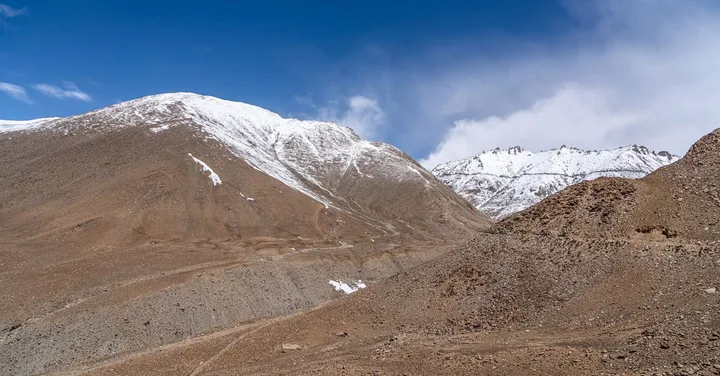
The drive from Pushkar to Jodhpur is about 4 hours through the Thar fringe. You start seeing the landscape shift: the green disappears, the earth turns dusty ochre, and by the time you reach the outskirts of Jodhpur, Mehrangarh Fort is already visible on the horizon, sitting on a rocky cliff like something out of a Mughal miniature painting.
Jodhpur's old city is blue, and it's not a tourist gimmick. The colour traditionally indicated Brahmin households and also helped with temperature regulation. Walking through the lanes below the fort in the early morning, when the light catches those indigo walls and the sound of temple bells drifts down from above, is the kind of moment that stays with you long after you've forgotten the hotel name.
Mehrangarh is one of the finest fort museums in India. Block 3 hours minimum. The audio guide is excellent. Jaswant Thada, the white marble cenotaph nearby, is often rushed through but deserves a slow half-hour. Have lunch at Indique on the rooftop, where you eat with the fort looming directly above you.
Day 6-7: Jaisalmer, the Golden City
Jaisalmer is remote, and that's exactly the point. The drive from Jodhpur takes about 5 hours through desert that gradually becomes more dramatic. The Sam Sand Dunes sit about 42 kilometres from the city, and your first Rajasthan sunset over open desert is something to savour slowly with a cold beer and no agenda.
Jaisalmer Fort is a living fort, which means people actually live inside it. Restaurants, guesthouses, temples, and families all share the sandstone ramparts. The Patwon Ki Haveli is the most ornate of the old merchant houses, with carved stone screens so intricate they look like fabric. The camel ride on Day 7 evening might sound touristy and it is, a little, but the light on the dunes at that hour is worth every cheesy photograph.
Day 8-9: Udaipur, the Lake City
Udaipur is Rajasthan on a completely different register. Where Jodhpur and Jaisalmer are sun-baked and dramatic, Udaipur is green, watery, and almost romantic in its softness. The city sits around Lake Pichola and Lake Fateh Sagar, and the hills around it catch clouds in a way that most of Rajasthan simply doesn't.
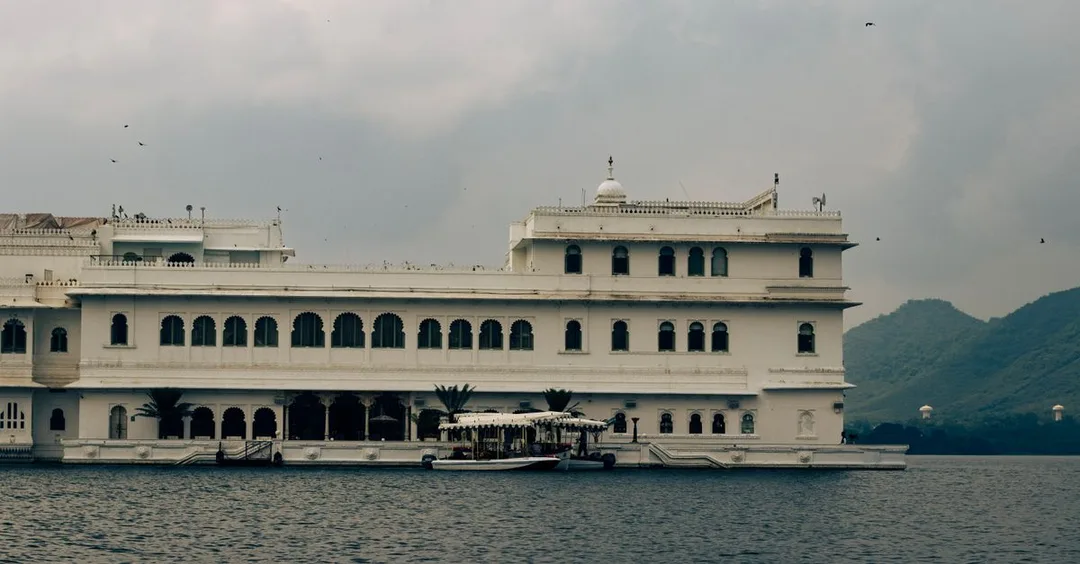
City Palace is enormous and requires at least 3 hours to do it properly. The boat ride on Lake Pichola at dusk, passing the Jag Niwas island where the Taj Lake Palace hotel floats on the water, is the postcard moment everyone comes for. Saheliyon ki Bari, the garden of maidens, is quieter and lovelier than most people expect. Have dinner at Ambrai restaurant on the lakefront, where the view of the City Palace floodlit at night is as good as any restaurant view gets in India.
Day 10: Udaipur to Mumbai
Udaipur airport (Maharana Pratap Airport) is small and manageable. IndiGo and Air India run regular connections to Mumbai, with the flight taking about 90 minutes. You could do a morning at the Shilpgram crafts village or a quick walk around the old city before heading to the airport for a midday or afternoon departure.
What's Included and What's Not
Typically included in a Safari Sutra Holidays package:
- All hotel accommodation (3-star, 4-star, or heritage options depending on your preference)
- All transfers by private AC vehicle
- Daily breakfast
- All fort and monument entry fees (Indian nationals)
- Ranthambore jeep safari seats (both morning and evening)
- Local sightseeing guides at major stops
Not included:
- Domestic flights (Mumbai to Jaipur, Udaipur to Mumbai): these vary by booking date
- Lunches and dinners unless specifically mentioned
- Travel insurance (strongly recommended)
- Tips and gratuity
- Personal shopping and alcohol
- Any activities booked independently on the ground
Being clear about this matters. A package that looks cheap often excludes flights and safaris, and that's where the price jumps. Always ask for a fully itemised quote.
Total Cost in INR
This is a general guide. Actual costs vary by season, hotel category, and group size.
7-Day Itinerary (per person, based on 2 people travelling)
- Domestic flights (Mumbai-Jaipur, Agra-Mumbai or return): Rs 6,000 to Rs 12,000
- 4-star accommodation (6 nights): Rs 18,000 to Rs 30,000
- Transfers and driver: Rs 15,000 to Rs 20,000
- Ranthambore safari (2 rides): Rs 3,000 to Rs 5,000
- Entry fees and guides: Rs 3,000 to Rs 5,000
- Estimated total: Rs 45,000 to Rs 72,000 per person
10-Day Itinerary (per person, based on 2 people travelling)
- Domestic flights (Mumbai-Jaipur, Udaipur-Mumbai): Rs 5,000 to Rs 10,000
- Heritage and 4-star accommodation (9 nights): Rs 27,000 to Rs 54,000
- Transfers and driver: Rs 22,000 to Rs 30,000
- Ranthambore safari (2 rides): Rs 3,000 to Rs 5,000
- Entry fees and guides: Rs 4,000 to Rs 6,000
- Estimated total: Rs 61,000 to Rs 1,05,000 per person
The wide range reflects the difference between a comfortable 4-star trip and one that includes heritage properties like converted havelis and palace hotels, which are genuinely worth the premium if it's within your budget.
Tips for Making the Most of Every Day
- Book Ranthambore safari seats as early as possible. The forest department opens bookings 90-120 days in advance and peak months fill up fast.
- Carry cash in smaller towns. Pushkar and Sam Dunes are not great for digital payments at smaller vendors.
- Wear layers in October-November. Rajasthan days are warm but the nights drop quickly, sometimes to 10-12 degrees Celsius in December-January.
- The drive from Jodhpur to Jaisalmer is long. Break it up with a stop at the Khichan crane sanctuary if you're travelling between October and March; thousands of demoiselle cranes winter there.
- Udaipur's best lighting for photography is before 8am and after 5pm. The midday glare flattens everything.
- If you're buying textiles or jewellery, the best quality-to-price ratio is usually in Jaipur, not in the smaller towns where tourist markups are higher.
- A good local guide in Jaipur and Jodhpur makes a real difference. For Rajasthan heritage tour packages, we include specialist heritage guides who know the history and the stories that aren't on the signboards.
Frequently Asked Questions
Q: How do I get from Mumbai to Jaipur for this trip?
Flying is by far the most practical option. The journey takes just over an hour and there are multiple daily flights on IndiGo, Air India, and SpiceJet from CSIA Terminal 1 and Terminal 2. Train is an option (the Mumbai-Jaipur Superfast runs overnight) but takes around 18 hours, which eats into your itinerary time. For a 7 or 10 day trip, fly.
Q: Is Rajasthan safe to travel solo or as a family?
Yes, and it's one of the most family-friendly destination groups in India. Heritage hotels often have excellent children's programming, and the forts and palaces genuinely capture kids' imaginations. Solo women travellers do fine in Jaipur and Udaipur; Jaisalmer and Jodhpur are also generally safe, though standard city precautions apply everywhere.
Q: What's the best time of year to do this trip from Mumbai?
October to March is the comfortable travel window. October-November is our actual recommendation within that range: the weather is cool and pleasant, festivals like Pushkar Fair are active, and the crowds haven't peaked the way they do in December-January. February is beautiful but considerably busier. Summer (April-June) is extreme with temperatures crossing 45 degrees in Jaisalmer.
Q: Can this itinerary be done entirely by train?
The 10-day version can be done largely by train with some planning, since Rajasthan has decent rail connectivity between Jaipur, Ajmer (for Pushkar), Jodhpur, Jaisalmer, and Udaipur. You'll need road transfers for Ranthambore and some sightseeing legs. That said, a private vehicle gives you far more flexibility and the roads between cities are genuinely good now.
Q: How many people does this itinerary work for?
It works for couples, families of 4, and small groups of friends. The per-person cost drops meaningfully for groups of 4 or more because vehicle and driver costs are shared. Groups larger than 8-10 need two vehicles and more logistical coordination.
Q: Are foreign nationals welcome on this trip and is there any additional paperwork?
Indian nationals need no special permits for any destination on this itinerary. Foreign nationals travelling on tourist visas are welcome in all these areas. E-Tourist visas are available for citizens of most countries through the Indian government's official portal. The only place that occasionally requires additional permits is near the Pakistan border in Jaisalmer, but tourist areas of the city itself are fully accessible.
Q: How does Safari Sutra Holidays handle custom requests like anniversary surprises or dietary needs?
We've handled over 15,000 trips across 12+ years, which means we've seen most requests before. Anniversary setups at heritage hotels, Jain or vegan meal requirements, wheelchair-accessible rooms, and early check-ins are all things we coordinate in advance. The key is telling us when you first enquire, not two days before departure.
Book This Itinerary with Safari Sutra
Rajasthan from Mumbai is one of those trips that rewards a bit of planning. The route, the timing, the hotel choices, which safari zones to request, when to push through and when to slow down: these details are where a good travel partner earns their place. After 12 years and 15,000+ trips, we know this route extremely well.
If you want to see the full day-by-day details for both itinerary versions, including accommodation options at each price point, check out our complete guide to Rajasthan tour packages from Mumbai: 7 and 10-day itineraries.
This exact itinerary is bookable. Contact Safari Sutra Holidays to get your custom quote.

Safari Sutra Team
Travel curators with 13 years of experience planning Indian and international holidays — from safari adventures to island escapes.
View All Posts