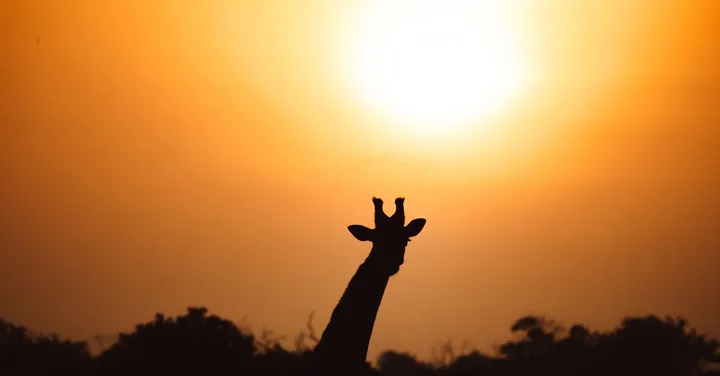
Imagine standing at the edge of the African savannah at 6am, a cup of chai warming your hands (okay, maybe it's camp coffee, but still), watching a herd of 200 elephants move slowly across a yellow-green plain. And rising above all of it, impossibly large, impossibly white, is Kilimanjaro. The whole mountain. Just... There. No clouds. No filters needed. This is Amboseli on a good morning, and good mornings here happen more often than you'd think.
For Indian travellers who've been dreaming about Africa, Amboseli National Park sits right at the top of the list for a reason. It's accessible, emotionally overwhelming in the best way, and delivers those postcard-perfect elephant-plus-Kilimanjaro shots that make your Instagram do things you didn't think were possible anymore.
Why Amboseli National Park Is Perfect for Indian Travellers
Let's talk about what makes Amboseli different from the other great East African parks, because the difference matters when you're planning an amboseli national park safari india trip from Mumbai or Delhi.
Most safari destinations in Africa reward patience. You drive for hours, scan the horizon, and hope. Amboseli is different. Elephant sightings here are almost guaranteed because the park is home to one of Africa's best-studied and most relaxed elephant populations. These elephants have been observed by researchers for over 50 years. They're not spooked by vehicles. They don't run. They just live their enormous, unhurried lives right in front of you, close enough that you can hear them tearing grass and breathing.
For Indian families, this is huge. You don't need to be a seasoned safari veteran or spend hours squinting at distant specks. Kids see elephants properly, up close, the way they should. Parents get the photos they actually want.
The Kilimanjaro factor is real too. At 5,895 metres, Kili is the tallest free-standing mountain on earth. From Kenya's side, specifically from Amboseli's open floodplains, you get some of the clearest and most dramatic views of the mountain anywhere in East Africa. On clear mornings, the whole snowcapped peak hangs over the landscape like something from a painting. These views are particularly good between July and October.
Amboseli is also manageable in size. At roughly 392 square kilometres, it's compact enough that you can see the key zones, the swamps, the observation hill, the open plains, without spending your whole trip in a vehicle. That suits most Indian travel styles perfectly. You're not just game-driving for eight hours a day. You have time to breathe, rest at your lodge in the afternoon heat, and then go back out for a golden-hour drive when the light turns everything amber.
It's about 4 hours from Nairobi by road, or a short 45-minute flight on a scheduled charter. Both options work. First-timers often fly in to save time and drive back.
Kenya also doesn't require an Indian passport holder to have a visa in advance. You apply online through the Kenyan e-visa portal before travel, which takes a couple of days and costs around USD 50. This is straightforward compared to some other African destinations.
Best Time to Visit
January to March: This is a dry, warm period that's genuinely excellent for game viewing. The vegetation is low, water is scarce, and animals cluster around the swamp areas. Elephant sightings are superb. Kilimanjaro is often clear in the mornings before cloud builds up around midday. This is also one of the cheaper flight seasons from India, which is a bonus.
April to May: The long rains arrive. The park gets lush and green, which is beautiful in a different way, but the dirt tracks can get muddy and some areas become inaccessible. If you're flexible and okay with occasional downpours, prices drop significantly and the crowds thin out. Birdwatching is spectacular during this time.
June to July: The rains ease. The landscape starts to dry out, animals spread across the park, and the elephant families begin to move more freely. Kilimanjaro views improve dramatically as the skies clear. This is when the park starts filling up again.
August to October: Peak season, and for good reason. This is the absolute best time to visit Amboseli. Skies are clear, elephants are active, and on many mornings you'll get that full, unobstructed view of Kilimanjaro with a herd of elephants in the foreground. Book early for this period. Lodges fill up fast and prices reflect the demand.
November to December: The short rains come through, usually lighter and more unpredictable than the long rains. The landscape greens up again, birding is good, and game viewing is still perfectly solid. A good value window for travellers who can travel between school terms.
The honest bottom line: avoid April and May if elephant sightings and mountain views are your priority. Every other month has something to offer.
What's Included in Amboseli Packages
A well-put-together Amboseli safari package from India typically includes everything you need from the moment you land in Nairobi.
- Return flights from India (Mumbai, Delhi, Bengaluru, or Hyderabad, usually with one stop in Nairobi via Addis Ababa, Doha, or Dubai)
- Airport transfers in Nairobi
- Shared or private road transfer to Amboseli, or a chartered light aircraft flight if you've opted for a premium package
- Full board accommodation at your chosen lodge or tented camp (breakfast, lunch, and dinner included)
- Two game drives per day, morning and evening, with a trained Kenyan guide and 4x4 vehicle
- Park entry fees
- All government taxes and levies
Some packages also include optional extras like a visit to a Maasai village, sundowner drinks on the open plain, or a guided walk around the swamp area with a ranger. These add real texture to a trip, especially if you have curious teenagers or travellers who want more than just vehicle-based game viewing.
What's typically NOT included: international travel insurance (you should always have this), alcoholic beverages unless specified, tips for guides and camp staff, and any personal shopping. Check your specific package details before booking.
You can explore the full range of options through Africa Safari Packages to get a feel for what different lodge tiers and combinations look like.
Package Options and Prices in INR
Prices below are per person on twin/double sharing basis, including flights from Delhi or Mumbai (economy class) for approximately 5 nights / 6 days in Amboseli. They are indicative for the 2025-2026 travel season.
Budget-Friendly Shared Safari (INR 1,20,000 to 1,50,000 per person)
Accommodation in a mid-range lodge or tented camp. Shared game drives with a small group of up to 6. Good value for solo travellers or couples who are flexible about timing and travel style.
Mid-Range Private Safari (INR 1,80,000 to 2,40,000 per person)
Private vehicle and guide, so you set the pace and decide where to spend your time. Accommodation in a well-appointed lodge with a pool. Good balance of quality and cost, ideal for families.
Premium Lodge Safari (INR 2,80,000 to 3,60,000 per person)
Staying at one of the signature properties with better views, more personalised service, and often a dedicated guide assigned to your group. Includes charter flight from Nairobi to Amboseli airstrip. Very popular with families celebrating milestones.
Luxury Tented Camp Safari (INR 4,00,000 to 5,50,000 per person)
The full experience. Boutique camps with 10 to 20 tents maximum, excellent food, private game vehicle for your group, star-gazing decks, and the kind of attention to detail that makes you feel like the park exists just for you.
Multi-Park Combo: Amboseli + Maasai Mara or Tsavo (INR 3,20,000 to 6,00,000 per person)
Pair Amboseli with one or two other parks in Kenya for a 9 to 12 day safari. Best for those who want to see the wildebeest migration as well as the elephants. We've helped over 15,000 travellers build exactly this kind of trip over the last 12 years, and the Kenya combo is consistently one of our most loved itineraries.
Practical Travel Tips
Visa: Indian passport holders need a Kenya e-visa. Apply online at least a week before departure. It costs USD 50 and is processed within a few working days. You'll receive a PDF approval to carry with you.
Flights: Most routes from India connect through Addis Ababa (Ethiopian Airlines), Doha (Qatar Airways), or Dubai (Emirates/flydubai) into Nairobi's Jomo Kenyatta International Airport. From Delhi or Mumbai, total travel time is roughly 8 to 10 hours depending on your layover. Ethiopian Airlines often has good fares for the India-Nairobi sector.
Yellow Fever: If you're transiting through certain countries before entering Kenya, you may need a Yellow Fever vaccination certificate. Check the latest requirements with the WHO Yellow Fever Info page and confirm with your doctor before travel. It's a straightforward jab but requires advance planning since it's not available everywhere.
Malaria: Kenya is a malaria zone. Speak to your doctor about antimalarial prophylaxis. Carry a good repellent with DEET and pack full-sleeve shirts for evenings at camp.
Packing: Think neutral colours, khaki, olive, beige, tan. Dust is real in Amboseli, so pack a good buff or bandana. Layers matter too: mornings on game drive are cool, afternoons are hot. A good pair of binoculars makes every drive better. Don't forget a power bank since some camps have limited charging points.
Currency and Payments: The Kenyan Shilling (KES) is the local currency, but USD is widely accepted at lodges and parks. Carry some small USD bills for tips. Most mid-range and premium lodges accept credit cards but inform your bank before travel.
Safety: Kenya is very much open for tourism and Amboseli is a well-managed, safe destination. Standard travel sense applies: stay in your vehicle during game drives, follow guide instructions, don't walk outside camp after dark without a ranger escort.
Frequently Asked Questions
Q: How many days should I spend in Amboseli?
Three nights and four days is the sweet spot for most Indian travellers. You get six game drives across different times of day, enough to see elephant herds in multiple settings and hopefully catch Kilimanjaro on a clear morning. If you're combining Amboseli with another park like Maasai Mara, 2 nights in Amboseli is still very satisfying.
Q: Is Amboseli good for families with children?
It's one of the best family safari destinations in Africa. The elephant sightings are reliable and up-close, which means even young children stay engaged. The drives are shorter than in larger parks. Many lodges have family rooms or interconnected tents. Most camps welcome children of all ages, though some luxury properties have age restrictions of 7 or 8 years old.
Q: Will I definitely see Kilimanjaro?
Not guaranteed, but your chances are genuinely high, especially if you visit between July and October and in January and February. The mountain is clearest at dawn, before clouds build up. Most travellers staying 3 nights see the mountain clearly at least once. Even on days when it's partially covered, you can see the snowcap and it's still a remarkable sight.
Q: Can I combine Amboseli with a beach holiday in Mombasa or Zanzibar?
Absolutely, and this combination is incredibly popular. Kenya's Mombasa coast is a short flight from Nairobi, and Tanzania's Zanzibar is accessible via Nairobi or directly from Amboseli via a connecting flight. Safari followed by 3 to 4 days on a stunning white-sand beach is one of the most complete Africa trips you can build.
Q: Is food at Amboseli lodges suitable for Indian vegetarians?
Most reputable lodges in Amboseli are experienced with dietary requirements including vegetarian and Jain diets. Let your travel agent specify this clearly at the time of booking. Meals at quality lodges are generous buffet-style spreads and alternatives are always available. That said, you won't find the spice levels of home cooking. Pack some instant khakra or your preferred snacks for the drives.
Q: What currency should I carry and how much?
Carry USD for tips and incidentals. A typical guideline for tips is USD 10 to 15 per day for your driver-guide and USD 5 to 10 per day for camp staff as a collective tip. Check if your lodge has a tipping box or if direct tipping is preferred. Your total cash spend is usually quite low since meals and activities are included.
Q: How is the Amboseli national park safari india booking process with Safari Sutra?
Reach out to us with your travel dates and group composition. We'll suggest itinerary options, walk you through lodge choices, and build a price comparison across different tiers. There's no pressure to book immediately. Most of our clients finalise their Kenya trip within a few conversations over WhatsApp or email, and we handle everything from visa guidance to flight advice.
Plan Your Trip with Safari Sutra Holidays
Amboseli is the kind of place that resets your sense of scale. You watch an elephant walk past Kilimanjaro and suddenly the small stuff you were worried about before the trip feels genuinely small. That's not poetic exaggeration. That's what actually happens out there.
At Safari Sutra Holidays, we've spent 12 years and 15,000+ trips getting the details right for Indian travellers, from vegetarian meal requests to sorting out the Kenya e-visa, from choosing the right lodge tier to timing your morning drives for the best Kilimanjaro light. We know this destination properly, and we plan it that way.
Whether you're looking at a 5-night Amboseli-only trip or a bigger Kenya circuit with multiple parks, Contact Safari Sutra Holidays to start building your itinerary. We'll give you honest advice, real options across budgets, and zero pressure.
Ready to plan your trip? Contact Safari Sutra Holidays today.

Safari Sutra Team
Travel curators with 13 years of experience planning Indian and international holidays — from safari adventures to island escapes.
View All Posts