The smoke from the pyres at Manikarnika catches you before you see the flames. You're on a wooden boat, barely 20 feet from the ghat, and the boatman is rowing quietly, letting the moment breathe. On your left, a family is performing last rites. On your right, two boys are playing cricket against a crumbling temple wall. A priest is chanting somewhere above you, and the Ganga is so still at this hour that it looks like polished bronze. This is 5 AM in Varanasi, and nothing you've read or seen on Instagram has actually prepared you for it.
In This Guide
- Varanasi Travel Guide 2026 for Indian Travellers: What You Actually Get
- Best Time to Visit (Month-by-Month, Honest)
- Top Experiences You Can't Miss
- Safari Sutra Package Options & Prices in INR
- Getting There: Flights from India
- Visa, Vaccinations & Practical Prep
- Frequently Asked Questions
- Plan Your Varanasi Travel Guide 2026 Trip with Safari Sutra
Varanasi Travel Guide 2026 for Indian Travellers: What You Actually Get
Varanasi is one of those places that Indian travellers have been meaning to visit for years. It's always on the list. And then something else happens. Europe, Maldives, a hill station. Varanasi keeps getting pushed.
Here's the thing: Varanasi is not like other Indian cities. It doesn't ease you in. It hits you immediately with noise, colour, smoke, devotion, and a kind of raw energy that you either surrender to or resist. The travellers who love it most are the ones who come without a fixed plan and without rushing it.
The city is officially called Varanasi, though most people still say Banaras. It sits on the west bank of the Ganga in Uttar Pradesh, and it's widely considered one of the oldest continuously inhabited cities in the world. More importantly for the traveller, it's a city that rewards slowness. The ghats, the lanes of the old city, the temples, the silk weavers, the chai shops at 6 AM: these are not things you tick off a checklist. They are things you absorb.
As a destination, it works beautifully for a long weekend, or it can anchor a 7-10 day spiritual circuit that includes Sarnath, Prayagraj, and Ayodhya. At Safari Sutra Holidays, we've helped thousands of Indian travellers discover that their most meaningful trip wasn't across an ocean. Sometimes it's a two-hour flight from home.
You can browse the full range of spiritual and cultural India trips on our Explore All Destinations, Safari Sutra page.
Best Time to Visit (Month-by-Month, Honest)
October to February: This is the window. The weather is genuinely pleasant, the morning boat rides on the Ganga are crisp and atmospheric, and Diwali in Varanasi (usually October or November) is something else entirely. The ghats are lit with thousands of diyas, and the city feels genuinely celebratory rather than theatrical.
November and December are peak months. Expect prices to be higher, hotels to fill up fast, and the ghats to be crowded. None of that is a dealbreaker, but it does mean booking well in advance matters more here than almost anywhere else in India.
January and February are slightly quieter and very comfortable temperature-wise. Makar Sankranti in January brings kite flying over the ghats, which makes for great photography.
March and April are a transition period. Holi is celebrated with genuine abandon in Varanasi. If you want to experience Holi somewhere it feels ancient and real rather than Insta-staged, Banaras is the answer. Post-Holi, temperatures rise fast and the city gets humid.
May to September is tough. The heat between May and June is punishing, and the monsoon from July to September brings flooding near the lower ghats. Some travellers love the quieter pace and moody light of monsoon Varanasi, but it's a specific kind of trip. If you're visiting for the first time, the October-February window is simply the better call.
Top Experiences You Can't Miss
The Ganga Aarti at Dashashwamedh Ghat
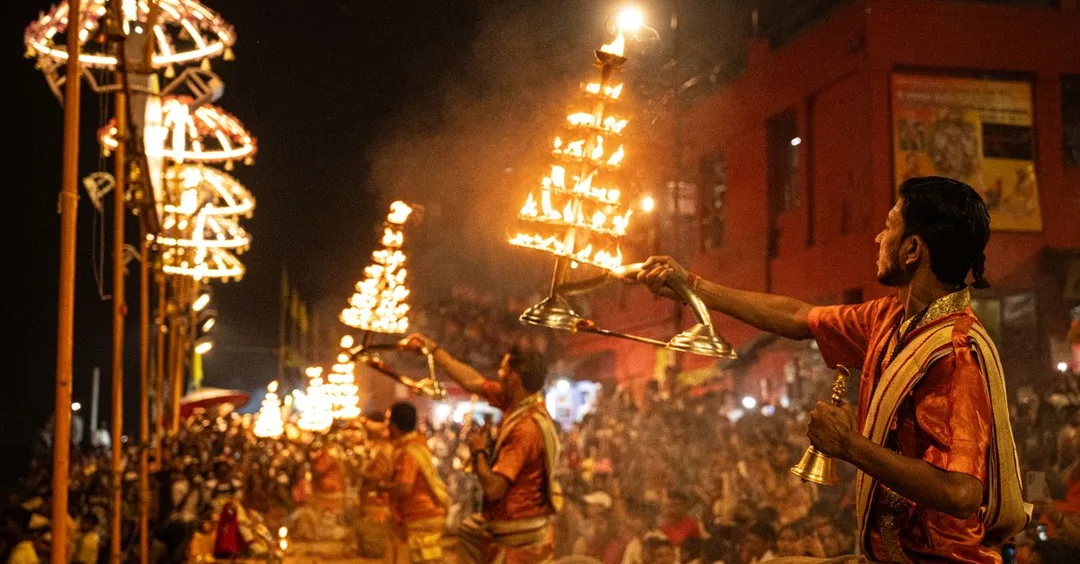
Every evening at sunset, seven priests perform the Ganga Aarti at Dashashwamedh Ghat in a ceremony that combines fire, flowers, incense, and sound in a way that's hypnotic even if you've watched it five times. You can watch from the steps or from a boat on the river. The boat view is better. Book it through your hotel or your Safari Sutra itinerary in advance, especially if you're visiting between October and February.
The aarti starts around 6:15 PM in winter and closer to 7 PM in summer. Get there 30 minutes early.
A Pre-Dawn Boat Ride on the Ganga
This is non-negotiable. The 5 to 6:30 AM boat ride covers the main stretch of ghats from Assi to Manikarnika and possibly beyond. The light changes every few minutes from dark blue to orange to gold. You'll see sadhus meditating, pilgrims taking their morning dip, children bathing before school, and the burning ghats working quietly in the background. Bring a light jacket. It's cold on the water in winter.
The Lanes of the Old City
Behind the ghats is a maze of lanes so narrow that two people with bags can barely pass each other. This is where you find the real Banaras: tiny temples at every turn, shops selling sarees and silver, chai stalls that have been in the same family for generations, and an absolute sensory overload of sound and smell. Get slightly lost in here. That's the point.
Sarnath: Half-Day Trip
Just 10 km from Varanasi city is Sarnath, where the Buddha gave his first sermon after attaining enlightenment. The Dhamek Stupa, the Ashoka pillar capital (now India's national emblem), and the archaeological museum here are genuinely moving even if you're not Buddhist. It's a quiet, dignified place and a nice contrast to the intensity of the old city.
Banarasi Silk and the Weavers of Varanasi
Varanasi is one of the great textile cities of India. Banarasi silk sarees are genuinely different here: heavier, richer, and made using techniques passed down through weaver families for centuries. Visit one of the workshops in the Peeli Kothi or Lallapura areas to see the weaving on a handloom before you shop. You'll spend more money, but you'll actually understand what you're buying.
Kashi Vishwanath Temple
The new Kashi Vishwanath Corridor, opened in 2022 by the Incredible India tourism initiative as part of a broader cultural heritage push, has made access far easier while preserving the temple's sanctity. The original temple dedicated to Shiva is one of the twelve Jyotirlingas and attracts millions of devotees annually. Go early morning (the line is shorter) and dress appropriately. Phones are not allowed inside.
Safari Sutra Package Options & Prices in INR
Here's a realistic sense of what different kinds of Varanasi trips cost. These are per person prices based on double occupancy, including accommodation, transfers, guided sightseeing, and the morning boat ride.
Weekend Essentials (2 nights / 3 days)
Covers the key ghats, evening aarti, boat ride, and Sarnath visit. Budget-heritage hotel or boutique guesthouse on or near the ghats. Prices start around Rs. 18,000 per person. Good for first-time visitors who want to test the city before a longer return trip.
Classic Varanasi (3 nights / 4 days)
Adds Kashi Vishwanath darshan, old city food walk, a Banarasi silk workshop visit, and more time for wandering. Comfortable 3-4 star accommodation. Prices from Rs. 28,000 per person. This is our most popular format.
Spiritual Circuit (6 nights / 7 days)
Combines Varanasi with Sarnath, Prayagraj (Triveni Sangam), and Ayodhya. Designed for travellers who want depth and context. Good hotels throughout, private vehicle for all transfers. From Rs. 55,000 per person.
Premium Varanasi (3 nights / 4 days)
Stays at properties like Brijrama Palace or Taj Ganges, with private ghats access, a personal guide for all sightseeing, and a classical music or evening cultural performance. From Rs. 75,000 per person.
Varanasi + Rajasthan Heritage Combo (10 nights / 11 days)
Varanasi into Agra into Jaipur, using private vehicle or train, with premium accommodation throughout. Suited for families or couples doing a serious cultural India trip. From Rs. 1,20,000 per person.
All prices above are indicative and vary by season and room type. Contact us for a fixed itinerary with exact pricing.
Getting There: Flights from India
Varanasi's Lal Bahadur Shastri International Airport (code: VNS) is well connected, and flights from the major metro cities are straightforward.
From Mumbai: IndiGo, Air India, and Vistara operate direct flights. Flight time is approximately 2 hours. Fares typically range from Rs. 4,000 to Rs. 9,000 one way depending on how early you book.
From Delhi: Multiple direct flights daily. Flight time is around 1 hour 15 minutes. Fares from Rs. 3,000 to Rs. 7,000 one way. Delhi to Varanasi is also very doable by overnight train (Kashi Express or Prayagraj Express), which some travellers prefer for the experience.
From Bangalore, Chennai, Hyderabad: Connecting flights via Delhi or Mumbai. Budget roughly 4-5 hours total travel time and fares in the Rs. 6,000 to Rs. 14,000 range one way.
From Kolkata: Very close. Direct flights are around 1 hour 20 minutes, and there's also a direct train option that many families use.
The airport is about 26 km from the city centre. Pre-booked cabs are the recommended option. Auto-rickshaws work within the city, but the lanes near the ghats are not navigable by car. Expect to walk the last 10-15 minutes to your guesthouse on the ghats, which is all part of the experience.
Visa, Vaccinations & Practical Prep
Varanasi is a domestic destination, so there's no visa requirement for Indian passport holders. For travellers holding a foreign passport, India's e-Visa covers tourism and is straightforward to apply for online.
There are no mandatory vaccinations for Varanasi, but a few practical health notes: drink only bottled or filtered water, avoid eating at roadside stalls if your stomach is sensitive, and carry a basic travel kit with oral rehydration salts and an antidiarrheal. The Ganga is sacred, but bathing in it is something to decide on personally. Many pilgrims do, but the water quality in the city stretch is a known concern.
Carry cash. Many shops, boat operators, and temple priests in the old city lanes work on cash only. ATMs are available near the main ghats, but they can run out during peak season.
Dress modestly, especially near temples. Scarves and dupattas are useful. Photography at the burning ghats requires sensitivity and judgment. Some families will object, and that has to be respected.
Frequently Asked Questions
Q: How many days are enough for Varanasi?
Three nights and four days gives you time to experience the main ghats, do the boat ride more than once (morning and evening feel completely different), visit Sarnath, explore the old city lanes properly, and catch the evening aarti without rushing. A two-night trip works but you'll feel like you left too early.
Q: Is Varanasi safe for solo women travellers?
Yes, broadly speaking, with the standard awareness you'd bring to any busy Indian city. The main ghats and tourist areas are busy and reasonably safe. The old city lanes can feel overwhelming but are generally fine during the day. For evenings, use your hotel's cab or a pre-booked ride. Solo women staying in guesthouses on the ghats generally report feeling very welcome.
Q: Can I swim or take a dip in the Ganga?
Millions of pilgrims take the ritual dip every day, particularly at Assi Ghat and Dashashwamedh Ghat. From a religious standpoint, it's deeply meaningful. From a water quality standpoint, the Ganga in the city stretch is highly polluted. This is a personal choice, and many travellers choose to participate in the ritual by stepping in ankle-deep or simply touching the water.
Q: What's the Kashi Vishwanath Corridor and do I need to book in advance?
The Corridor is a large infrastructure project completed in 2022 that cleared land around the temple to create a cleaner, more accessible pilgrimage zone linking the temple directly to the Ganga ghats. No prior booking is required for general entry, but the queue on auspicious dates like Mondays, Shivratri, and Mahashivaratri can be several hours long. Visiting on a regular weekday early morning is the smartest approach.
Q: Is the Ganga Aarti worth watching from a boat or from the ghat steps?
Both have merit. From the ghat steps, you're in the crowd, you feel the energy around you, and the sounds hit you from all directions. From a boat, you get a wider view of the ceremony with the ghats lit up behind the priests, and it's slightly more peaceful. For first-timers, the boat is the better call. Your second time in Varanasi, sit on the steps.
Q: Are there any good restaurants or is the food mostly street food?
Both, and Varanasi's food scene is genuinely great. The kachori sabzi and jalebi at Ram Bhandar near Kachori Gali at 7 AM is a proper Banaras ritual. Brown Bread Bakery near Assi Ghat is a reliable, clean option with good coffee, popular with travellers. Daal baati and thandai (especially the original Thandai from shops near the Vishwanath temple) are worth seeking out. The city also has a solid tradition of vegetarian thalis and mithai, especially on Vishwanath Gali.
Q: Is Varanasi good for children?
Absolutely, if approached thoughtfully. The boat ride, the aarti, the Sarnath museum, and the streets themselves are very engaging for older kids (8+). The burning ghats can be confronting for younger children, and it's worth deciding in advance how you'll handle that conversation. Many families find that visiting Varanasi with children opens up discussions about life, death, and spirituality in a way that stays with them.
Plan Your Varanasi Travel Guide 2026 Trip with Safari Sutra
After 12 years and over 15,000 trips planned for Indian travellers, we've seen the difference between a trip that works and one that doesn't. In Varanasi specifically, the two things that matter most are where you stay (proximity to the ghats makes everything easier and more atmospheric) and whether you have a knowledgeable local guide for at least the first day. A good guide here isn't just giving you history. They're helping you read the city.
At Safari Sutra Holidays, we've built our Varanasi itineraries around these principles. We're not trying to pack your days or rush the ghats. We're trying to give you a real Banaras experience, yaar, the kind where you understand why people keep coming back.
Whether you want a long weekend or a full spiritual circuit across Uttar Pradesh, we'll put together something that fits your travel style and your budget.
Ready to Plan Your Trip?
Safari Sutra Holidays — 13 years, 15,000+ trips, zero cookie-cutter itineraries.
Get Your Free Custom Quote →+91 9860415774 | hello@thesafarisutra.com

Safari Sutra Team
Travel curators with 13 years of experience planning Indian and international holidays — from safari adventures to island escapes.
View All Posts