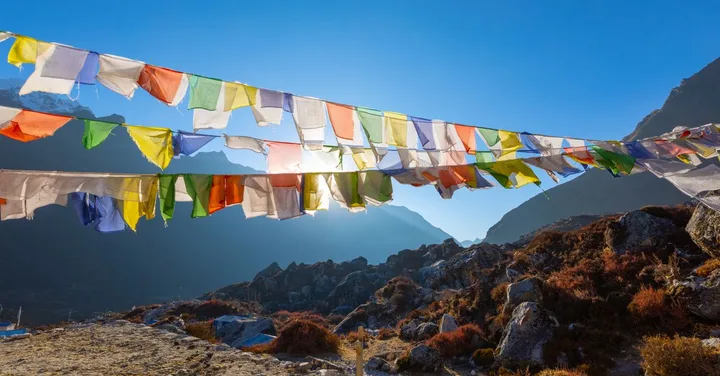
The moment you step onto the Punakha Suspension Bridge, the Mo Chhu river rushes below you, pale green and glacial cold, prayer flags snapping overhead in the mountain wind. The Punakha Dzong rises on the opposite bank like something from a legend, its whitewashed walls catching the afternoon light. You can smell pine resin and incense drifting together. You hear monks chanting somewhere inside the fortress walls. This is Bhutan doing what it does best: throwing beauty at you so quietly, so naturally, that you almost forget to reach for your phone.
In This Guide
- Punakha Bhutan for Indian Travellers: What You Actually Get
- Best Time to Visit (Month-by-Month, Honest)
- Top Experiences You Can't Miss
- Safari Sutra Package Options & Prices in INR
- Getting There: Flights from India
- Visa, Vaccinations & Practical Prep
- Frequently Asked Questions
- Plan Your Punakha Bhutan Trip with Safari Sutra
Punakha is the kind of place Indian travellers discover once and then spend months trying to explain to everyone back home. It's not Thimphu's buzz or Tiger's Nest's drama. It's slower, warmer, and richer in a way that takes a day or two to fully understand.
Punakha Bhutan for Indian Travellers: What You Actually Get
Punakha sits about 77 kilometres from Thimphu, roughly three hours by road through the Dochula Pass. The altitude here is around 1,200 metres, which means it's significantly warmer than most of Bhutan. You won't need a heavy down jacket in October the way you would in Paro. Winters are mild enough to walk around comfortably during the day.
For Indian travellers, the cultural familiarity is immediate and real. Bhutan's traditions are rooted in Vajrayana Buddhism, which shares deep threads with Tibetan and North Indian Buddhist culture. If you've visited Spiti or Ladakh, some of this will feel like a homecoming. The dzongs (fortress-monasteries), the mani wheels you spin as you walk past, the butter lamps flickering inside dark temple halls, the monks in their maroon robes, it all lands differently when you understand the context behind it.
What makes Punakha specifically special is the concentration of experiences in a compact geography. The Punakha Dzong, one of the most photogenic buildings in Asia, sits at the confluence of two rivers. The Chimi Lhakhang fertility temple is a 25-minute walk through rice paddies from the nearest road. The suspension bridge is free to cross. The white water rafting on the Mo Chhu is genuinely good. All of this is accessible, unhurried, and deeply Bhutanese.
Our Bhutan Himalayan Kingdom Tour covers all of this and connects it smartly with Thimphu and Paro so you're not wasting a day doubling back on mountain roads.
Best Time to Visit (Month-by-Month, Honest)
October and November are the peak months, and for good reason. The sky is clear blue, the mountains are visible from Dochula Pass, and the temperature in Punakha sits between 10 and 22 degrees Celsius. The light in the late afternoon on the dzong is extraordinary. This is the time to go.
March and April are the second-best window. Jacaranda trees bloom around the dzong in deep purple, a sight that's become almost iconic in Bhutan travel photography. The valley turns green after winter, and the Punakha Tshechu festival (a masked dance festival at the dzong) often falls in this period. If festivals matter to you, plan around this.
December to February is cooler but genuinely manageable in Punakha specifically, because of its lower altitude. Crowds are thin, prices are better, and the dzong looks stunning against cold clear skies. If you're doing Bhutan in winter, make sure Punakha is on your list rather than spending all your time in high-altitude Bumthang.
June to August is monsoon season. Bhutan is green and dramatic, the river runs high and fast, but roads through the Dochula Pass can get tricky. It's doable, but you need flexibility in your schedule and a good operator who knows the contingencies.
Top Experiences You Can't Miss
Punakha Dzong
This is the administrative and religious centre of Punakha and the most beautiful dzong in Bhutan by most accounts. It sits at the exact point where the Pho Chhu and Mo Chhu rivers meet. Inside, monks still live and work here, and the main assembly hall is covered in intricate paintings and golden statues. You need modest dress (no shorts, covered shoulders) and you'll remove your shoes before entering certain areas. Spend at least 90 minutes here, not 20.
The Suspension Bridge
Just upstream from the dzong, this 160-metre bridge is the longest suspension bridge in Bhutan. Walk across it in the morning before the tour groups arrive. The views of the dzong from mid-bridge are the ones you've seen in every Bhutan feature in travel magazines.
Chimi Lhakhang (The Fertility Temple)
This one surprises people. The temple is dedicated to Drukpa Kunley, a 15th-century Buddhist master who was known for his irreverent, bawdy wisdom. The approach is a 20-minute walk through paddy fields and small farms, passing local homes where families will wave at you. The temple itself is small and intimate. Couples who are trying to conceive make pilgrimages here, and the monks perform blessings. The phallus imagery around the village is jarring at first, then becomes completely normal within about five minutes. It's one of the most genuinely unique cultural experiences in South Asia.
White Water Rafting on Mo Chhu
Grade II to III rapids, appropriate for beginners and families. The scenery from the water looking up at forested hillsides is excellent. Best in spring when the water level is good.
Khamsum Yuley Namgyal Chorten
A 20-minute hike through rice fields to a hilltop chorten (stupa) with panoramic valley views. It's quieter than the main sights and worth every step if your knees cooperate. Incredible India and Bhutan Tourism jointly recognise this valley as one of the most biodiverse and culturally intact landscapes in the entire Eastern Himalayan region, which gives you a sense of how protected and pristine this area is.
Safari Sutra Package Options & Prices in INR
All packages include Bhutan's Sustainable Development Fee (SDF), which is USD 100 per person per night for international tourists. That's built into the pricing below.
-
Punakha Weekend Escape (3 nights/4 days): Covers Punakha, connects to Thimphu. Flights from Delhi or Kolkata to Paro, 3-star hotels, guided sightseeing, transfers. Approximately INR 75,000 to 90,000 per person.
-
Bhutan Classic (5 nights/6 days): Paro, Thimphu, Punakha in full. Includes Tiger's Nest hike, Punakha Dzong, Chimi Lhakhang, Dochula Pass. Mid-range hotels with character. Approximately INR 1,10,000 to 1,35,000 per person.
-
Bhutan Premium Valley & Monastery (7 nights/8 days): Full circuit including Punakha, Paro, Thimphu, and either Bumthang or Haa Valley. Boutique heritage hotels, private guides, festival timing where possible. Approximately INR 1,70,000 to 2,10,000 per person.
-
Bhutan Luxury Small Group (7-8 nights): Stays at Amankora or Six Senses category properties, private vehicles throughout, curated monk interactions, spa inclusions. INR 3,50,000 upwards per person.
Group discounts apply for families of four or more. All prices are per person based on double occupancy.
Getting There: Flights from India
The only international airport in Bhutan is Paro. Druk Air and Bhutan Airlines operate direct flights from Delhi, Kolkata, Mumbai, Guwahati, and Bagdogra. Delhi to Paro takes about 2 hours. Mumbai to Paro is roughly 3 hours with a connection in Kolkata or Delhi.
From Paro, Punakha is about 3 hours by road, passing over the Dochula Pass at 3,088 metres. On a clear day, you can see the entire eastern Himalayan range from that pass. It's one of the best views in Bhutan and most people stop there for 30 minutes.
Flights to Bhutan aren't cheap, typically INR 18,000 to 35,000 return depending on season and route. Book early, especially for October-November travel.
Visa, Vaccinations & Practical Prep
Indian citizens don't need a visa for Bhutan. You need a valid Indian passport or a voter ID card. The entry permit is processed by your tour operator before you arrive, and you collect it at Paro airport. You cannot travel independently in Bhutan as a non-Bhutanese tourist; a licensed operator is mandatory, which is why choosing the right one matters.
The Bhutan SDF (USD 100/night) is mandatory and goes directly to the government to fund education, healthcare, and conservation. This isn't a tourist tax that disappears into a bureaucracy; it's the foundation of Bhutan's low-impact, high-value tourism model.
No specific vaccinations are required for Bhutan, but make sure your routine immunisations are current. Travel insurance covering altitude and medical evacuation is strongly advised.
Carry Indian rupees; INR is accepted at par with the Bhutanese Ngultrum. UPI works at some places but don't count on it everywhere. Cash is king in Punakha's smaller shops and temples.
Pack layers even in spring and autumn. Mornings and evenings in Punakha can be cool even when afternoons are warm. Modest clothing is required for dzong and temple visits.
Frequently Asked Questions
Q: Is Bhutan suitable for families with children?
Absolutely yes, and Punakha is one of the easiest parts of Bhutan for families. The altitude is low, the walks are manageable, and kids find the dzong and suspension bridge genuinely exciting. The White water rafting is suitable for children above 10. Bhutan is also very safe, with almost no petty crime.
Q: How many days should I spend in Punakha specifically?
Two full days is the right amount. One day for the dzong, suspension bridge, and Chimi Lhakhang. A second day for the Khamsum Chorten hike, a morning on the river if you're doing rafting, and some time just sitting by the Mo Chhu. Most people arrive from Thimphu and leave for Paro, so Punakha works well as the middle leg of a 5-7 day Bhutan trip.
Q: Is the SDF really USD 100 per night? Why is Bhutan so expensive?
Bhutan's model is deliberate: fewer tourists, lower environmental impact, higher quality experience. The SDF funds free education and healthcare for Bhutanese citizens. When you pay it, you're actually contributing to a working model of sustainable tourism, not just lining corporate pockets. Many travellers find this reframes how they think about the cost.
Q: Can Indian citizens travel to Bhutan independently without a tour operator?
No. Indian nationals are exempt from the visa requirement but still need to travel through a registered Bhutanese or Indian tour operator. You cannot rent a car and drive yourself around. The permit system means your operator handles your entry paperwork, accommodation, and guides. This is actually a good thing as your experience quality depends directly on who you book with.
Q: What's the Punakha Tshechu and should I plan around it?
The Tshechu is a three-day mask dance festival held at the Punakha Dzong, usually in February or March. Local Bhutanese come from surrounding villages in traditional dress. The performances are genuine religious events, not tourist shows. If you have any flexibility in timing, building your trip around this is worth it. Accommodation books up fast during festival periods, so plan six to eight weeks ahead minimum.
Q: Is Bhutan Buddhist, and will I feel out of place as a Hindu or Muslim traveller?
Bhutan is deeply Buddhist, but the culture is respectful and genuinely welcoming. Hindu Indian travellers often find the aesthetics and rituals feel surprisingly familiar, since both traditions share roots and some iconography. Muslim travellers should note that halal food options in Punakha are limited, so vegetarian meals are the practical default. The cultural environment is warm and curious rather than exclusive.
Q: How does Safari Sutra handle the permit and booking process?
Safari Sutra Holidays manages the full permit process directly with our Bhutanese partner operators. Once you confirm your trip, we handle the permit application, coordinate all hotel bookings, arrange your airport transfers, and assign an English-speaking local guide. After 12 years and 15,000+ trips, we've found the biggest difference between an average trip and a great one is guide quality and the small logistical decisions, like timing your dzong visit before tour buses arrive, or knowing which corner of the Punakha bridge to stand on for the best light. These are things we get right for every Safari Sutra client.
Plan Your Punakha Bhutan Trip with Safari Sutra
Punakha is one of those places that makes you want to slow down. You walk across a suspension bridge, watch a river split around an ancient fortress, share a courtyard with monks who don't particularly care about your camera, and eat momos at a small restaurant where the owner's grandmother is asleep in the corner. It's ordinary and extraordinary at the same time.
Our Bhutan Himalayan Kingdom Tour gives you Punakha properly, without rushing, with guides who understand what you're looking at and why it matters.
Ready to Plan Your Trip?
Safari Sutra Holidays — 13 years, 15,000+ trips, zero cookie-cutter itineraries.
Get Your Free Custom Quote →+91 9860415774 | hello@thesafarisutra.com

Safari Sutra Team
Travel curators with 13 years of experience planning Indian and international holidays — from safari adventures to island escapes.
View All Posts