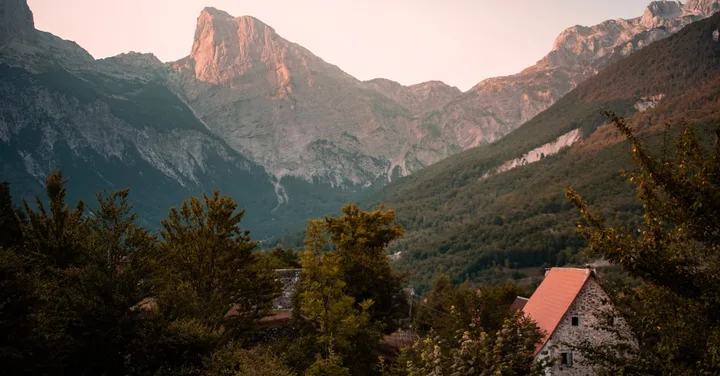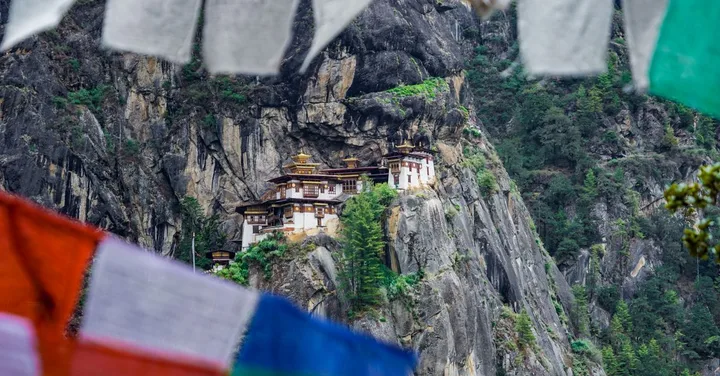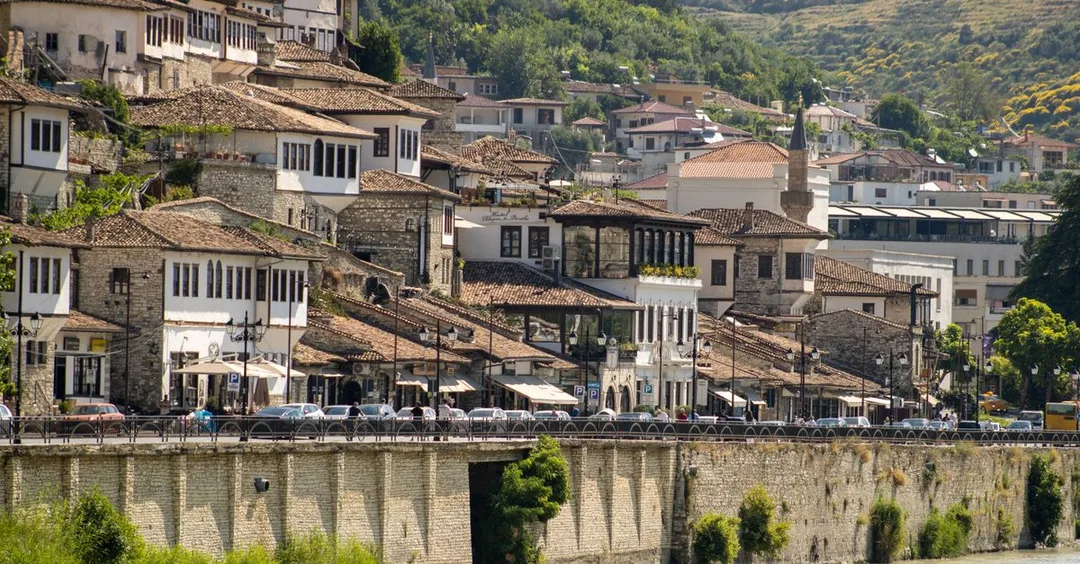
You're standing on a cobblestone street so old it predates the Ottoman Empire, looking up at a hillside town where every single window seems to glow amber in the late afternoon light. No tour groups. No selfie sticks blocking your shot. Just the smell of grilled byrek drifting from a stone doorway, a cat asleep on a Roman-era wall, and the quiet realisation that you've found somewhere genuinely untouched. That place is Berat, and about two hours south on a winding mountain road is its equally spectacular sibling, Gjirokaster. Together, they form one of Europe's most underrated road trips, and Indian travellers are only just beginning to notice.
In This Guide
- Berat and Gjirokaster Albania for Indian Travellers: What You Actually Get
- Best Time to Visit (Month-by-Month, Honest)
- Top Experiences You Can't Miss
- Safari Sutra Package Options & Prices in INR
- Getting There: Flights from India
- Visa, Vaccinations & Practical Prep
- Frequently Asked Questions
- Plan Your Berat and Gjirokaster Albania Trip with Safari Sutra
Berat and Gjirokaster Albania for Indian Travellers: What You Actually Get
Let's be honest about why this combination works so well for Indian travellers specifically.
Both cities carry UNESCO World Heritage status, which means the old architecture is protected and genuinely intact, not reconstructed. Berat is called the "City of a Thousand Windows" because its Ottoman-era houses literally cascade down a hillside, stacked so close together that each building's upper floor overlooks the roof of the one below. Gjirokaster, on the other hand, is all grey stone, fortress walls, and steep cobblestone streets that feel like walking through a black-and-white photograph that somehow got colorised.
For Indian travellers, there's something deeply familiar here. The layered history, the bazaars, the old mosques and churches sharing the same hilltop, the hospitality of locals who insist you have coffee before you leave. Albania was under Ottoman rule for over 400 years, and that cultural DNA shows in the food, the architecture, and the warmth of the people.
Albania also happens to be one of the most affordable countries in Europe. Your money stretches significantly further here than in Italy or Greece, and the experiences are just as rich, sometimes richer because they haven't been polished smooth for mass tourism yet.
If you're the kind of traveller who wants to tell a story your dinner party guests haven't heard before, this is it.
If you're already inspired and wondering what else Europe has to offer, Explore All Destinations, Safari Sutra to see how we approach travel across the continent and beyond.
Best Time to Visit (Month-by-Month, Honest)
April to June is the sweet spot. The weather sits between 18 and 26 degrees Celsius, the hills around Berat are green and flowering, and the tourist numbers are low enough that you can walk the Mangalem quarter without bumping elbows with anyone. This is the time to go.
July and August are hot, sometimes crossing 35 degrees in the valleys. The coastal Albanians tend to head inland during this period, so the towns do get livelier, but the midday heat in Gjirokaster's all-stone streets can be punishing. If you're visiting in peak summer, plan your walking for early morning and late afternoon.
September and October are genuinely excellent. The heat softens, the harvest season brings local produce markets to life, and the light in the late afternoon turns the limestone walls of Gjirokaster completely golden. Many travellers who've been in July say October felt like a completely different, better trip.
November to March is quieter, cooler (sometimes cold in Gjirokaster, which sits at elevation), and some smaller guesthouses and restaurants may be closed. That said, the fortress in Berat draped in low cloud has an atmosphere that photographs can't fully capture. If you're a photographer or someone who loves a moody travel aesthetic, shoulder season has its own appeal.
For most Indian travellers flying from Mumbai or Delhi, April-May or September-October gives the best combination of weather, value, and availability.
Top Experiences You Can't Miss
Berat Castle and Onufri Museum
The castle district of Berat, called Kala, is an inhabited fortress. People actually live here, which means as you wander through 2,400 years of layered history, you'll pass laundry on a line, a grandmother sweeping her doorstep, kids playing football in a Byzantine churchyard. Inside the Church of the Dormition of Saint Mary sits the Onufri Museum, home to 16th-century Orthodox icons painted with a vivid red pigment that Onufri apparently extracted from cherry bark. The red genuinely glows. It's worth the walk up alone.
The Mangalem Quarter
This is the Ottoman residential district below the castle, the one with the famous thousand windows. Walk it slowly. Go in the morning when the light hits the east-facing facades. Stop for burek (Albania's version of our samosa puff, filled with cheese or spinach) from a bakery that's likely been in the same family for three generations.
Gjirokaster Castle and Arms Museum
Gjirokaster's fortress is genuinely enormous, and it contains an eclectic collection that includes a captured US Air Force plane from 1957, which is very much an "only in Albania" moment. The views from the battlements over the Drino Valley are panoramic in a way that a photo can't convey.
Ethnographic Museum, Gjirokaster
Enver Hoxha, Albania's communist-era dictator, was born in Gjirokaster. His childhood home is now an ethnographic museum showing how an 18th-century Albanian merchant family lived. The interiors, with carved wooden ceilings and tiered guest rooms, have an aesthetic that Indian travellers with an interest in Indo-Persian architecture will find surprisingly familiar.
The Bazaar District (Pazari i Vjetër)
Gjirokaster's old bazaar is lined with artisan workshops. Copper work, handwoven textiles, silver filigree. The prices are genuinely reasonable by any measure, and the artisans are happy to talk. Bring a light bag because you will shop.
Day Trip to the Blue Eye Spring (Syri i Kaltër)
About 25 kilometres from Gjirokaster, this natural freshwater spring is a circle of impossibly blue water that bubbles up from an underground river. The blue is Caribbean-level vivid but cold, around 10 degrees. It's set in forest, it costs almost nothing to visit, and it has an otherworldly quality that genuinely surprises people.
Safari Sutra Package Options & Prices in INR
We've structured a few different ways to do this trip depending on your travel style and how much of the planning you want us to handle.
Tier 1: Albania Explorer (7 nights, DIY-light)
Covers flights from Delhi or Mumbai (usually via Istanbul or Vienna), accommodation in boutique guesthouses in Berat and Gjirokaster, airport transfers, and a detailed itinerary with restaurant and site recommendations built around your interests.
Approx. INR 1,10,000 to 1,30,000 per person (twin sharing)
Tier 2: Albania Deep Dive (9 nights, semi-guided)
Everything in Tier 1, plus a private English-speaking guide for your old town walks in both cities, a day trip to the Blue Eye Spring with transport, and visits to a working raki distillery (yes, Albania has its own grape spirit culture) and a traditional Albanian lunch at a family home.
Approx. INR 1,55,000 to 1,80,000 per person (twin sharing)
Tier 3: Balkans Circuit with Albania (14 nights)
Extends the itinerary to include Montenegro's Bay of Kotor and North Macedonia's Ohrid, both equally under-visited by Indian travellers. You get the full regional picture, private transfers throughout, and guided experiences in each location.
Approx. INR 2,20,000 to 2,60,000 per person (twin sharing)
Tier 4: Premium Private Albania (7-10 nights, boutique hotels)
For travellers who want the experience without compromise. Boutique heritage hotels including Mangalem Hotel in Berat and Gjirokastrit Hotel, private guide throughout, private vehicle, and a handpicked restaurant list vetted by our local contacts on the ground.
Approx. INR 2,80,000 to 3,40,000 per person (twin sharing)
All prices are indicative and based on double occupancy from Delhi or Mumbai. International airfare fluctuates, and we always recommend booking flights 60-90 days ahead for the best rates. Talk to our team for a personalised quote once you've settled on dates.
Getting There: Flights from India
Albania's main international airport is Tirana International Airport (TIA), officially named Nënë Tereza Airport. There are no direct flights from India to Tirana, but connections are straightforward.
The most popular routing from Delhi or Mumbai is via Istanbul with Turkish Airlines, with a layover of 1.5 to 4 hours. The total travel time runs around 10 to 12 hours depending on the layover. Other good options include connections via Vienna (Austrian Airlines or Air India codeshare), Doha (Qatar Airways via Athens or Rome and then a short hop), or Zurich.
Flight prices from Mumbai or Delhi to Tirana typically run between INR 55,000 and INR 85,000 return per person depending on the season and how far ahead you book. April and October tend to be the better value windows.
From Tirana, Berat is about 1.5 hours by road and Gjirokaster is about 3 hours. We arrange private transfers for all Safari Sutra Holidays clients from the airport, which is by far the most convenient way to handle arrival.
Visa, Vaccinations & Practical Prep
Visa: Indian passport holders currently do not require a visa to enter Albania for stays of up to 90 days within a 180-day period. This is one of the genuinely useful travel facts that most Indians don't know. Albania is not in the Schengen zone, which means your Albanian stay doesn't count against your Schengen 90-day allowance either. If you're combining this trip with Greece or Croatia, that's a significant practical advantage.
Always verify visa policies before you travel. The Incredible India portal and your country's Ministry of External Affairs website carry current advisories for Indian citizens travelling internationally.
Vaccinations: No specific vaccinations are required for Albania. Standard travel health precautions apply, including being up to date on routine immunisations. If you're travelling from India during mosquito season (summer), standard mosquito precautions are sensible.
Currency: Albania uses the Albanian Lek (ALL). Credit cards are accepted at most hotels and larger restaurants, but cash is useful in smaller towns, bazaars, and for tips. Tirana airport has reliable ATMs. Albania is genuinely inexpensive, a sit-down meal in Berat or Gjirokaster for two people with drinks runs between INR 600 and INR 1,500.
Language: Albanian, but English is spoken by most people under 40, especially in the tourism sector. In Gjirokaster, you'll also find some Greek speakers near the border region.
Mobile and Connectivity: Local SIM cards are cheap and widely available at Tirana airport. Alternatively, an international eSIM covering Albania works well. Don't expect 5G in the mountain towns, but 4G is generally reliable.
Best Packing Tip: Comfortable walking shoes with ankle support are non-negotiable. The cobblestones in both cities are beautiful but uneven, and the approach to Gjirokaster Castle involves a serious uphill walk. A light layer for evenings, even in summer, is worth packing.
Frequently Asked Questions
Q: Is Albania safe for Indian tourists, including women travelling solo or in small groups?
Albania ranks as one of the safer countries in the Balkans for tourists. Petty crime exists, as it does everywhere, but violent crime against tourists is rare. Women travelling in groups or with a trusted operator report feeling comfortable and welcome. The Albanian concept of besa, a code of hospitality and honour, is very real in practice. That said, exercising standard travel awareness, keeping valuables secure and being mindful in very quiet areas late at night, is always wise.
Q: How many days should I spend across Berat and Gjirokaster?
Two full days in Berat and two full days in Gjirokaster is a comfortable pace that lets you go beyond the surface. If you're combining with Tirana or the Albanian Riviera, a 10-12 day total itinerary works well. Rushing either city into a single day means you'll miss the slower, more rewarding parts of each place.
Q: Can I travel between the two cities independently by bus?
Yes. There are furgons (shared minivans) and buses connecting Berat and Gjirokaster via Fier. It's affordable and doable, but schedules are not always reliable and the journey involves a change. For the comfort and flexibility of a private transfer, especially with luggage, most travellers find it worth the marginal cost difference.
Q: What's the food like, and is there anything vegetarian-friendly?
Albanian cuisine has strong Ottoman and Mediterranean influences. You'll find plenty of grilled meats, but also excellent vegetarian options including byrek (filo pastry with cheese or greens), tavë kosi (baked lamb yogurt dish, non-veg but worth knowing about), fasule (slow-cooked beans), roasted peppers, and fresh salads. Vegans may find it slightly harder in smaller family restaurants but can manage well. Restaurants in both cities are used to dietary requests.
Q: Is this trip suitable for families with children?
Absolutely, with some caveats. The castle walks and cobblestone streets require good walking stamina, so very young children may find parts tiring. For families with kids aged 8 and above, the fortress at Berat (with its living neighbourhood inside) and the castle at Gjirokaster (with its aircraft and battlements) are genuinely engaging. Albania's pace and outdoor spaces suit families well.
Q: How does Albania compare to the more popular Balkan destinations like Croatia or Greece for Indian travellers?
Croatia and Greece are beautiful but have become significantly busier and pricier. Albania gives you a similar quality of history, architecture, and natural scenery at roughly 40-50% lower cost, with a fraction of the crowds. The trade-off is less polished infrastructure, fewer luxury hotel options, and some language barriers in rural areas. For Indian travellers who prioritise depth of experience and value over brand recognition, Albania consistently wins.
Q: Can Safari Sutra help us combine this with a Schengen Europe trip?
Yes, this is one of the more popular combinations we build. Albania pairs naturally with Montenegro, North Macedonia, Greece (Thessaloniki), and even a short add-on in Croatia. Because Albania is outside Schengen, combining it with a Schengen trip lets you effectively extend your European stay without visa complications. After 12 years and 15,000+ trips, we've found the biggest difference between an average trip and a great one is guide quality and the quality of on-ground planning. These are things we get right for every Safari Sutra client, regardless of which combination itinerary you choose.
Plan Your Berat and Gjirokaster Albania Trip with Safari Sutra
Berat and Gjirokaster are the kind of places that change your baseline for what travel can feel like. There are no queues, no overcrowded viewpoints, no feeling that you're just ticking a box. What you get instead is a slower, richer engagement with somewhere genuinely old and genuinely alive.
For Indian travellers who've already done their Paris and Prague, this is the logical next step. Come for the architecture, stay for the food, and leave with the quiet satisfaction of knowing you found somewhere most people still haven't.
Safari Sutra Holidays has built itineraries across the Balkans for travellers from across India, and we handle every detail so you can focus on actually being there.
Ready to Plan Your Trip?
Safari Sutra Holidays — 13 years, 15,000+ trips, zero cookie-cutter itineraries.
Get Your Free Custom Quote →+91 9860415774 | hello@thesafarisutra.com

Safari Sutra Team
Travel curators with 13 years of experience planning Indian and international holidays — from safari adventures to island escapes.
View All Posts