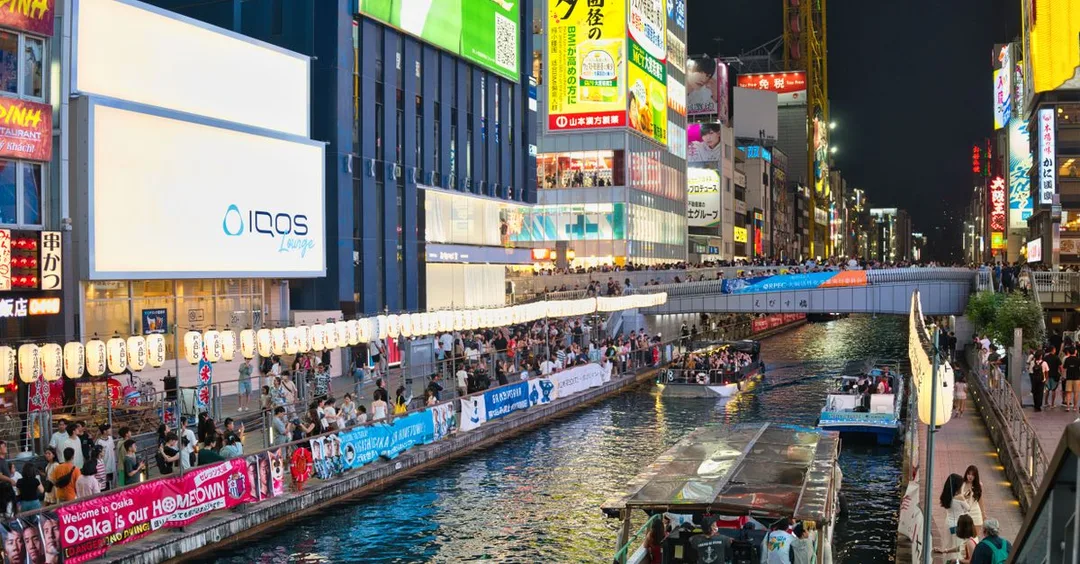
You smell it before you see it. Hot oil, soy, something sweet and smoky drifting through the evening air as you cross the Ebisu Bridge. Below you, the Dotonbori canal glows orange and red from a hundred neon signs. A giant mechanical crab waves its claws at you from above a restaurant entrance. Someone nearby is eating takoyaki straight off a paper tray, blowing on each octopus ball before they pop it in their mouth. This is Osaka at 8pm, and it is the most delicious chaos you will ever walk into.
In This Guide
- Osaka Japan for Indian Travellers: What You Actually Get
- Best Time to Visit (Month-by-Month, Honest)
- Top Experiences You Can't Miss
- Safari Sutra Package Options and Prices in INR
- Getting There: Flights from India
- Visa, Vaccinations and Practical Prep
- Frequently Asked Questions
- Plan Your Osaka Japan Trip with Safari Sutra
Osaka Japan for Indian Travellers: What You Actually Get
Osaka isn't Tokyo's quieter cousin. It's its own beast entirely, and honestly, it suits Indian travellers better than any other Japanese city.
Here's why. Osaka people are louder, funnier, and more food-obsessed than anywhere else in Japan. They have a phrase, kuidaore, which roughly means "eat yourself into ruin." That's the city's actual ethos. As Indians, we get this. Food isn't just fuel here, it's identity, pride, conversation, and community. You'll feel that kinship immediately.
The city is also compact and walkable. Dotonbori, Namba, Shinsaibashi, and Kuromon Market are all within easy reach of each other. You don't need to spend hours on trains. You can wake up, walk to a ramen shop, spend the morning at Osaka Castle, eat your way through Kuromon Market by noon, and still have energy for a street food crawl through Dotonbori at night.
For vegetarians and Jains, Osaka is more manageable than you'd expect in Japan, though it requires planning. Dashi (fish stock) is in almost everything, so you'll need to ask specifically or head to dedicated vegetarian spots. We'll cover this more in the FAQ section.
What you'll notice as an Indian traveller is that Osaka has almost no pretension. People here want you to enjoy yourself. They'll mime, draw pictures, use Google Translate, do whatever it takes to help you order the right thing. That warmth, that hospitality through food, feels familiar.
Best Time to Visit (Month-by-Month, Honest)
March to May is the most popular window, and for good reason. Cherry blossoms hit Osaka Castle Park around late March to early April, and the city is genuinely beautiful. Temperatures sit between 10°C and 20°C, perfect for walking. The trade-off is crowds and slightly higher hotel prices. Book early if you're targeting this window.
June to August is hot and humid. Think Chennai-in-June levels of sticky heat. July and August can hit 35°C with high humidity. It's not impossible, but you'll be ducking into air-conditioned restaurants more than exploring streets. If your trip falls here, lean into it and make food your main activity.
September to November is the sweet spot if you're flexible. Autumn foliage starts in late October and the weather is crisp and pleasant, 15°C to 25°C. Crowds are smaller than spring, prices are more reasonable, and the light is gorgeous. This is the window Safari Sutra Holidays recommends most often for first-time visitors.
December to February is cold, sometimes touching 5°C at night, but Osaka in winter has a magic to it. The food gets heartier, there are fewer tourists, and the city feels more local. If you're someone who doesn't mind a jacket and wants to see the real Osaka, winter works beautifully.
Top Experiences You Can't Miss
Dotonbori After Dark
Come here at night first, then revisit in the morning to see how different it feels. At night, the neon reflects in the canal, street carts line the walkways, and every few metres someone is handing you a takoyaki sample or a stick of kushikatsu (deep-fried skewers). Dotonbori is where Osaka's personality is on full display.
The Glico running man sign is the photo spot everyone stops at. Go at night for the best shot.
Kuromon Ichiba Market
This is Osaka's kitchen. Chefs shop here, and so should you. The market has over 150 stalls selling everything from fresh tuna to wagyu beef to pickled vegetables. You can eat as you walk: grilled oysters for a few hundred yen, thick cuts of sashimi on a stick, matcha mochi, tamagoyaki (sweet egg omelette). Come hungry, ideally around 10am when it's busy but not overwhelming.
Osaka Castle and the Park Around It
The castle itself is a museum inside, worth an hour. But the real reason to come is the park. It's huge, beautifully maintained, and in spring it's lined with cherry trees. Even outside cherry blossom season, it's a fantastic place to sit, have coffee from a nearby kiosk, and watch Osaka go about its morning.
Shinsekai and Tsutenkaku Tower
This neighbourhood doesn't show up on every tourist itinerary, and that's exactly why you should go. Shinsekai is old Osaka, a little gritty, a little retro, full of kushikatsu shops and locals who've been eating at the same counters for decades. The Tsutenkaku Tower is the neighbourhood's symbol and you can go up for views. But honestly, just walking the streets and eating is the point here.
A Day Trip to Nara
It's only 45 minutes from Osaka by express train. You walk out of Nara station, follow the path, and within 10 minutes wild deer are walking up to you. Not in a zoo, just on the street, in the park, nuzzling strangers for deer crackers. Todai-ji Temple, home to a giant bronze Buddha, is a short walk from there. Do this on a weekday morning if you can.
Arashiyama (Easy from Osaka)
Technically this is Kyoto, but it's 30 minutes from Osaka by train and absolutely worth building into your itinerary. The bamboo grove, the Togetsukyo Bridge over the Oi River, and the small shops selling yatsuhashi sweets are all packed into a walkable area. Go early, by 8am if possible, before tour groups arrive.
You can find detailed itineraries across all these experiences through Japan Cultural Tour Packages on the Safari Sutra site.
Safari Sutra Package Options and Prices in INR
Prices below are per person based on double occupancy, and they cover flights from Delhi or Mumbai, accommodation, transfers, and guided experiences as noted. They will shift by season, so treat these as realistic anchors rather than fixed quotes.
Osaka Express (5 Nights / 6 Days)
From INR 1,45,000 per person
Flights, 3-star accommodation in Namba, airport transfers, and a half-day Dotonbori food walk with a local guide. Perfect if you want to go independently but with the key pieces sorted.
Classic Osaka and Kyoto (7 Nights / 8 Days)
From INR 1,95,000 per person
Everything above plus Kyoto day trips (Arashiyama, Fushimi Inari), a Nara visit, and a Kuromon Market walk with tastings. This is the most popular package among Safari Sutra clients.
Japan Deep (10 Nights / 11 Days)
From INR 2,75,000 per person
Osaka plus Kyoto plus Tokyo, with a Shinkansen (bullet train) leg included. You get a full Japan sweep with local guides at each destination and a curated set of restaurant bookings, including one omakase dinner.
Private Luxury Osaka (5 Nights / 6 Days)
From INR 3,20,000 per person
Private transfers throughout, 5-star hotels (think The St. Regis Osaka or Conrad Osaka), private food tour, sake tasting session, and a cooking class where you make takoyaki and okonomiyaki. For couples and families who want space and pace.
Family Japan (8 Nights / 9 Days, Family of 4)
From INR 6,50,000 for the family
Built around families with children, with kid-friendly experiences woven in: a Pokémon Centre visit, teamLab digital art in Tokyo if combined, deer feeding in Nara, and a ramen-making class. Slower pace, more downtime built in.
For a personalised quote based on your travel dates and group size, Plan Your Trip with Safari Sutra and we'll work it out in detail.
Getting There: Flights from India
Ready to Plan Your Trip?
Safari Sutra Holidays — 13 years, 15,000+ trips, zero cookie-cutter itineraries.
Get Your Free Custom Quote →+91 9860415774 | hello@thesafarisutra.com

Safari Sutra Team
Travel curators with 13 years of experience planning Indian and international holidays — from safari adventures to island escapes.
View All Posts