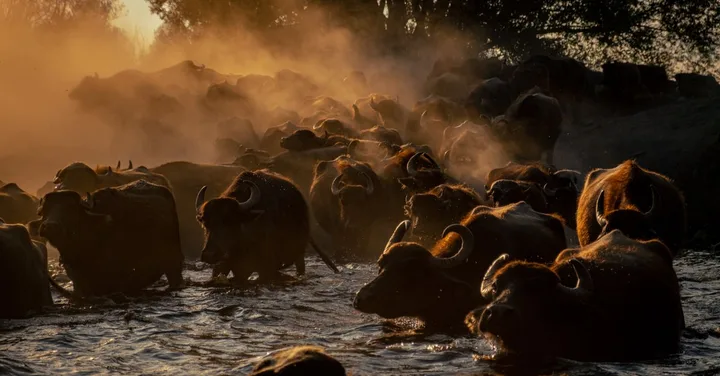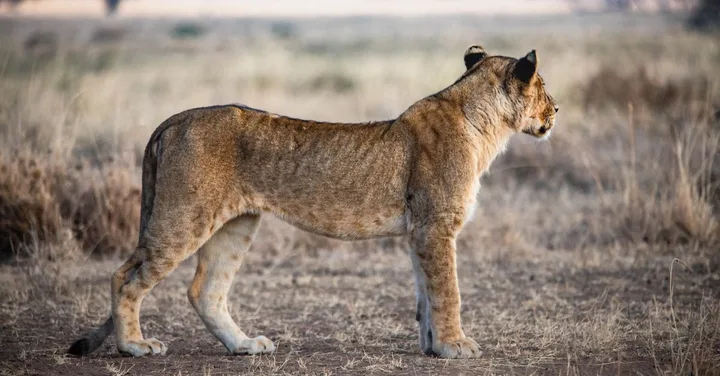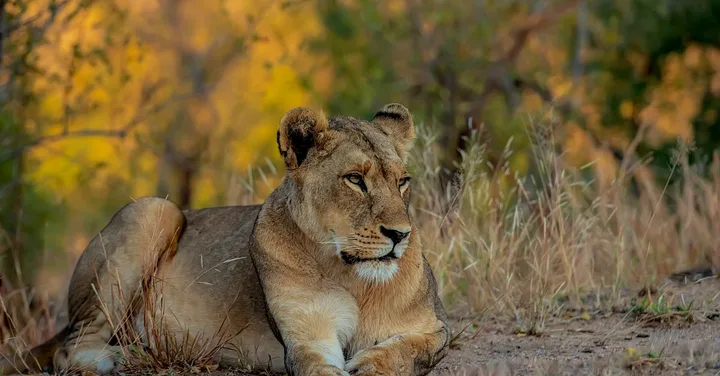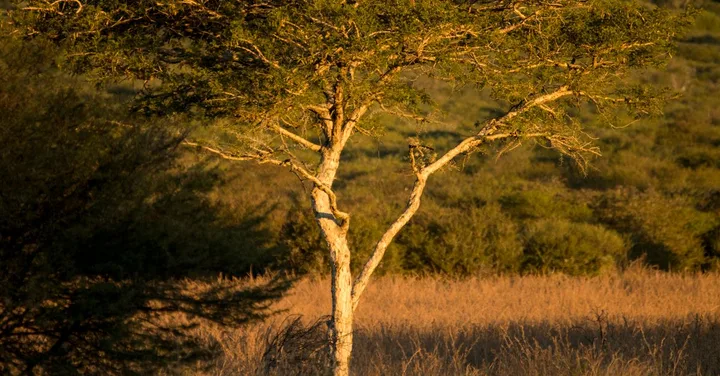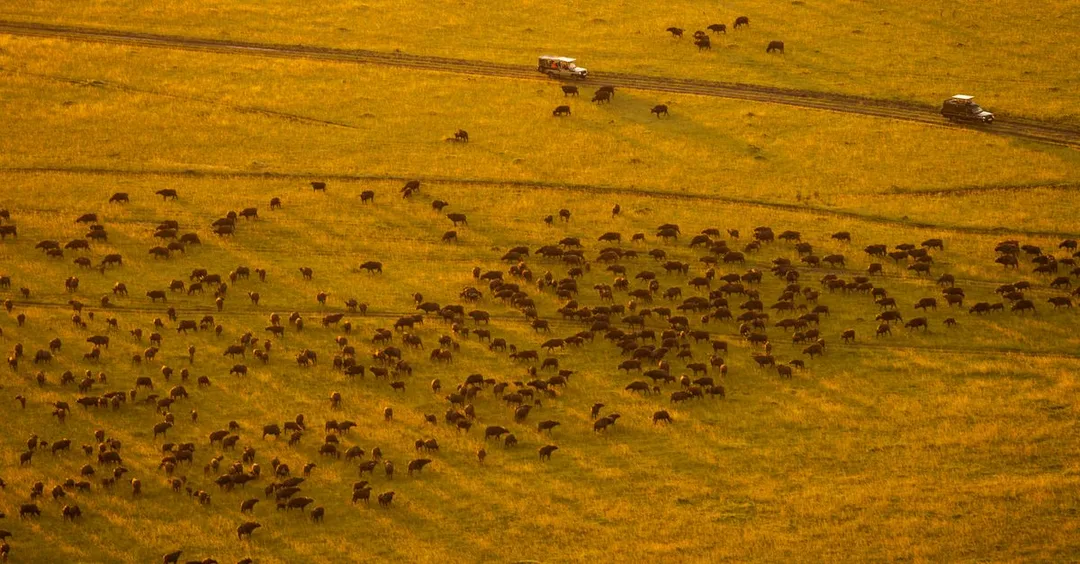
You're standing in the middle of a golden plain, the air smelling of dry grass and something wild you can't quite name. A lion yawns about fifteen metres from your jeep, utterly unbothered by your existence. Ahead, a river of wildebeest churns toward a croc-filled crossing. Your heart is hammering. You can't believe this is real.
That scene plays out in both Kenya's Masai Mara and Tanzania's Serengeti. And if you've been trying to figure out which one deserves your hard-earned leave and your travel budget, you're not alone. This is one of the most common questions we get from Indian travellers planning their first East Africa trip. After helping people plan 15,000+ trips over 12 years, we've seen both sides of this debate play out in real life, and we're ready to settle it for you.
Short answer? Both are incredible. But they're different in ways that matter, especially if you're coming from India.
Why Both Destinations Are Perfect for Indian Travellers
Let's talk about the practical stuff first, because Indian travellers are smart about this.
The distance and routing is roughly similar. From Mumbai or Delhi, you're typically flying into Nairobi (for the Mara) or Kilimanjaro/Dar es Salaam (for the Serengeti), with one connection through Dubai, Doha, Addis Ababa, or Nairobi itself. Total travel time runs around 10 to 14 hours depending on your layover. Neither destination is harder to reach than the other from India.
The Indian community connection is real in both countries. Kenya has a large, well-established Indian diaspora, particularly in Nairobi, which means you'll find familiar food options, Hindi-speaking staff at some hotels, and a general warmth toward Indian visitors. Tanzania has fewer Indians but Zanzibar has deep historical ties to the Indian Ocean trade routes, so the culture feels surprisingly familiar if you stay a couple of extra days.
Value for money is where things get interesting. The Serengeti and Tanzania overall tend to offer more safari for your rupees. Park fees are higher in Kenya, and the Masai Mara's proximity to Nairobi means it attracts more tourists in peak season, which drives up accommodation costs. Tanzania, on the other hand, gives you more space, more parks to combine (think Ngorongoro, Tarangire, Lake Manyara), and a slightly quieter feel.
That said, the Masai Mara offers one major logistical advantage: you can do a meaningful safari in just 3 to 4 days. Tanzania rewards a longer itinerary. For Indian families working around school holidays or limited annual leave, that flexibility matters.
Vegetarian food is available at most mid-range and luxury camps in both destinations. It's worth mentioning this upfront because it's genuinely one of the first things Indian families ask. Most camps accommodate Indian dietary requirements if you flag it at booking.
If you want to explore the full range of options across both countries, take a look at our Africa Safari Packages page, which covers itineraries for both Kenya and Tanzania at different budgets.
Best Time to Visit
This is where the comparison gets really interesting, and where your travel dates may actually make the decision for you.
The Great Migration: The Star of the Show
The Great Migration is the movement of over 1.5 million wildebeest (plus hundreds of thousands of zebras and gazelles) in a giant loop between the Serengeti and the Masai Mara. Understanding where the herd is tells you which destination to choose.
January to March: The herd is in the southern Serengeti, specifically the Ndutu region, and this is calving season. Thousands of wildebeest calves are born within weeks of each other, which triggers intense predator activity. Lions, cheetahs, and hyenas are everywhere. This is genuinely one of the most dramatic wildlife windows in Africa, and it's often overlooked because people fixate on the river crossings. Verdict: Go to Tanzania.
April to May: The long rains fall across both countries. The Mara and Serengeti turn green and beautiful, but game drives can be muddy. Fewer tourists, lower prices, and surprisingly good wildlife since animals congregate near waterholes. Good for experienced safari-goers on a budget. Verdict: Either works if you're flexible.
June to July: The herd moves north through the central Serengeti. Excellent game viewing in Tanzania as the columns of wildebeest stretch for kilometres. River crossings begin in the northern Serengeti near the Mara River (still on the Tanzanian side). Verdict: Tanzania wins in June, starts to split in July.
July to October: This is the famous period. The herd crosses the Mara River into Kenya, and this is where the dramatic, chaotic, crocodile-filled crossings happen. The Masai Mara is at its peak. Camps fill up fast, prices spike, and you need to book 6 to 12 months in advance. But if you witness a crossing, nothing comes close. Verdict: Kenya's Masai Mara is the answer here.
November to December: The herd starts moving south again through the Serengeti. Short rains fall in November. December can be excellent for the Mara as conditions dry up and the park is less crowded than in August.
The honest summary: If you're travelling between July and October, choose the Masai Mara. Any other time of year, Tanzania and the Serengeti give you a more rewarding experience.
What's Included in Safari Packages
Whether you go to Kenya or Tanzania, a standard safari package from India will typically cover the following:
- Return flights from your Indian city (Mumbai, Delhi, Bangalore, Chennai, Hyderabad)
- Visa fees (Kenya eVisa or Tanzania single-entry visa)
- Airport transfers in Nairobi or Kilimanjaro
- Internal charter flights to the safari camps (essential for the Serengeti, common for the Mara)
- Full board accommodation at the camp or lodge (breakfast, lunch, and dinner)
- All game drives with an English-speaking naturalist guide
- Park entry fees for the days you're on safari
- Basic travel insurance
What's usually NOT included unless you ask: premium drinks, laundry, optional balloon safaris, tips for guides and camp staff (budget around USD 10 to 15 per guide per day), and activities outside the park.
For Tanzania specifically, a well-planned package often combines the Serengeti with the Ngorongoro Crater, which is a full-day game drive inside a volcanic crater that holds the densest concentration of predators in Africa. That combination is hard to beat. Our Tanzania Safari Packages page has detailed itineraries that show exactly how these parks work together.
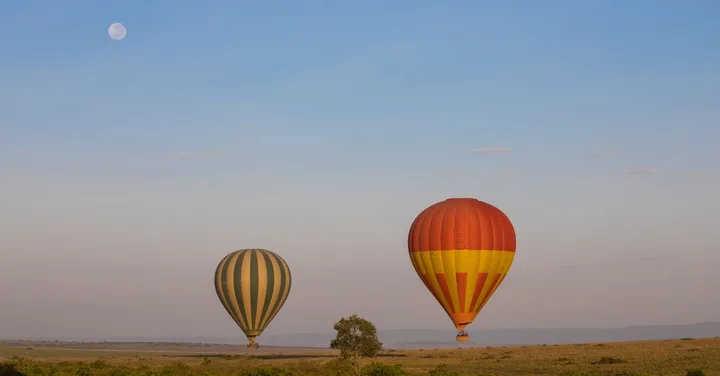
The hot air balloon safari in both the Mara and the Serengeti costs around USD 450 to 500 per person and is worth every rupee if you can stretch the budget. Drifting over the plains at sunrise, watching elephants move below you in silence, is the kind of morning you'll talk about for years.
Package Options and Prices in INR
Prices below are per person, based on double occupancy, and include international flights from Delhi or Mumbai. Solo travellers pay a supplement of approximately INR 40,000 to 70,000.
Budget / Value (3 nights Masai Mara or 4 nights Serengeti): INR 1,80,000 to 2,20,000 per person. Tented camps with shared facilities, older vehicles, group game drives. Still an excellent wildlife experience, just fewer frills.
Mid-range (4 nights Masai Mara or 5 nights Serengeti + Ngorongoro): INR 2,50,000 to 3,50,000 per person. Comfortable private tented camps or lodges, en-suite bathrooms, private game drives, better guiding. This is the sweet spot for most Indian families.
Premium (5 to 6 nights, multiple camps, private vehicles): INR 4,00,000 to 5,50,000 per person. Top-tier camps in private conservancies adjacent to the Mara or in the remote southern Serengeti. Less crowded, better guiding, more flexible daily schedules. Best for honeymoon couples or small groups.
Luxury (6 to 8 nights, ultra-luxury camps, private guide, balloon safari included): INR 6,50,000 to 10,00,000+ per person. Think Singita, andBeyond, Four Seasons Safari Lodge. Private guides, helicopters, wellness facilities, chef-prepared meals. The kind of trip where you wonder why you haven't done this sooner.
Family Package (Masai Mara + Nairobi + 1 night Zanzibar or Diani Beach, 10 nights total): INR 3,80,000 to 5,00,000 per person (family of 4). Adds a beach tail to decompress after the safari, which Indian families tend to love.
Prices fluctuate with flight costs and seasonal demand. Peak season (July to October) adds a 15 to 25% premium across the board.
Practical Travel Tips
Visas
Kenya: Indian passport holders can apply for an eVisa online at the official Kenya eCitizen portal. The fee is USD 50 for a single-entry tourist visa. Processing takes 2 to 5 working days. Apply at least 2 weeks before travel to be safe.
Tanzania: Indians need a visa, available on arrival or as an eVisa online. Cost is USD 50 for most nationalities. The online process is straightforward. Tanzania and Kenya are also part of the East Africa Tourist Visa (USD 100), which covers Kenya, Uganda, and Rwanda and is worth considering if you plan to extend your trip.
Flights
Emirates from Mumbai via Dubai to Nairobi is usually the most comfortable routing. Ethiopian Airlines via Addis Ababa is often the most affordable. Qatar Airways via Doha is a solid middle ground. For Kilimanjaro (Tanzania), KLM via Amsterdam is popular, as is Kenya Airways via Nairobi.
Book flights at least 4 to 5 months in advance for peak season travel. Business class upgrades on the long-haul leg are worth exploring if budget allows, since arriving rested makes the first morning game drive much better.
Health and Vaccinations
Yellow fever vaccination is required if you're arriving from a yellow fever endemic country. Even if you're coming directly from India (which is not on the endemic list), some camps and border officials may ask for proof. Check the latest guidelines on the WHO Yellow Fever Info page before you travel.
Malaria prophylaxis is strongly recommended for both Kenya and Tanzania. Consult your doctor about Doxycycline or Malarone at least 2 weeks before departure. Dengue is also present, so pack good quality insect repellent (50% DEET works well).
Packing Essentials
- Neutral colours for game drives: khaki, olive, beige. Avoid white (attracts insects) and blue (attracts tsetse flies)
- Layers for early morning game drives, which can be genuinely cold even in July
- Binoculars, ideally 8x42 or 10x42
- A good zoom camera lens (300mm or more) if you're a photography enthusiast
- Power bank and extra memory cards
- Prescription medications, since pharmacies in remote areas are limited
Money and Connectivity
US Dollars are universally accepted at camps and lodges. Carry a mix of USD 1, 5, 10, and 20 notes for tips and small purchases. MTN and Safaricom SIM cards are available at Nairobi airport for good data connectivity. Most camps have WiFi, though it's often slow in remote areas. Honestly, that's part of the point.
Frequently Asked Questions
Q: Is Masai Mara or Serengeti better for first-time safari-goers from India?
For a first safari, the Masai Mara is often the easier introduction. It's compact, the wildlife density is high year-round, and Nairobi is a well-connected hub with plenty of familiar comforts. You can have a deeply satisfying 4-night experience without spending too many days in transit. The Serengeti rewards those who have a bit more time and want to go deeper, combining it with the Ngorongoro Crater for a richer circuit.
Q: Can I do both the Masai Mara and Serengeti in one trip?
Yes, and it makes for a spectacular combination. The standard approach is to fly into Nairobi, spend 3 nights in the Mara, then fly to Kilimanjaro or Arusha and do 3 to 4 nights in the Serengeti plus Ngorongoro. Total trip: 10 to 12 days. It's a longer trip but you get the complete East Africa picture. The short charter flight between the two countries takes around 1.5 hours.
Q: When should Indian travellers who visit during Diwali or Christmas holidays go?
Diwali typically falls in October or November, which is a good window. The Mara is less crowded than peak August, the rains haven't fully set in, and prices are slightly softer. Christmas and New Year is peak season across both destinations, with premium pricing and full camps. Book at least 8 months ahead if you're planning a December trip.
Q: Is it safe to travel to Kenya and Tanzania as an Indian family?
Both Kenya and Tanzania are well-established, safe tourist destinations. The safari zones are far removed from any political tension areas. Nairobi has standard big-city precautions worth following (don't flash expensive gear in non-tourist areas), but inside the Mara or the Serengeti you're in a controlled, guided environment. Most Indian families find the experience extremely comfortable and well-organized.
Q: How many days is enough for a proper safari experience?
Minimum 3 nights in the bush to truly settle in and see the rhythm of the place. Ideally 4 to 5 nights. The first evening you're adjusting to the sounds and the scale of it all. By day 2, you start reading the landscape. By day 3 or 4, you're spotting things your guide hasn't pointed out yet. Don't shortchange yourself on time in the field.
Q: Do Indian vegetarians eat well on safari?
This surprises people, but yes. Most mid-range and luxury camps are well-versed in vegetarian cooking and can usually prepare Indian-style food with some notice. Inform the camp at the time of booking, and reiterate it when you arrive. The quality varies but you won't go hungry. Some camps in both Kenya and Tanzania have Indian cooks on staff specifically because of how many Indian guests they host.
Q: What's the difference between a tented camp and a lodge? Which is better?
A tented camp is exactly what it sounds like: a canvas tent on a platform, usually with proper beds, electricity, and an en-suite bathroom. It offers the authentic sounds and feel of the bush, with animals occasionally walking right through camp at night. A lodge is a more solid structure with hotel-style facilities. Neither is objectively better. If you want immersion, pick a tented camp. If you or your travel companion need creature comforts to relax, a lodge works perfectly.
Plan Your Trip with Safari Sutra Holidays
Here's the honest bottom line. If you're travelling between July and October and you want to witness the river crossings, book the Masai Mara. If you're travelling any other time of year, or if you have 7+ days and want more variety, build your trip around the Serengeti and combine it with Ngorongoro.
If budget is a concern, Tanzania gives you slightly more value. If time is the constraint, Kenya's Mara delivers a concentrated experience in fewer days.
Both are the real thing. Neither will disappoint a traveller who goes in with curiosity and a good guide.
At Safari Sutra Holidays, we've helped thousands of Indian families, couples, and solo travellers figure out exactly this question and build trips that suit their dates, budgets, and travel styles. We're not going to push you toward the more expensive option. We're going to tell you which one makes sense for you, specifically.
Ready to plan your trip? Contact Safari Sutra Holidays today.

Safari Sutra Team
Travel curators with 13 years of experience planning Indian and international holidays — from safari adventures to island escapes.
View All Posts