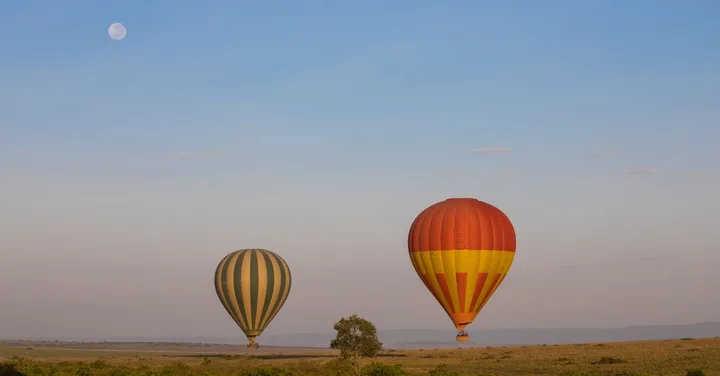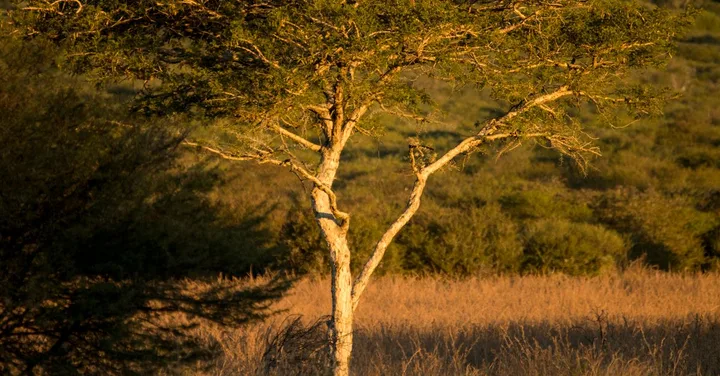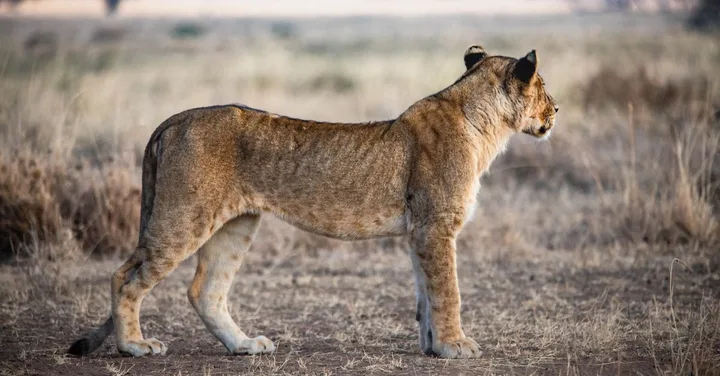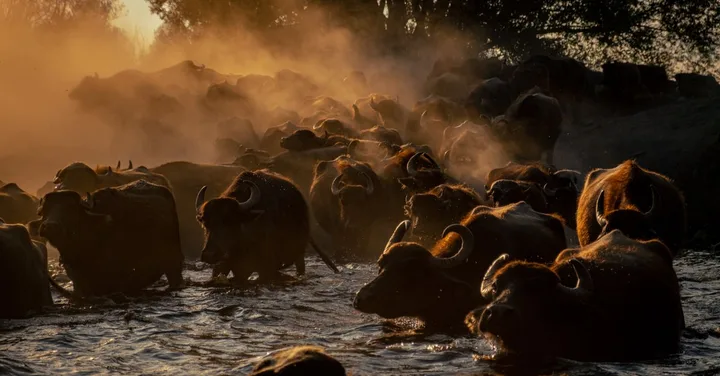
If you're planning a Kenya safari and someone has told you there are two very different ways to experience the Masai Mara, they're right. The choice between the main Masai Mara National Reserve and the private conservancies surrounding it is one of the most genuinely tricky decisions in safari planning. Both have lions. Both have the migration. Both will leave you slack-jawed at sunrise. But they deliver completely different experiences, at different price points, with different trade-offs. Get it wrong and you'll either feel boxed in by crowds or wonder why you paid extra for something you didn't fully use.
In This Guide
- At a Glance: Side-by-Side Comparison
- Wildlife and Landscape: What's Different
- Best Time: When to Choose Each
- Experience for Indian Travellers: Accessibility, Crowds, Language
- Cost Comparison in INR (Same Trip Duration, Apples-to-Apples)
- Verdict: Which One Should You Book First?
- Frequently Asked Questions
- Can't Decide? Talk to Safari Sutra
This post breaks it down properly, so you can make the call with your eyes open.
At a Glance: Side-by-Side Comparison
Masai Mara National Reserve (Main Reserve)
- Managed by the Narok County Council
- Open to all licensed operators and vehicles
- Entry fees paid per person, per day (around $80-$100 USD)
- Multiple accommodation tiers from budget tented camps to luxury lodges
- Famous Mara River crossing sightings, Governors' Camp area, Sekenani Gate
- Can get very busy July to October, especially at crossing points
- Great for first-timers on a more flexible budget
Private Conservancies (Mara North, Olare Motorogi, Naboisho, Ol Kinyei, etc.)
- Managed jointly by private operators and Maasai landowners
- Strictly limited vehicle numbers per conservancy
- Higher daily conservation fees (often $150-$250+ USD included in lodge rates)
- Only guests staying at partner lodges can access each conservancy
- Off-road driving allowed in most conservancies (not permitted in the main reserve)
- Night drives and walking safaris permitted
- Almost exclusively high-end lodges and tented camps
- Quieter, more exclusive, often better for photography
The core difference in one line: the main reserve is democratic and accessible; the conservancies are exclusive and controlled.
Wildlife and Landscape: What's Different
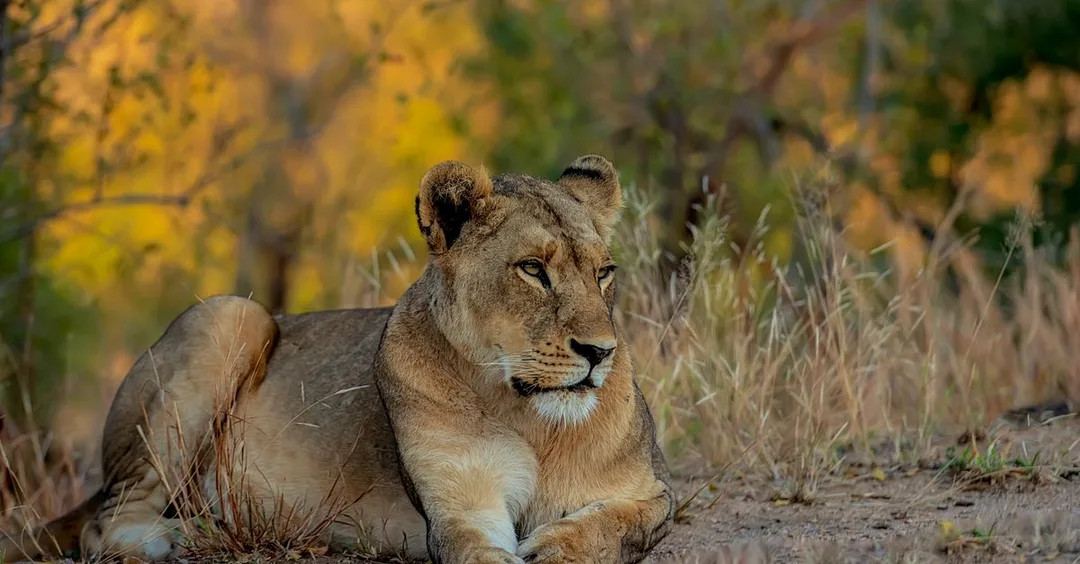
The wildlife itself is largely the same across both. The Big Five, hundreds of species of birds, the wildebeest migration, cheetahs on open plains. None of that is reserved for one side of a fence.
What changes is the conditions under which you see them.
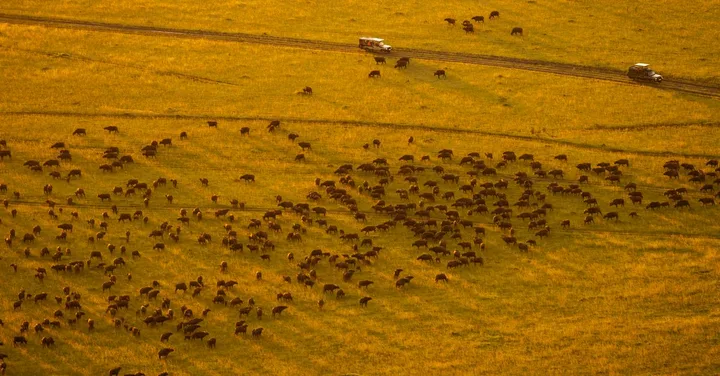
In the main reserve, you might watch a leopard in a tree and count 20 other jeeps doing exactly the same thing. That's not an exaggeration. During the peak Mara River crossings in July and August, the scene can look more like a parking lot than a wilderness. The crossing itself is electrifying but the congestion around it is a real thing, and it's something plenty of Indian travellers mention to us after coming back.
In the private conservancies, your guide can take the vehicle off-road to get closer to a cheetah without disturbing it. You can do a bush walk in the morning and a night drive to find a leopard hunting after dark. Those two things alone change the depth of the safari completely. The density of vehicles is regulated, so even during peak season you might arrive at a lion sighting and see two or three other jeeps, not twenty.
The landscape shifts a little too. Some conservancies border the Mara River and open plains, while others like Naboisho sit in hillier, more varied terrain with fig forests and scrubland. Ol Kinyei is well-regarded for cheetah sightings specifically because the open grasslands suit them. Each conservancy has a slightly different character.
For a wildlife photographer, the conservancy case is almost unarguable. Off-road access plus low vehicle density means you can position for the light, follow an animal patiently, and get the shot. In the main reserve, you're often stuck on a track with limited angles.
Best Time: When to Choose Each
The famous Great Migration peak runs July to October, when millions of wildebeest move north from Tanzania's Serengeti into the Mara ecosystem. This is when the Mara River crossings happen, and it's why people book Kenya in the first place.
For the main reserve, this is genuinely the best time to visit but also the most congested. The crossings happen along the Mara River inside and just outside the reserve boundary, so you'll be close to the action.
Here's something we've learned through experience at Safari Sutra Holidays: we've taken 400+ groups to the Masai Mara since 2013, and the most common mistake is booking peak July to August without knowing the river crossings attract 50+ jeeps per sighting. Shifting one week either side, so late June or early September, gives you the migration with far less crowd pressure. Worth remembering when you're setting your dates.
For the conservancies, the timing advantage is strongest outside peak migration season. January to March is calving season in the Serengeti-Mara ecosystem, great for predator action, and the conservancies are quieter with better rates. November to December brings green, lush landscapes and some genuinely beautiful light for photography. These are months when the main reserve feels a little thin but the conservancy experience barely drops.
If you're visiting purely for the crossing drama, the main reserve or a conservancy bordering the Mara River (like Mara North) in July to October is the call. If you want an immersive experience year-round with night drives and walks, conservancies win every other month.
Experience for Indian Travellers: Accessibility, Crowds, Language
Most Indian travellers reach the Masai Mara via Nairobi. Kenya Airways operates direct flights from Mumbai, and Ethiopian Airlines connects through Addis Ababa from multiple Indian cities. From Nairobi, it's either a 5-6 hour drive or a 45-minute charter flight to the Mara region.
If you're flying in on a charter or scheduled domestic flight, the landing strips close to the conservancies (Kichwa Tembo, Ol Kiombo, Mara North) are separate from the main reserve airstrips, so your transfer logistics depend on where you're staying.
English is widely spoken across all camps and lodges. Safari guides in both the reserve and conservancies are trained professionals and most have excellent English. Communication has never been a barrier for Indian guests. Food tends to be international at most mid to high-end camps, and several of the bigger lodges are used to catering to dietary preferences including vegetarian options if mentioned in advance.
The crowd factor is where the experience really diverges for Indian travellers who've done group tours before. If you've ever been on a Rajasthan bus tour where everyone piles out at the same viewpoint, the main reserve during peak season can feel a little like that around popular sightings. The conservancies feel nothing like that. It's a noticeably different headspace.
For families with children, many conservancies now welcome children above 6 or 8 years (age limits vary by property), and the private setting with walking safaris and night drives makes for a richer experience than the main reserve for older kids.
You can check out Kenya Wildlife Safari Packages for a better sense of what a full Kenya itinerary looks like before finalising the lodge type.
Cost Comparison in INR (Same Trip Duration, Apples-to-Apples)
Let's look at a 7-night Masai Mara trip for two adults flying from Mumbai, to keep this honest.
Main Reserve option (mid-range camp, 7 nights)
- Flights (return, Mumbai-Nairobi): approx. Rs. 60,000-75,000 per person
- Mid-tier tented camp inside or adjacent to reserve: approx. Rs. 15,000-22,000 per person per night all-inclusive
- Game drives included in most packages
- Total estimate for two: Rs. 3.5 to 4.5 lakh for the full trip
Private Conservancy option (high-end tented lodge, 7 nights)
- Flights: same as above
- Conservancy lodge (all-inclusive with game drives, night drives, walks): approx. Rs. 30,000-55,000 per person per night
- Conservancy fees typically included in the lodge rate
- Total estimate for two: Rs. 6 to 9 lakh for the full trip
The gap is significant. But in the conservancy, your game drive vehicle is often exclusively yours or shared with one other couple, your guide's time is undivided, and activities like night drives add genuine value. It's not a price premium for a nicer room. It's a fundamentally different product.
For a classic first-time Kenya trip starting from Rs. 1.8 lakh per person, the main reserve makes total sense. For a deeper, more personal safari experience, the conservancy premium is justifiable and most people who've done both say they'd never go back to the main reserve.
Verdict: Which One Should You Book First?
For your first Kenya safari, start with the main Masai Mara National Reserve paired with a good mid-range or upper-mid-range camp. You'll see everything you came to see, the migration is accessible, and you'll spend within a sensible budget. Coming in around the Rs. 1.8 to 2.5 lakh per person range (including flights) is very achievable.
If you've already done a game drive and want to go deeper, or if this is a honeymoon, anniversary, or significant birthday trip where the experience really matters, book a private conservancy. Mara North and Olare Motorogi are particularly well-regarded. You'll pay more, but the word that comes back to us most often from clients who've done conservancy trips is "peaceful." Not quiet in a boring way. Just calm, undisturbed, and genuinely wild.
And if budget allows, a split stay works beautifully: three nights in a conservancy for the immersive experience, and then four nights in the main reserve timed for the Mara River crossings. That's actually our favourite structure for clients who want the best of both.
Plan your Kenya trip with Safari Sutra and we'll help you put together the right combination based on your travel dates and what matters most to you.
Frequently Asked Questions
Ready to Plan Your Trip?
Safari Sutra Holidays — 13 years, 15,000+ trips, zero cookie-cutter itineraries.
Get Your Free Custom Quote →+91 9860415774 | hello@thesafarisutra.com

Safari Sutra Team
Travel curators with 13 years of experience planning Indian and international holidays — from safari adventures to island escapes.
View All Posts