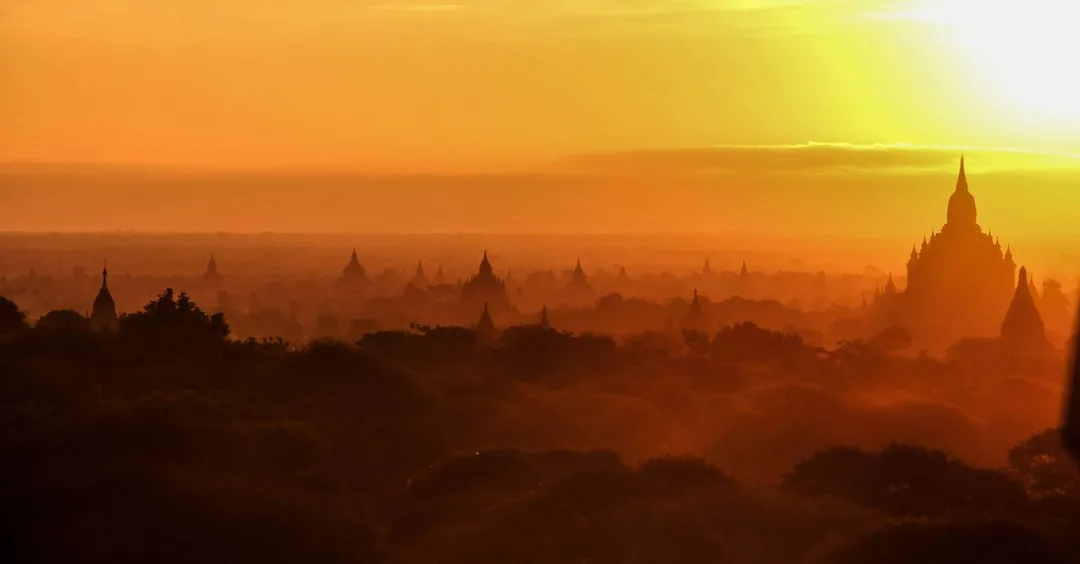
The sandstone figures at Khajuraho catch the morning light in a way that stops you mid-step. You're standing in front of a thousand-year-old wall covered in figures so detailed, so alive, that you forget you're looking at stone. A woman adjusting her anklet. Warriors mid-battle. Lovers intertwined with an intimacy that feels completely at odds with the quiet, dusty town around you. Then a peacock calls from somewhere behind the temple, and a local guide is explaining the Chandela dynasty's philosophy of desire as a path to liberation, and you realise this is one of those places that just doesn't behave like a typical tourist attraction. Khajuraho earns your attention slowly, and then all at once.
In This Guide
- Khajuraho Temples Guide for Indian Travellers: What You Actually Get
- Best Time to Visit (Month-by-Month, Honest)
- Top Experiences You Can't Miss
- Safari Sutra Package Options & Prices in INR
- Getting There: Flights from India
- Visa, Vaccinations & Practical Prep
- Frequently Asked Questions
- Plan Your Khajuraho Temples Guide Trip with Safari Sutra
Khajuraho Temples Guide for Indian Travellers: What You Actually Get
Khajuraho is a small town in Madhya Pradesh, about 175 km from Jhansi, and it punches well above its size. The UNESCO World Heritage Site here comprises a group of medieval Hindu and Jain temples built between 950 and 1050 AD by the Chandela Rajputs. Of the original 85 temples, 25 survive, and they are extraordinary.
The erotic sculptures are, obviously, the thing everyone mentions. But they cover only about 10% of the total surface area of the temples. The rest is mythological scenes, celestial nymphs, animals, hunting parties, and devotional imagery of extraordinary detail. The scale and craft involved would be impressive even with modern tools. The fact that this was achieved by hand, in the 10th century, makes it genuinely hard to process.
The temples are divided across three main groups:
- Western Group (the main site, ticketed, well-maintained) contains the most famous temples including Kandariya Mahadeva, Lakshmana, and Chitragupta. This is where you'll spend most of your time.
- Eastern Group has both Hindu and Jain temples and is far less crowded. Walking through here in the early morning, you'll often have entire temples to yourself.
- Southern Group is the smallest and most off-the-beaten-path. Two temples, worth an hour if you have the time.
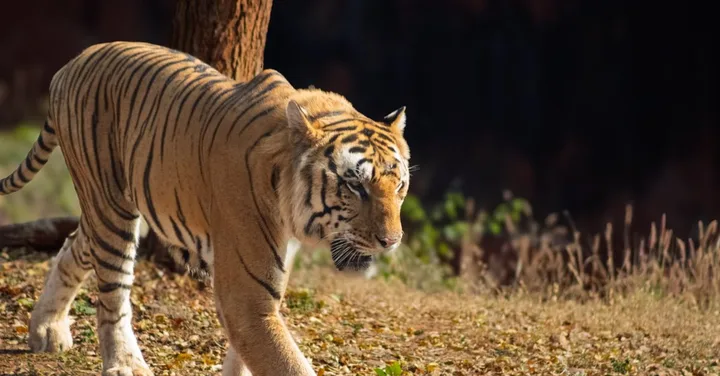
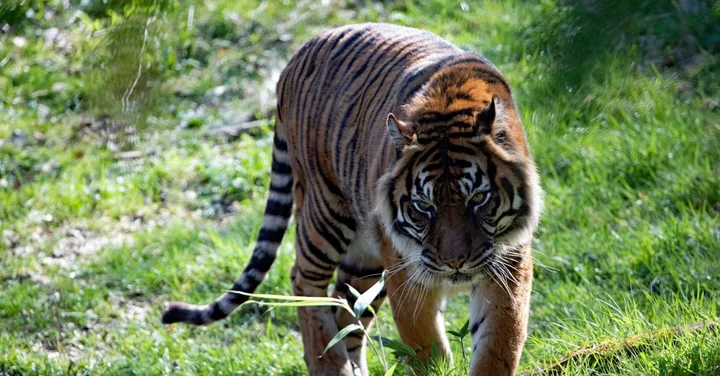
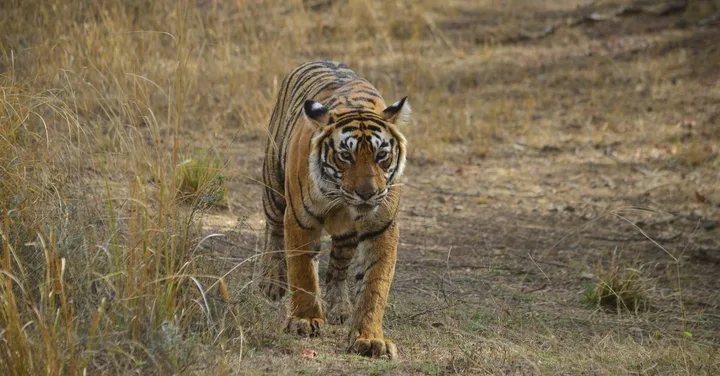
What makes this destination genuinely exciting for Indian travellers is the Panna National Park combo. Panna sits just 25 km from Khajuraho and offers tiger sightings, gharial-filled rivers, and jeep safaris through some of central India's most underrated forest. The combination of a major heritage site with a real wildlife sanctuary, all within a 3-4 day trip, is what makes this one of the best-value cultural-wildlife combos in India.
Explore All Destinations, Safari Sutra to see how Khajuraho fits into a wider India itinerary.
Best Time to Visit (Month-by-Month, Honest)
October to February is the sweet spot. Days are cool (15-25°C), the light is golden, and you'll be comfortable walking between temples and doing morning game drives at Panna. December and January are the most popular months, so book accommodation early.
March to April is still manageable. Temperatures start climbing (up to 35°C by April), but if you go early morning and evening, you can avoid the worst of the heat. Panna safari season runs until June 15, so April works well for wildlife.
May and June are hot. Khajuraho temperatures can hit 45°C. Avoid unless you're travelling specifically for Panna before the monsoon closure.
July to September is monsoon season. Panna National Park is closed (June 16 to October 15). The temples themselves are fine to visit and look beautiful in the rain, and the crowds drop significantly. If wildlife isn't your priority, July and August actually offer a moody, atmospheric experience at the heritage site.
The honest recommendation: plan for November to February if you want temples plus safari. Plan for March to April if budget matters more than weather comfort. Avoid May-June unless you have no other option.
Top Experiences You Can't Miss
Sunrise at the Western Group
The Archaeological Survey of India opens the Western Group at 6 AM (check current timings before you go). Getting there at opening means you beat the tour groups and you get that golden sandstone lit from the east in a way that genuinely makes the sculptures glow. Spend at least two hours here. Don't rush.
The Light and Sound Show
Every evening at the Western Group, there's a sound and light show in Hindi and English. It's theatrical and a little dramatic, but it works. The narration walks through Chandela history against an illuminated temple backdrop, and it genuinely adds context. Tickets are inexpensive and worth it, especially if this is your first time here.
Panna National Park Safari
Panna is a genuine tiger reserve with a good success story behind it. The tigers were locally extinct by 2009 due to poaching, then reintroduced from other reserves, and the population has recovered well. You won't get a sighting guarantee, but the mornings here are special regardless. Ken River runs through the park and you'll spot gharial (the narrow-snouted crocodilian that's critically endangered globally) basking on the banks, vultures overhead, and often leopard, sloth bear, and wild dog. Two safaris (morning and afternoon) over a full day give you the best odds.
Raneh Falls (Ken River Canyon)
About 20 km from Khajuraho, the Ken River cuts through a canyon of pink, grey, and red granite that looks almost otherworldly. Raneh Falls is best visited post-monsoon (October-November) when water levels are up. It's a quiet, crowd-free spot that most day-trippers skip, which makes it worth building into your itinerary.
Khajuraho Dance Festival
Held every February against the backdrop of the lit Western Group temples, this classical dance festival brings performers from across India. Kathak, Bharatanatyam, Odissi performed in front of a 1,000-year-old temple at night. If your dates align, plan around this.
Old Town and Local Bazaar
The area around the bus stand has a genuinely local market where you'll find stone craft replicas (Khajuraho is known for these), local mithai, and the kind of chai stalls where you can sit for an hour watching the world go by. Not Instagram-ready. Completely real.
Safari Sutra Package Options & Prices in INR
Here are some realistic starting-point options. Prices are per person based on double occupancy and include accommodation, transfers, guided temple tours, and safaris as noted.
Tier 1: Heritage Weekend (2 Nights / 3 Days)
From INR 18,000 per person. Covers Western and Eastern Group guided temple tours, one Panna safari, accommodation in a good mid-range heritage property, and Khajuraho airport transfers. Right for travellers who want to cover the essentials without stretching the trip.
Tier 2: Temples and Safari Combo (3 Nights / 4 Days)
From INR 28,000 per person. Everything in Tier 1 plus a full Panna day (morning + afternoon safari), visit to Raneh Falls, Light and Sound Show, and an art village excursion. This is the format most Indian families and couples choose. Good balance of depth and pacing.
Tier 3: Premium Immersion (4 Nights / 5 Days)
From INR 45,000 per person. Luxury resort accommodation (Lalit or equivalent), private licensed archaeologist guide for temple tours, all three temple groups covered, two full safari days at Panna, Ken River boat ride, and a classical music or dance evening arranged privately. Right for anniversary trips, milestone birthdays, or anyone who doesn't want to compromise on guide quality.
Tier 4: Family Extension (4 Nights / 5 Days, Family of 4)
From INR 1,10,000 for a family of four. Designed around children with age-appropriate temple storytelling, kid-friendly safari timings, and a heritage craft workshop. Hotels selected for family amenities.
All packages are customisable. After 12 years and 15,000+ trips, we've found the biggest difference between an average trip and a great one is guide quality and game drive timing, and these are things Safari Sutra Holidays gets right for every client.
Getting There: Flights from India
Khajuraho has its own airport (airport code: HJR) with direct flights from Delhi on IndiGo and Air India. Flight time is about 1.5 hours. Delhi to Khajuraho fares typically range from INR 3,500 to INR 8,000 one way depending on how early you book.
From Mumbai, you'll usually connect via Delhi. Total travel time is around 4-5 hours including the layover.
By train: Jhansi Junction (on the Delhi-Mumbai main line) is the nearest major railhead, about 175 km away. From Jhansi, you take a road transfer of roughly 3.5 hours. Jhansi is well-connected from Delhi (Shatabdi Express, about 4.5 hours) and from Mumbai (about 10-12 hours on overnight trains). This route works well if you're combining with Orchha, which is only 16 km from Jhansi and worth a night in itself.
Best practical advice: fly Delhi-Khajuraho direct if convenience matters. Take the train via Jhansi if you want to make it a longer Bundelkhand heritage trail.
Visa, Vaccinations & Practical Prep
Khajuraho is a domestic destination, so no visa is required for Indian citizens. International travellers holding a valid Indian tourist visa are fine.
Health: No specific vaccinations are required beyond standard hygiene precautions. Carry an ORS and basic stomach medicine since water quality in smaller towns can be variable. Mosquito repellent is useful in the evenings, especially near the park.
What to wear: Covered shoulders and legs are respectful and practical at the temples (the stone floors and pathways can get hot). Comfortable walking shoes matter more than you'd expect; the Western Group alone involves a fair amount of walking on uneven paths.
Money: Khajuraho is a cash-heavy town. Carry Indian rupees. UPI works at many larger restaurants and hotels, but smaller stalls and the bazaar will expect cash.
Photography: Allowed at the temples (no flash inside). The ASI ticket includes photography rights. Tripods need a separate permit at some sites; check at entry.
Language: Hindi works perfectly everywhere. English is understood at most hotels and by licensed guides. You won't need anything else.
Frequently Asked Questions
Q: Are the Khajuraho temples appropriate to visit with children?
Yes, entirely. The temples have religious and mythological scenes throughout, and the sculptural language is part of India's classical art tradition. Most families visit without issue. If your children are young, a good guide will naturally focus on the mythological stories, warrior scenes, and celestial figures, which are equally impressive and make for great storytelling. Context makes all the difference.
Q: How many days is enough for Khajuraho?
Two full days cover the temples thoroughly. Three to four days lets you add Panna National Park properly (ideally two safari slots), Raneh Falls, and a slower pace. If you're flying in and out of Khajuraho, four nights is the format that tends to leave people most satisfied.
Q: Is Panna National Park worth it, or is it just for tiger sightings?
Panna is worth it even without a tiger sighting, though sighting rates are reasonably good. The Ken River valley itself is beautiful, the gharial population is rare enough to be genuinely exciting, and the birding is excellent. The park gets a fraction of the footfall of Ranthambore or Bandhavgarh, which means a more relaxed, personal experience.
Q: What's the best way to cover both Khajuraho and Orchha in one trip?
The classic circuit is Delhi to Orchha (by train to Jhansi, then road to Orchha), one to two nights in Orchha, road to Khajuraho (about 3.5 hours), three to four nights in Khajuraho, then fly back to Delhi. It's an excellent heritage route through Bundelkhand and works beautifully as a long weekend or 5-6 day trip.
Q: Is Khajuraho safe for solo women travellers?
Yes, it's one of the more comfortable heritage towns in MP for solo travel. The main temple area is well-managed by ASI staff and licensed guides. As with any smaller town, evenings away from the main tourist areas call for standard awareness. The town is genuinely used to international and domestic tourists.
Q: Can I book just the safari through Safari Sutra Holidays without the full package?
Absolutely. You can book just the Panna safari, or just guided temple tours, or any combination. The full packages offer better value, but we're happy to handle single components if that's what fits your travel style.
Q: When does Panna National Park open and close?
Panna is open from October 16 to June 15 each year. The park closes during the monsoon (mid-June to mid-October). Within the open season, mornings from November to March offer the best wildlife activity and most comfortable temperatures for game drives.
Plan Your Khajuraho Temples Guide Trip with Safari Sutra
Khajuraho rewards the traveller who comes prepared, moves at a measured pace, and doesn't treat it as a quick Instagram stop. The temples deserve time. Panna deserves an early morning. And the combination of both, done properly, makes for one of the richest short breaks available from any Indian city.
Whether you're planning a long weekend from Delhi, a family heritage trip, or a romantic getaway built around temples and forest mornings, Safari Sutra Holidays has the ground knowledge and the relationships to make it work well.
Ready to Plan Your Trip?
Safari Sutra Holidays — 13 years, 15,000+ trips, zero cookie-cutter itineraries.
Get Your Free Custom Quote →+91 9860415774 | hello@thesafarisutra.com

Safari Sutra Team
Travel curators with 13 years of experience planning Indian and international holidays — from safari adventures to island escapes.
View All Posts