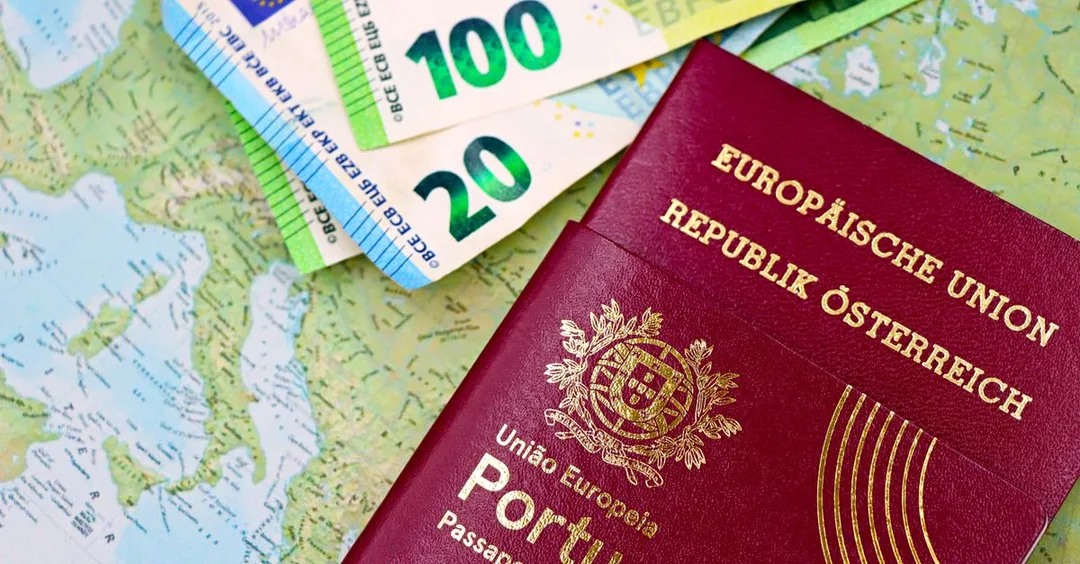
Let's be honest. The moment you decide you want to spend three weeks eating pasta in Rome, watching the Northern Lights in Iceland, or hopping between Amsterdam's canals, the very next thought is: "But the visa, yaar." That sinking feeling is real. Schengen visa rejections happen, appointments are hard to get, and the paperwork feels designed to confuse. But here's the thing: it's actually one of the more straightforward visas for Indian travellers once you understand exactly what they want. This guide breaks down the full process for the Europe Schengen visa for Indians in 2026, with no vague advice and no filler. Just the stuff that actually matters.
Do Indians Need a Visa for the Europe Schengen Visa for Indians 2026?
Yes. Indian passport holders need a Schengen visa to visit any of the 29 Schengen Area countries. There are no exceptions to this, no visa-on-arrival option, and no e-visa workaround for short tourist visits to Europe's Schengen zone.
The Schengen Area includes most of the big names: France, Germany, Italy, Spain, Netherlands, Switzerland, Greece, Portugal, Austria, Czech Republic, Belgium, and 17 others. The UK and Ireland are separate, and they run their own visa systems, so if your Europe trip includes London, that's an additional application altogether.
A standard Schengen visa lets you stay for up to 90 days within any 180-day period. For most Indian travellers planning a two to three week holiday, this is more than enough headroom.
Types of Visa Available
For Indian passport holders planning a leisure trip to Europe, the relevant category is a Short-Stay Schengen Visa (Type C), which covers tourism, family visits, and business trips up to 90 days.
Here's how it breaks down:
-
Single Entry Visa: Lets you enter the Schengen Area once. If you exit and re-enter, the second entry won't be permitted. Works fine for a straightforward trip through one or two countries.
-
Double Entry Visa: Allows two entries. Useful if your itinerary takes you outside the Schengen zone briefly, say into the UK or Turkey, and back again.
-
Multiple Entry Visa: This is what you want if you're a frequent Europe traveller. It can be valid for one, two, or even five years and allows unlimited entries within the 90/180 day rule. First-time applicants rarely get this, but with a solid travel history, it's very achievable.
There's no e-visa system for the Schengen Area for Indian nationals in 2026. The European Travel Information and Authorisation System (ETIAS), which will function like an e-visa for eligible nationalities, does not apply to Indians. We still go through the full visa application process. Check the latest updates on official portals like India Passport & Visa for any changes to requirements as your travel date approaches.
Step-by-Step Application Process
The process itself is logical once you see it laid out clearly.
-
Decide which country to apply to. You apply at the embassy or consulate of the country where you'll spend the most days. If you're spending five days in Paris and four in Rome, apply through France.
-
Book your appointment. Most Schengen country visa centres in India use VFS Global or BLS International as their outsourced visa centres. Appointments in cities like Mumbai and Delhi book up fast, sometimes four to six weeks in advance. Don't leave this for the last minute.
-
Fill out the Schengen visa application form. This is available on the official website of whichever country's visa centre you're applying through. Fill it carefully, sign it, and print it.
-
Gather your documents. Full list in the next section.
-
Submit at the visa application centre. You attend in person for biometric data (fingerprints and photograph). Some countries have fee-based home collection options in select cities.
-
Pay the visa fee. Currently 90 EUR (approximately Rs. 8,000 to Rs. 8,500 at current rates) for adults.
-
Wait for processing. Standard processing takes 15 calendar days. Apply at least 4-6 weeks before your departure.
-
Collect your passport. You can collect it in person or opt for courier delivery at an additional charge.
Documents You'll Need
This is where most applications run into trouble, not because people are missing documents, but because they submit incomplete or inconsistent ones. Here's the exact checklist:
Identity and Travel Documents
- Valid passport with at least 3 months validity beyond your intended return date, and at least two blank pages
- All old passports (carry originals)
- Schengen visa application form, fully filled and signed
- Two recent passport-size photographs as per Schengen specifications
Travel and Accommodation Proof
- Return flight tickets (confirmed bookings or dummy tickets, depending on the embassy)
- Hotel bookings or proof of accommodation for every night of your stay
- Detailed day-by-day travel itinerary
Financial Proof
- Bank statements for the last 3 to 6 months showing consistent activity, not just a sudden large deposit
- ITR (Income Tax Returns) for the last 2 years
- Salary slips for the last 3 months (for salaried applicants)
- Business registration documents or GST filings (for self-employed applicants)
- Forex or travel card proof if you've already purchased travel money
Insurance
- Travel insurance with minimum coverage of 30,000 EUR, valid for the entire Schengen trip duration
Employment and Leave
- Leave approval letter from employer
- Employment contract or offer letter
- For business owners: company letterhead stating purpose of travel
For Self-Funded or Retired Applicants
- Proof of pension or fixed deposit income
- Property documents if required
If you're applying as a family, each member needs a complete individual set. Children need additional documents like birth certificates and school NOC letters.
Fees, Processing Time and Where to Apply
The standard Schengen visa fee is 90 EUR per adult and 45 EUR for children aged 6 to 11 years. Children under 6 are exempt. These fees are non-refundable, regardless of the outcome.
Add to this the VFS Global or BLS service charge, which ranges from Rs. 1,500 to Rs. 2,500 depending on the country. Courier charges for passport return are extra.
Processing time is 15 calendar days for standard applications. Some embassies offer express or priority processing for an additional fee. Apply no earlier than 6 months before travel and no later than 15 working days before your trip.
Visa application centres are available in most Indian metros. VFS Global handles applications for Germany, France, Netherlands, Greece, Switzerland, and several others. BLS International manages Spain and Italy applications. Check the official website of the specific country's consulate in India for the exact centre near you.
Common Mistakes That Get Applications Rejected
After 12 years and 15,000+ trips, the team at Safari Sutra Holidays has seen what consistently causes visa stress. Guide quality and timing matter enormously on safari, but in Europe, the difference between an approved and a rejected Schengen visa usually comes down to documentation quality. Get these right:
-
Inconsistent financials: If your bank statement shows Rs. 2 lakh but you're claiming a trip worth Rs. 4 lakh, it raises flags. Your financial documents need to tell a believable, consistent story.
-
Blank or sudden bank deposits: Embassies can spot a fresh cash deposit made just before application. They want to see regular transactions over months, not a one-time top-up.
-
Wrong country embassy: If your main destination is Italy but you applied through France, your application can be rejected or transferred. Calculate your days carefully.
-
No strong ties to India: Embassies want confidence that you'll return. Strong ties include property ownership, a stable job, family in India, or a running business. Mention these clearly.
-
Incomplete itinerary: A vague plan, like "visiting Europe for two weeks," isn't enough. Day-by-day hotel bookings and a clear travel plan matter.
-
Expired or insufficient travel insurance: Make sure your policy explicitly states 30,000 EUR Schengen coverage and covers the full travel period including the return date.
Frequently Asked Questions About Europe Schengen Visa for Indians 2026
Q: How early should I apply for a Schengen visa from India?
Apply between six weeks and three months before your travel date. The Schengen rules allow you to apply up to six months in advance, and earlier is generally better, especially if you're travelling in peak summer months (June to August) or during school holidays when appointment slots fill up fast in Mumbai, Delhi, and Bangalore.
Q: Can I apply online for a Schengen visa from India?
Partly. You fill out the application form online and book your appointment online, but you must appear in person at the visa application centre to submit documents and provide your biometrics. There's no fully remote option for Indian applicants.
Q: What if my Schengen visa application is rejected?
You'll receive a rejection letter with a stated reason. You have the right to appeal, though the process and timeframe vary by country. More practically, fix the flagged issue, whether it's documentation, financials, or ties to India, and reapply. A past rejection doesn't permanently bar you, but it does mean your next application needs to be especially tight.
Q: Can I visit multiple European countries on one Schengen visa?
Yes. One Schengen visa allows you to travel freely across all 29 Schengen countries within your permitted stay period. You don't need separate visas for each country, which is one of the great practical advantages of the Schengen system.
Q: I have a US visa. Does that help with my Schengen application?
A valid US visa or a history of travel to the US, UK, or other Schengen countries is a positive signal and strengthens your application profile. It's not a shortcut, but it does build credibility with the visa officer.
Q: Is travel insurance mandatory for a Schengen visa?
Yes, it's a hard requirement. You must submit proof of travel insurance with a minimum coverage of 30,000 EUR, covering medical emergencies and repatriation, valid for your entire Schengen trip. Without it, your application is incomplete. Many Indian banks and insurance providers offer Schengen-specific policies.
Q: My passport is almost full. Do I need a new one before applying?
You need at least two blank pages for the visa stamp and your passport must be valid for at least three months beyond your intended return date from the Schengen Area. If you're close to either limit, renew your passport before applying. It avoids any unnecessary complications. You can find passport renewal information at India Passport & Visa.
Sorted Your Visa? Now Plan the Trip
Once you have the visa, the fun starts. You're looking at the Alps in winter, the Amalfi Coast in summer, Christmas markets in Vienna, or a slow train through Portugal with a glass of wine and no agenda. Europe in 2026 is very much open for Indian travellers who plan properly.
If you want help planning the actual trip, the kind where every day makes sense, where you're not scrambling between connections, and where you actually get to feel the places rather than just tick them off, explore all our destinations at Safari Sutra to get a sense of what's possible.
Contact Safari Sutra Holidays to plan your Europe Schengen visa for Indians 2026 trip, and let's build something worth the wait.

Safari Sutra Team
Travel curators with 13 years of experience planning Indian and international holidays — from safari adventures to island escapes.
View All Posts