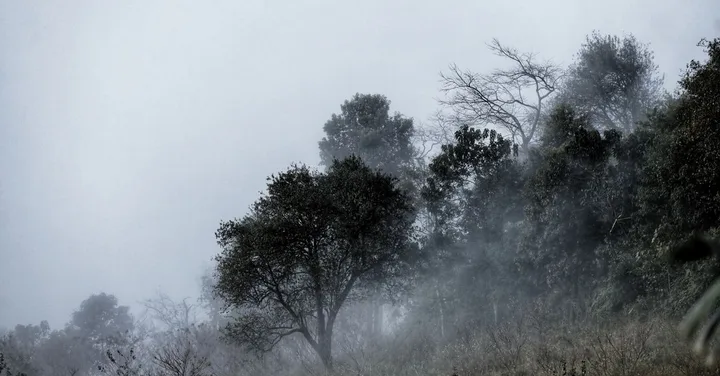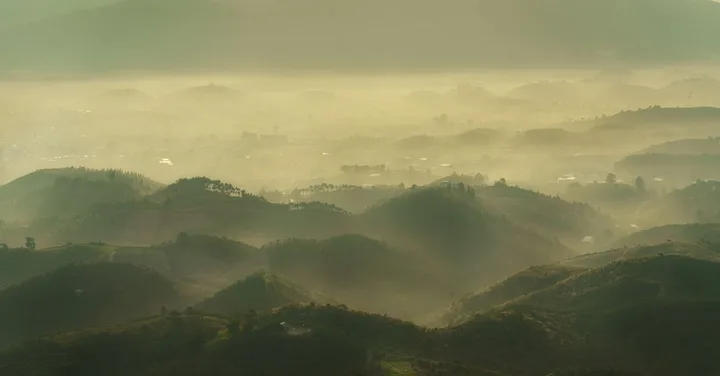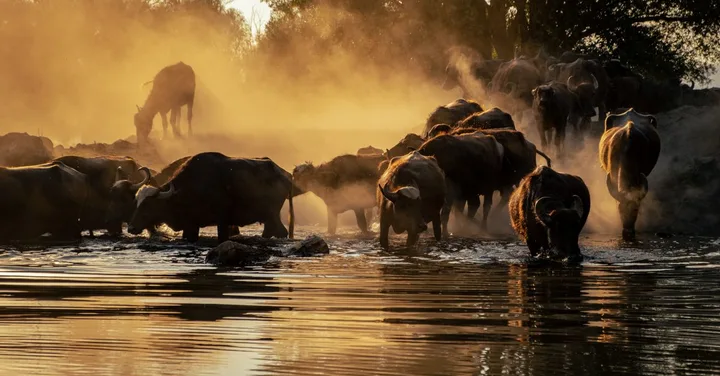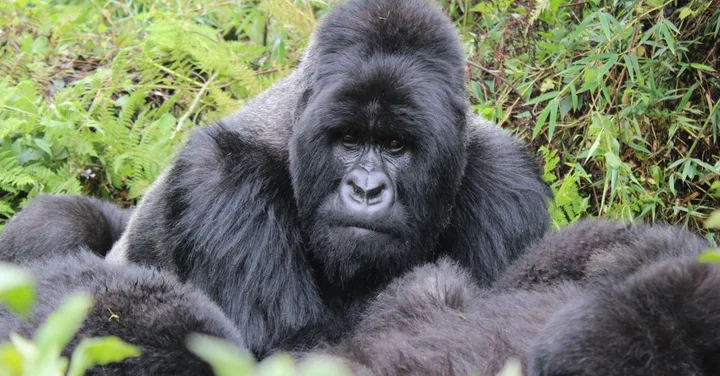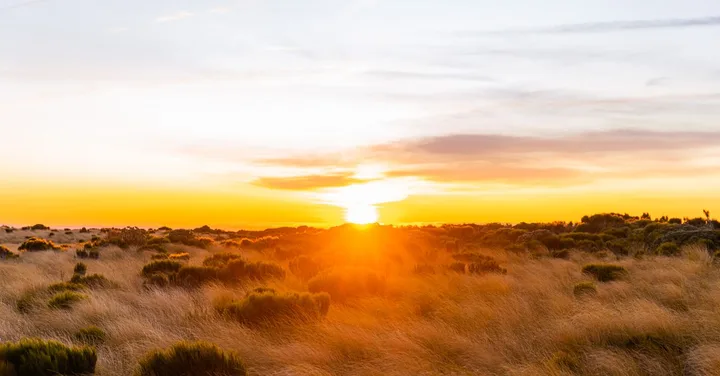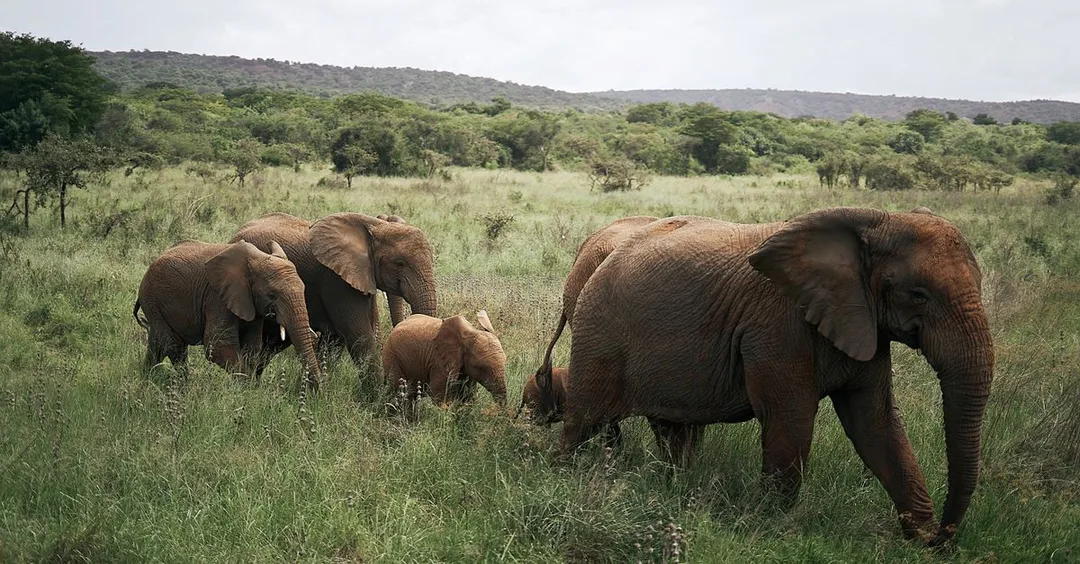
Imagine standing on a open ridge as the sun climbs over Lake Ihema, turning the water a deep copper-orange. A bull elephant moves through the acacia scrub below you, unhurried, enormous. Somewhere behind you, a hippo grunts from the shallows. Your guide speaks quietly, points left. Lions, a pair, stretched out on a flat rock, still warm from the night. This is Akagera National Park in Rwanda, and nobody back home has heard of it yet. That's exactly why you should go.
In This Guide
- Akagera National Park Rwanda for Indian Travellers: What You Actually Get
- Best Time to Visit (Month-by-Month, Honest)
- Top Experiences You Can't Miss
- Safari Sutra Package Options & Prices in INR
- Getting There: Flights from India
- Visa, Vaccinations & Practical Prep
- Frequently Asked Questions
- Plan Your Akagera National Park Rwanda Trip with Safari Sutra
Akagera National Park Rwanda for Indian Travellers: What You Actually Get
Most people who think "Rwanda safari" immediately picture gorillas in Volcanoes National Park. That makes sense. But Akagera National Park, sitting on Rwanda's eastern border with Tanzania, is a completely different kind of wild, and honestly, it deserves far more attention from Indian travellers than it currently gets.
Akagera covers about 1,122 square kilometres of savannah, woodland, and a string of lakes along the Kagera River. It's Rwanda's only savannah park, which means it's the place to see the classic African safari animals you've seen in every documentary: lions, leopards, elephants, buffalo, hippos, zebras, giraffes, and since 2017, black rhinos, reintroduced after decades of absence. That last fact matters. Akagera is now one of the few places in East Africa where you can tick off the Big Five in a single park.
What makes this work so well for Indian travellers is the combination of accessibility and scale. This isn't the endless Serengeti where you can drive for hours without a lodge in sight. Akagera is compact enough to do serious game viewing in two or three days, yet wild enough that every drive feels genuinely unpredictable. The park is managed in partnership with African Parks, and the results show: roads are maintained, wildlife populations are growing, and the lodges are genuinely good.
English is spoken throughout Rwanda, which removes a major friction point for Indian travellers. The country runs on a culture of discipline and cleanliness that will remind you a little of Singapore. No plastic bags are allowed in Rwanda, full stop. The streets in Kigali are swept every Saturday morning by residents participating in a national community clean-up called umuganda. It's a country that takes itself seriously, and that attitude extends to how Akagera is managed.
If you're already planning a Rwanda trip for gorilla trekking (and you should be), adding Akagera is the natural move. Two completely different ecosystems, two completely different moods. Pair them and you've got one of the most interesting wildlife trips you can do anywhere on the continent. You can also look at combining this with East Africa Gorilla Trekking across the border for a broader East African adventure.
Best Time to Visit (Month-by-Month, Honest)
Rwanda has two dry seasons and two wet seasons, and unlike some African destinations, the difference actually matters for what you experience on the ground.
June to September is the best window. Dry air, shorter grass, and animals clustering around the lake system make wildlife viewing excellent. Daytime temperatures hover around 24-27 degrees Celsius, and evenings are genuinely cool, especially near the lakeside. This is peak season, so lodges fill up and prices reflect that. Book at least four to five months ahead.
December to February is the short dry season and a strong second choice. Fewer tourists, still good game viewing, and the landscape holds a little more green from the preceding rains. This window works particularly well for Indian travellers travelling over the Christmas-New Year period or Republic Day holidays.
March to May is the long rainy season. The park stays open, but some tracks get muddy and difficult. The landscape is dramatically green and photogenic if you're into that kind of thing. Wildlife can be harder to spot in thick vegetation. Prices drop noticeably, which makes this window worth considering if you're flexible on timing and want better value.
October to November is a short rainy season. Unpredictable but manageable. Game drives still produce good results, and the crowds are thin.
The honest answer: go June to September if you can. Go December to February if June-September doesn't work. Avoid March to May unless price is the overriding factor.
One thing to keep in mind: if you're combining Akagera with gorilla trekking in Volcanoes National Park, the permits for gorillas sell out 6 to 9 months ahead for June to September. At Safari Sutra Holidays, we hold a small allocation for our clients, but that window fills fast. If you're planning a peak season trip, get in touch early rather than hoping something opens up.
Top Experiences You Can't Miss
Big Five Game Drives
This is the main event. Morning drives starting at 6am are consistently the best, when lions and leopards are still active and the light is extraordinary for photography. The northern sector of the park, around the Mutumba Hills, tends to produce the big predator sightings. The southern lake circuit is where you'll find the heaviest hippo concentrations and the most reliable elephant and buffalo sightings.
Full-day drives with a packed lunch let you stay out when day-trippers head back, which is often when the best afternoon light hits.
Lake Ihema Boat Safari
This is genuinely different from anything you'll find in Kenya or Tanzania. Lake Ihema is one of the larger lakes in the park's chain, and a two-hour boat safari here puts you within a few metres of hippo pods and Nile crocodiles in a way that no land vehicle can match. Birds like the African fish eagle, goliath heron, and shoebill's cousin the saddle-billed stork line the shores. If you're a birder, bring good binoculars.
The Rhino Tracking Experience
Akagera's black rhino population, reintroduced with support from the Rwanda Development Board, has grown steadily since 2017. Tracking them on foot with a ranger is one of the more intense wildlife experiences in the park. It's not guaranteed, rhinos are reclusive and the terrain is thick in places, but when it works, it's remarkable.
Sunrise from Mutumba Hills
Ask your lodge to arrange an early morning drive to the Mutumba Hills viewpoint. Looking out over the park and the lake system as the light comes up is the kind of thing that stays with you. Pair it with a flask of good coffee and you've got a proper moment.
Kigali Stopover
Almost every Rwanda trip connects through Kigali anyway, so build in at least a day. The Kigali Genocide Memorial is difficult and necessary. The Kimironko Market is bright, chaotic in the best way, and worth a couple of hours. The restaurant scene is better than you'd expect, with good Ethiopian, Lebanese, and local Rwandan food all within easy reach of the main hotel strip.
Safari Sutra Package Options & Prices in INR
All prices below are per person, based on double occupancy, and include return international flights from Delhi or Mumbai unless stated otherwise. Rwanda is accessible on a fairly predictable flight routing, which helps keep costs manageable.
Tier 1: Akagera Classic, 5 Nights
Three nights Akagera (mid-range tented camp), two nights Kigali. Includes morning and evening game drives, boat safari on Lake Ihema, and Kigali city day with memorial visit.
Approximate price: INR 2,80,000 to 3,20,000 per person
Tier 2: Akagera Plus Gorillas, 8 Nights
Three nights Akagera, two nights Volcanoes National Park with gorilla trek permit (USD 1,500 per person included), three nights Kigali. Best overall Rwanda experience.
Approximate price: INR 5,50,000 to 6,50,000 per person
Tier 3: Rwanda Luxury, 8 Nights
Three nights Akagera (luxury lakeside lodge with private butler), two nights Volcanoes National Park (luxury lodge with fireplace suites), three nights Kigali (top-tier city hotel). Private vehicle throughout.
Approximate price: INR 8,00,000 to 10,00,000 per person
Tier 4: Rwanda Plus Kenya Combo, 12 Nights
Designed as a full East Africa safari. Three nights Akagera, one night Kigali, four nights Masai Mara (mid to high-end camp), four nights Nairobi with day trip or Amboseli extension. Two permits included.
Approximate price: INR 9,50,000 to 12,00,000 per person
Tier 5: Akagera Weekender, 4 Nights
For travellers with limited time. Two nights Akagera (mid-range), two nights Kigali. No gorilla trek. Works well as an add-on after a business trip or a shorter long-weekend break.
Approximate price: INR 1,80,000 to 2,20,000 per person
Prices include flights, accommodation, ground transfers, park fees, most meals, and game drives. Gorilla permits are priced separately at USD 1,500 per person where applicable. Prices are indicative and confirmed at booking based on dates and availability.
Getting There: Flights from India
RwandAir operates direct flights from Mumbai to Kigali four times a week, with a very manageable total travel time of around 9 to 10 hours. This is genuinely one of the more painless long-haul routes from India to Africa.
From Delhi, you'll typically connect through Nairobi, Addis Ababa, or Dubai with a total travel time of 12 to 15 hours depending on routing and layover length. Ethiopian Airlines and Kenya Airways both offer smooth connections.
Kigali International Airport (KGL) is compact and efficient. Immigration for Indian passport holders holding an e-visa moves quickly, and the drive from the airport to central Kigali is under 30 minutes.
From Kigali, Akagera National Park is about two to two and a half hours by road. Most packages include a private vehicle transfer from the airport directly to the park, or to the city first if you're doing Kigali at the start.
Visa, Vaccinations & Practical Prep
Visa: Indian passport holders can get a Rwanda visa on arrival or apply for an e-visa online before travel. The e-visa is straightforward, costs around USD 50, and is approved within a few business days. Rwanda also participates in the East Africa Tourist Visa (USD 100), which covers Rwanda, Uganda, and Kenya in a single visa. If you're doing a combo trip, this saves both money and admin.
Yellow fever: Yellow fever vaccination is mandatory for entry from India. You'll need to carry the International Certificate of Vaccination (the yellow card) with you. Get this at least 10 days before departure if you haven't had it before.
Malaria: Akagera is a malaria risk zone. Standard prophylaxis (Doxycycline or Malarone) is recommended. Consult your doctor at least two weeks before travel.
Currency: The Rwandan franc (RWF) is the local currency, but USD is widely accepted at lodges, parks, and most shops. Carry small USD denominations for tips and smaller transactions. Indian rupees are not exchangeable in Rwanda.
Connectivity: Airtel and MTN both offer prepaid SIM cards at Kigali airport. Data is cheap and fast. You'll have good signal in Kigali and reasonable signal at most lodges.
Clothing: Akagera is warm and savannah dry. Light cotton clothes in neutral tones (avoid bright colours and white) work well for game drives. Evenings can be cool, so a light fleece or jacket is useful. If you're adding gorilla trekking to your itinerary, you'll need full-length trousers, a long-sleeved shirt, and sturdy walking shoes or trekking boots for the forest altitude.
Frequently Asked Questions
Q: Is Rwanda safe for Indian travellers?
Yes, very. Rwanda consistently ranks as one of the safest countries in Africa, with low petty crime and a strong rule of law. Solo travellers, women travelling alone, and families all move around Kigali and the national parks without notable safety concerns. The country's orderliness, which can feel surprising given what most people know of Rwanda's history, is a real and deliberate achievement. English is spoken everywhere you'll need it.
Q: Do I need to be very fit for Akagera safaris?
Akagera game drives are vehicle-based, so general fitness isn't really a factor. The rhino tracking on foot requires a bit of stamina since you might walk for one to two hours over uneven terrain, but it's accessible to most reasonably healthy adults. Gorilla trekking, if you add that to your trip, is a different matter. Altitude, steep slopes, and uncertain trek duration mean it's genuinely moderate to strenuous. Most healthy adults in their 40s and 50s manage it fine with a bit of preparation.
Q: Can I see the Big Five in Akagera?
Yes. Akagera is Rwanda's only Big Five park. Lions were reintroduced in 2015, black rhinos in 2017, and populations of elephants, leopards, and buffalo have remained stable. Sightings are never guaranteed anywhere in Africa, but the Big Five are all present and the chances are good on a two to three night stay with morning and evening drives.
Q: How does Akagera compare to the Masai Mara or Serengeti?
Akagera is smaller, less famous, and genuinely more intimate. You won't have dozens of vehicles surrounding a lion kill here. The density of animals per square kilometre is lower than the Mara, and the big cat sightings are less consistent. What Akagera offers instead is a sense of discovery, beautiful lake scenery, and a conservation story that is genuinely moving. Many travellers combine both: Akagera for its uniqueness and the Mara for the sheer density of wildlife.
Q: What is the best way to combine Akagera with gorilla trekking?
The most logical itinerary starts in Kigali, transfers to Akagera for two to three nights, returns to Kigali, then drives or flies to Musanze near Volcanoes National Park for the gorilla trek. This works well as an eight-night trip. The reverse order works equally well. The key constraint is the gorilla permit, which needs to be booked well in advance. Six months minimum for peak season.
Q: How much should I budget for tips in Rwanda?
Tipping is expected but not extravagant. For a game drive guide, USD 10 to 20 per drive per vehicle is appropriate. For lodge staff, USD 10 to 15 per person per day as a collective tip left at the end of your stay is standard. Gorilla trek porters, if you hire one (recommended at altitude), get around USD 10 to 20 per trek. Budget roughly USD 50 to 80 in total tip money for a five-night trip.
Q: Is this a good trip for families with children?
Akagera is excellent for families. Children are welcome on game drives, the lake boat safari is kid-friendly, and the lodge environments are safe and relaxed. The minimum age for gorilla trekking is 15, so families with younger children would need to skip that element or have one adult stay back. Rwanda's general infrastructure, clean roads, and English language make it easier to manage than many African destinations.
Plan Your Akagera National Park Rwanda Trip with Safari Sutra
Akagera doesn't show up on most India-to-Africa itineraries yet. That's a gap worth closing. The park is properly wild, the logistics are simpler than most people expect, and combining it with Kigali and the gorillas makes for a trip that's hard to replicate anywhere else on the continent. We've been building East African itineraries for over 12 years and across 15,000+ trips, and Rwanda consistently ranks among the destinations that surprise our clients the most.
The practical bit: permits for gorilla trekking in peak season sell out 6 to 9 months ahead, and the best Akagera lodges follow a similar pattern in July and August. If you're serious about this trip, start planning now rather than in the month before you want to go.
Ready to Plan Your Trip?
Safari Sutra Holidays — 13 years, 15,000+ trips, zero cookie-cutter itineraries.
Get Your Free Custom Quote →+91 9860415774 | hello@thesafarisutra.com

Safari Sutra Team
Travel curators with 13 years of experience planning Indian and international holidays — from safari adventures to island escapes.
View All Posts