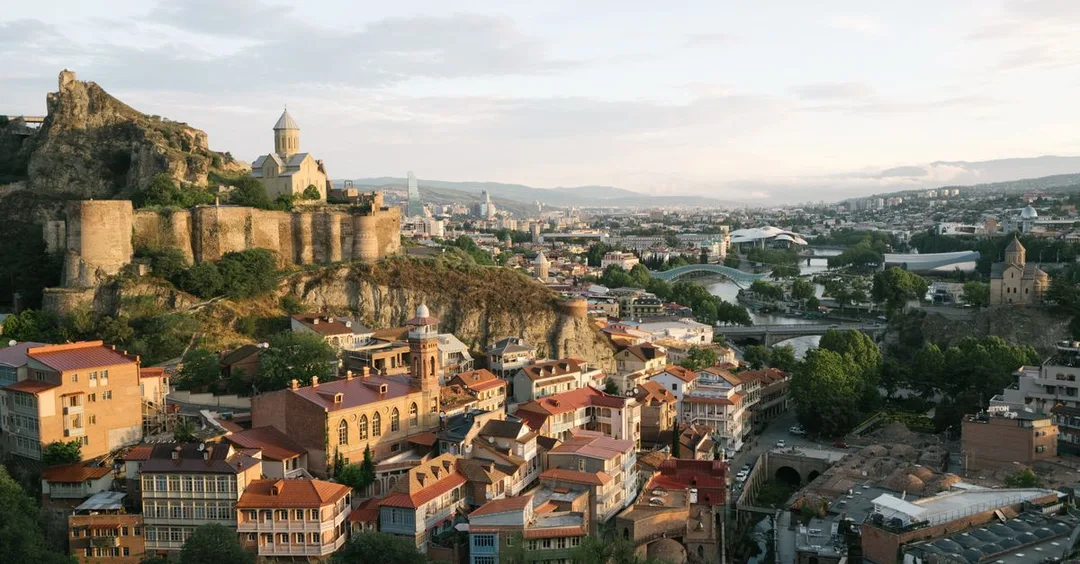
You step off the plane at Tbilisi International Airport and the air hits you differently. There's wood smoke in it, and something like a church candle, and bread baking somewhere nearby. The city unfolds below you in layers: honey-coloured stone houses with carved wooden balconies tilting over cobblestoned alleys, sulphur bathhouses steaming quietly in Abanotubani, a fortress looming on a cliff, and down by the Mtkvari River, a glass-and-steel bridge that looks like it landed here from the future. Georgia's capital is one of those cities that makes you feel like you've discovered something real. And for Indian travellers who have done Bangkok and Dubai to death, it feels exactly like that.
Tbilisi Travel Guide for Indians: What You Actually Get
Tbilisi is not a postcard city. It's a little rough at the edges, genuinely ancient, and completely alive. The old town, called Kala, has been standing here for over 1,500 years. The streets are uneven, the architecture is a mix of Persian, Russian, Ottoman and something purely Georgian, and the people are warm in the way that feels earned, not performed.
For Indian travellers, there's a familiarity underneath the foreignness. Georgians love their food, their family, their wine, and their gods. They'll feed you without asking. They'll invite you in for chacha (the local grape brandy) before you've introduced yourself properly. The hospitality isn't a tourism product here. It's just how people are.
The food alone is worth the flight ticket. Khinkali, the giant soup dumplings, are not far from what a momo lover from Delhi or Kolkata already knows and loves, but with a different soul. Khachapuri, the cheese bread, exists in about eight regional variations and you should try at least three. And Georgian wine is one of the world's oldest winemaking traditions, going back 8,000 years, with amber wines made in clay vessels called qvevri that taste like nothing you've had before.
The city also has a nightlife scene that's genuinely respected across Europe. Tbilisi's electronic music clubs, especially Bassiani and Mtkvarze, draw international DJs and a crowd that parties until noon the next day. If that's not your scene, the jazz bars and rooftop restaurants along the old town are equally good for a slower evening.
Georgians are also visa-free friendly to Indian passport holders, which alone puts Tbilisi ahead of a dozen other destinations worth this kind of trip.
Best Time to Visit (Month-by-Month, Honest)
May and June are the sweet spot. Temperatures sit between 22 and 28 degrees, the city is green, the wine festival season is picking up, and the tourist crowds haven't peaked yet. This is the time to go if you want everything, good weather, good prices, and the city at its most alive.
July and August get hot, up to 35 degrees in the city, but the mountains stay cool. If you're planning to combine Tbilisi with Kazbegi or the Svaneti highlands, summer actually works well. Just book accommodation early because European tourists flood in from July onwards.
September and October are arguably the best months for food lovers. The grape harvest season, called Rtveli, transforms the whole country. You can participate in the crush, drink wine straight from the qvevri, and eat your way through autumn produce at the Dezerter Bazaar. The light in October is golden and the air is crisp without being cold.
November through March is off-season. Tbilisi in winter has its own moody charm, the old town looks incredible in the fog, and prices drop significantly. But some mountain roads close, and you'll miss out on outdoor cafe culture. January and February are the coldest months, sometimes touching 2 to 3 degrees.
April can be rainy and unpredictable, but if you catch a clear week, the city is beautiful and almost empty of tourists.
Top Experiences You Can't Miss
Walk the Old Town at Your Own Pace
Don't rush this. Start at Narikala Fortress at dusk when the whole city turns amber below you. Walk down through the sulphur bath district, where the domed bathhouses have been running since the 5th century, and where one legend says King Vakhtang Gorgasali found the hot springs while hunting. You can actually book a private bath in one of these for around 40 to 80 USD for the hour.
Spend a Day at Uplistsikhe Cave Town
About 80 kilometres from Tbilisi, Uplistsikhe is a cave city carved directly into the rock around 3,000 years ago. It once had a population of 20,000 people. Today it's largely empty, slightly eerie, and completely spectacular. You walk through carved corridors, past cave theatres and pharmacies and wine cellars, with the Mtkvari River below. This is the kind of place that makes you stop talking.
Day Trip to Mtskheta
Georgia's former capital and UNESCO-listed spiritual heart sits just 20 minutes from Tbilisi. The Svetitskhoveli Cathedral, built in the 11th century, is one of the most important religious sites in Georgia and has a coat of arms that tells the whole story of Georgia's conversion to Christianity. The town itself is tiny, walkable, and has good churchkhela (the walnut-and-grape-juice sweet that Indians tend to love immediately).
The Wine Experience
Book a session at a family-run winery in the Kakheti region, about two hours from Tbilisi. You'll taste wine made in qvevri, eat a proper Georgian feast called supra, and understand why Georgians consider wine almost sacred. The amber wines, made from white grapes with the skins left in, are especially worth seeking out.
Rustaveli Avenue and the Art Scene
Tbilisi's main boulevard has the National Museum, the Georgian National Gallery, and the Opera House all within walking distance. The Georgian National Museum has a Gold Fund collection that includes artefacts going back to 3,000 BC. Spend two hours here before you write it off as obligatory.
The Nightlife (If That's Your Thing)
Tbilisi's clubs are serious. Bassiani is built inside a Soviet-era swimming pool and has been featured in international music publications as one of the best clubs in Europe. If you're travelling with a group that wants a late night, this is worth it. Dress down, not up. The door policy is strict about vibes, not appearances.
Safari Sutra Package Options & Prices in INR
These are realistic price ranges based on departures from Delhi or Mumbai, including flights, accommodation, transfers, and selected experiences.
Classic Tbilisi City Break (5 nights / 6 days)
Covers Tbilisi old town, Mtskheta day trip, sulphur bath experience, guided walking tour, and breakfast daily. Stays in a 4-star boutique hotel in the old town.
Approximate range: INR 85,000 to 1,05,000 per person (twin sharing)
Georgia Highlights (8 nights / 9 days)
Tbilisi plus Kazbegi mountains, Mtskheta, and Uplistsikhe cave town. Includes a private driver for mountain trips, a traditional supra dinner, and wine tasting in Kakheti.
Approximate range: INR 1,15,000 to 1,45,000 per person (twin sharing)
Wine and Culture (7 nights / 8 days)
Tbilisi, Kakheti wine region, Sighnaghi (the walled love town), and a cooking class. Best for couples or food-focused travellers.
Approximate range: INR 1,10,000 to 1,35,000 per person (twin sharing)
Family Georgia (9 nights / 10 days)
Designed for families with kids or multi-generational groups. Tbilisi, Mtskheta, the open-air ethnographic museum, Batumi on the Black Sea coast, and the rope park at Anuri Fortress.
Approximate range: INR 95,000 to 1,20,000 per person (based on group of 4)
Premium Georgia (10 nights / 11 days)
5-star hotels throughout, private guides in every city, helicopter transfer to Kazbegi, private wine cellar visit, and a chef's table dinner at one of Tbilisi's top restaurants.
Approximate range: INR 2,20,000 to 2,80,000 per person (twin sharing)
To get a quote tailored to your travel dates and group size, plan your trip by contacting Safari Sutra directly.
Getting There: Flights from India
There are no direct flights from India to Tbilisi currently. The most common connections are through:
- Dubai (Emirates or flydubai): Delhi or Mumbai to Dubai, then Dubai to Tbilisi. Total travel time around 8 to 9 hours. Flydubai offers some of the best-value connections.
- Istanbul (Turkish Airlines): Delhi to Istanbul, then Istanbul to Tbilisi. Total around 9 to 10 hours. Turkish Airlines has excellent connectivity from most Indian cities.
- Doha (Qatar Airways): Good option from southern India, especially Chennai and Hyderabad.
Return fares from Delhi or Mumbai typically range from INR 28,000 to 55,000 depending on the season and how far in advance you book. May and September are peak booking months, so lock in your tickets early.
Tbilisi International Airport is about 15 minutes from the city centre. Taxis are metered and affordable.
Visa, Vaccinations & Practical Prep
Visa: Indian passport holders get visa-free entry to Georgia for up to 365 days. No e-visa, no application, no appointment. You show your passport at immigration and you're in. This is one of the most traveller-friendly visa policies for Indians anywhere in the world.
Currency: Georgian Lari (GEL). As of 2025, approximately 1 USD equals about 2.7 GEL. ATMs are widely available in Tbilisi and accept Indian debit/credit cards. Carry some cash for the bazaars and smaller restaurants.
Language: Georgian script is unique and takes some getting used to, but English is widely spoken in Tbilisi among younger Georgians, hotel staff, and restaurant workers. Google Translate works fine for menus and signs.
Vaccinations: No specific vaccinations are required for Georgia. Standard travel health precautions apply. The tap water in Tbilisi is safe to drink (it comes from mountain springs), which is a pleasant surprise.
SIM Card: Pick up a Magti or Geocell SIM at the airport for about 15 GEL. Data is fast and cheap.
Safety: Tbilisi is genuinely safe for tourists, including solo women travellers. Petty crime exists but is low compared to most European cities. The Indian government travel advisory for Georgia is currently green.
For general travel health tips that apply across international trips, the Incredible India portal also has useful outbound travel guidance.
Frequently Asked Questions
Q: Is Tbilisi suitable for vegetarians from India?
It's workable but requires some planning. Georgian food is heavily meat-based, especially the khinkali dumplings and many of the stews. That said, there are plenty of vegetarian options if you know what to ask for: lobiani (bean-stuffed bread), badrijani nigvzit (fried aubergine with walnut paste), pkhali (vegetable and walnut balls), and khachapuri in its pure cheese form. Tbilisi also has several vegetarian and vegan restaurants in the old town and around Vera park. Tell your guide or hotel in advance and you'll eat very well.
Q: Is Tbilisi good for a honeymoon?
Yes, genuinely. The combination of candlelit wine cellars, balconied rooms in the old town, the walled city of Sighnaghi (often called Georgia's "city of love"), and the Black Sea coast at Batumi makes it a strong romantic destination. It's also far less crowded than the European honeymoon circuit, which means you actually get the quiet moments without crowds photobombing everything.
Q: How many days are enough for Tbilisi?
Three full days covers the city well: old town and Narikala, Mtskheta and Uplistsikhe, and a wine experience or mountain day trip. Add two more days if you want to go to Kazbegi or Kakheti properly. Most Indians we work with find 6 to 8 days is the right length for Georgia overall, combining Tbilisi with at least one other region.
Q: Is Georgia safe given its proximity to Russia and conflicts in the region?
Tbilisi and most of Georgia's tourist regions are safe and unaffected by the geopolitical tensions with Russia. The conflict zones near South Ossetia are clearly defined and not on any tourist itinerary. The Georgian government is strongly pro-Western and tourism is a major priority for them. Hundreds of thousands of tourists visit every year without incident. Check the latest advisories closer to travel, as with any destination.
Q: What's the alcohol situation for non-drinkers?
Absolutely fine. Georgian food is so good on its own that you won't feel like you're missing the main event. Non-alcoholic options include tarragon lemonade (a Georgian classic, bright green, intensely flavoured), fresh fruit juices, and the best pomegranate juice you've ever had. Wine is part of the culture but nobody will pressure you.
Q: Can I combine Tbilisi with a neighbouring country?
Easily. Georgia shares borders with Armenia and Azerbaijan, and both Yerevan and Baku are short flights or long (but scenic) drives away. A 10 to 12 day itinerary covering all three South Caucasus capitals is one of the most interesting routes in Asia right now and surprisingly affordable. Check out our Georgia tour packages for combination options.
Q: What should I buy in Tbilisi?
The Dezerter Bazaar is your first stop: churchkhela, dried spices, local cheese, walnut pastes, and wine to carry home. For gifts, look for hand-painted enamel cloisonne jewellery, Georgian polyphonic music CDs (yes, still a thing), and wooden wine cups. Avoid the tourist stalls right around Narikala and go a few streets deeper for better prices and more authentic goods.
Plan Your Tbilisi Trip with Safari Sutra
After 12 years and 15,000+ trips, we've found the biggest difference between an average trip and a great one is guide quality and timing. A good local guide in Tbilisi doesn't just explain history, they take you to the wine bar that a Georgian grandma runs out of her front room, or the bakery that opens at 5am for fresh shotis puri, or the terrace that only locals know about with the best view of the old town at golden hour. These are the details that matter, and they're what we get right for every Safari Sutra Holidays client.
Georgia is one of those destinations that rewards people who go in a little prepared and come out completely converted. The food, the history, the wine, the mountains, and the warmth of the people make it one of the most complete short-haul international trips an Indian traveller can take right now.
Whether you want a quick city break with your partner or a full family trip through the Caucasus, we'll put together something that fits how you actually travel.
Ready to start planning? Contact Safari Sutra Holidays and we'll handle everything.

Safari Sutra Team
Travel curators with 13 years of experience planning Indian and international holidays — from safari adventures to island escapes.
View All Posts