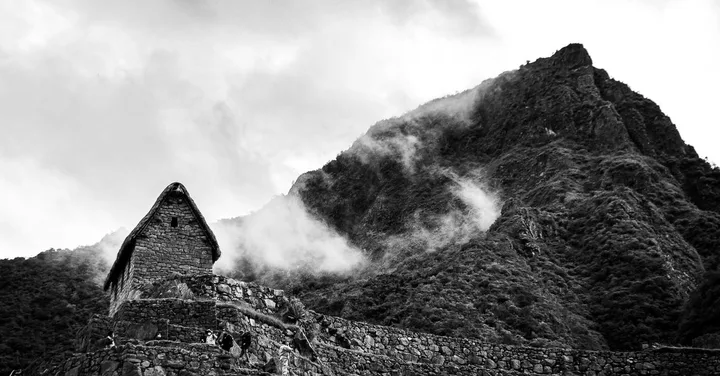
The air at 3,400 metres hits you differently. It's thin, cool, and carries the faint smell of eucalyptus and wet earth as you stand in the middle of an ancient Incan marketplace, watching a local woman in a bright red pollera weave alpaca wool on a backstrap loom, exactly as her ancestors did five centuries ago. Machu Picchu is an hour away, but you're not thinking about it right now. You're thinking about how nobody told you this valley, this 60-kilometre stretch of living history between Pisac and Ollantaytambo, was going to feel this alive.
In This Guide
- Sacred Valley Peru for Indian Travellers: What You Actually Get
- Best Time to Visit (Month-by-Month, Honest)
- Top Experiences You Can't Miss
- Safari Sutra Package Options & Prices in INR
- Getting There: Flights from India
- Visa, Vaccinations & Practical Prep
- Frequently Asked Questions
- Plan Your Sacred Valley Peru Trip with Safari Sutra
Sacred Valley Peru for Indian Travellers: What You Actually Get
The Sacred Valley of the Incas, called Valle Sagrado locally, runs along the Urubamba River in the Cusco region of southern Peru. Most travellers treat it as a transit corridor to Machu Picchu. That's a mistake.
What you actually get here is the full arc of Andean civilisation: Incan agricultural terraces still in use, indigenous markets that have been running every Sunday for centuries, salt pans that look like something from another planet, and mountain villages where Quechua is the first language and Spanish comes second. For Indian travellers especially, there's a familiar emotional frequency here. You'll recognise the reverence for mountains, the layered spirituality, the way ancient and modern sit right next to each other without any awkwardness.
Indians connect with Peru in a way that surprises them. The food is similar in its spice logic, the culture is deeply family-oriented, the hospitality is warm without being transactional, and the landscape, ranging from high-altitude plains to cloud forest, mirrors the visual range of our own Himalayas and Northeast.
The altitude is the one thing to take seriously. Cusco sits at 3,400 metres and the Sacred Valley is slightly lower at around 2,800 metres, which is why staying in the valley first is the smarter way to acclimatise. Give yourself two full days before you push up to Machu Picchu.
We've planned over 15,000 trips across more than 50 countries over 12 years, and Peru consistently ranks among the most emotionally rewarding destinations for Indian travellers. Not because it's easy or cheap, but because it genuinely delivers something you haven't seen before.
If you want to see how this region compares to other global destinations we cover, Explore All Destinations, Safari Sutra for a full picture of what we offer.
Best Time to Visit (Month-by-Month, Honest)
May to October: Dry Season (Best)
This is the window. Blue skies, zero rain, and the mountains sharp against the horizon every single day. June, July, and August are peak months globally, so Machu Picchu gets crowded, but the Sacred Valley itself remains manageable. July 28th is Peruvian Independence Day, and the celebrations across Cusco are worth watching.
April and November: Shoulder Season (Smart Choice)
You get the best of both worlds: fewer crowds, lower prices, and mostly dry weather with occasional afternoon showers. If you're flying from India with some flexibility, April and November are the insider pick.
December to March: Wet Season (Approach Carefully)
The valley turns intensely green, which is genuinely beautiful for photography. But rain can be heavy, some trekking routes close, and the Inca Trail to Machu Picchu shuts entirely in February. If you're not trekking, this season has its own appeal and comes with better hotel rates.
For most Indian families and couples flying from Mumbai or Delhi, May through early October is the answer. Book well ahead if you're targeting June or July.
Top Experiences You Can't Miss
Pisac Market and Ruins
Every Sunday, the town of Pisac fills with artisans, farmers, and traders from surrounding mountain villages. Above the town, the Incan ruins overlooking the valley are among the most dramatic in all of Peru. Do both in one morning.
Ollantaytambo
This is the only Incan town in Peru still inhabited in its original layout. The streets are centuries old, water channels still flow through the stone, and the fortress above town is genuinely awe-inspiring. It's also your departure point for the train to Aguas Calientes and onward to Machu Picchu.
Maras Salt Pans
Around 3,000 individual salt pools terraced into a hillside, still harvested by local families who've held the rights for generations. It's one of those sights that makes no logical sense until you're standing in front of it. Go in the late afternoon when the light turns everything gold.
Moray Circular Terraces
An Incan agricultural laboratory carved into a natural sinkhole, creating concentric circular terraces with different microclimates at each level. Scientists still aren't entirely sure how it worked. Walk to the bottom and look up. That moment stays with you.
Chinchero Weaving Villages
This is where you'll understand Andean textile tradition at its most authentic. Local women demonstrate natural dyeing techniques using plants and insects, and the colours they produce, deep crimson, saffron yellow, indigo blue, are extraordinary.
Machu Picchu Itself
Yes, it deserves the attention. Get the first entry slot (6am), hire a licensed guide, and stay for at least three hours. The light in the early morning, the mist rising off the peaks, the scale of what the Incas built without iron tools or wheels, it earns every superstition you've heard about it.
Safari Sutra Package Options & Prices in INR
All prices below are per person, based on double occupancy, and include accommodation, transfers, guided experiences, and daily breakfast. International flights are not included but we can assist with booking.
Essential Sacred Valley (6 nights / 7 days)
Approximate cost: Rs. 1,85,000 to Rs. 2,20,000 per person
Covers Cusco, Sacred Valley highlights, and Machu Picchu. Mid-range hotels, shared transfers, group guides. Good for first-timers watching their budget without cutting corners.
Premium Sacred Valley (8 nights / 9 days)
Approximate cost: Rs. 2,80,000 to Rs. 3,50,000 per person
Adds Pisac, Ollantaytambo, Chinchero, Moray, and Maras. Private transfers throughout, English-speaking dedicated guide, 4-star boutique hotels.
Luxury Andean Escape (10 nights / 11 days)
Approximate cost: Rs. 4,50,000 to Rs. 5,80,000 per person
Extends to Lake Titicaca and the floating islands of the Uros people. Luxury lodges, private cultural experiences, and a Machu Picchu sunrise access slot. Best for honeymooners or celebratory trips.
Family Peru Adventure (9 nights / 10 days)
Approximate cost: Rs. 3,20,000 to Rs. 4,00,000 per person (family of four pricing available)
Designed specifically for families with children aged 7 and above. Pacing is relaxed, activities are kid-friendly, and accommodation is family-suite oriented.
All tiers are fully customisable. These are starting benchmarks, not fixed itineraries.
Getting There: Flights from India
There are no direct flights from India to Peru. Standard routing is through a European hub (Madrid is the most efficient), the US (Miami or Houston), or occasionally through Dubai with an onward connection.
From Mumbai or Delhi, expect total travel time of 22 to 28 hours. The most common routing: Delhi/Mumbai to Madrid (Iberia or Air India), then Madrid to Lima, then Lima to Cusco on a domestic flight with LATAM Airlines. Cusco is the gateway city.
Total return airfare from India typically ranges from Rs. 85,000 to Rs. 1,40,000 per person in economy depending on timing and routing. Business class on the long-haul legs is available from approximately Rs. 2,80,000+ per person.
Book domestic Cusco flights well in advance. These fill up fast in peak season.
Visa, Vaccinations & Practical Prep
Visa: Indian passport holders can enter Peru visa-free for up to 183 days as tourists. No prior application needed. You'll need a valid passport with at least six months remaining, a return ticket, and proof of accommodation.
Transit visas: If your routing takes you through the US (Miami, Houston), you'll need a US transit visa or a valid US visa. Spain does not require a separate Schengen visa just for transit at Madrid Barajas if you don't leave the international zone, but check your specific flight timing with us before booking.
Vaccinations: No mandatory vaccinations for Peru unless you're arriving from a yellow fever zone. A Hepatitis A vaccination is recommended. Altitude sickness (soroche) is a real concern. Diamox (acetazolamide) prescribed by your doctor before travel helps. Carry it.
Travel insurance: Non-negotiable for Peru. Medical evacuation from altitude can be very expensive. Get a policy that covers high-altitude trekking and medical emergencies.
Currency: Peruvian Sol (PEN). ATMs are widely available in Cusco. Carry some USD as backup. Credit cards work in most hotels and larger restaurants.
Indian food: Cusco has a small number of Indian restaurants and the local Peruvian food is warming, filling, and genuinely delicious. Quinoa soup, slow-cooked alpaca stew, and fresh ceviche are staples. You'll eat well.
As Incredible India often highlights, Indians travelling internationally are increasingly seeking depth of culture alongside natural spectacle. Peru delivers exactly that combination.
Frequently Asked Questions
Q: Is Sacred Valley Peru safe for Indian tourists?
Peru is generally safe for tourists in the Sacred Valley and Cusco region. The main precautions are standard ones: don't display expensive jewellery or cameras openly, use registered taxis arranged through your hotel, and avoid wandering unfamiliar areas at night. Safari Sutra Holidays handles all in-destination transfers and recommends only vetted ground partners, so you're not navigating this alone.
Q: How bad is altitude sickness and how do I prepare?
It varies by individual. Some people feel nothing, others experience headaches, nausea, and fatigue on day one. The best preparation is to spend your first two nights in the Sacred Valley (lower altitude) rather than Cusco itself, stay very hydrated, skip alcohol for the first 48 hours, and move slowly. Coca tea, which locals swear by, genuinely helps. Your doctor can also prescribe Diamox as a preventive measure before you travel.
Q: Can we combine Sacred Valley with other South American countries?
Absolutely, and many Indian travellers do. Peru plus Patagonia (Argentina/Chile) is a popular longer circuit. Peru plus the Amazon is another option. The realistic minimum for Peru alone is 8 to 9 days. Adding another country needs at least 14 to 16 days total. We can design combined itineraries based on your time and budget.
Q: What's the best way to do Machu Picchu, train or trek?
The classic Inca Trail trek takes four days and requires a permit that sells out months in advance. It's physically demanding but rewarding. The train from Ollantaytambo to Aguas Calientes, followed by a bus up to the ruins, is the comfortable alternative and absolutely valid. Many of our 15,000+ trip travellers have had deeply moving Machu Picchu experiences without trekking a single step. The site speaks for itself.
Q: Is this trip suitable for senior travellers or families with young children?
With the right pacing, yes. We've taken clients in their 60s and 70s through the Sacred Valley and Machu Picchu successfully. The key is building in acclimatisation days, choosing the right hotels, and not overpacking the daily schedule. For children, we recommend ages 7 and above for the altitude and activity mix. We adjust every itinerary based on the group's fitness and comfort.
Q: When should I book to get the best availability?
For peak season travel (June to August), start planning at least four to five months ahead. Machu Picchu entry tickets and the Inca Trail sell out that far in advance. For shoulder season, two to three months is usually fine. The earlier you confirm your dates with us, the better the options we can secure.
Q: Is Peru more expensive than Southeast Asia or Europe for Indian travellers?
It's in the same ballpark as Western Europe and noticeably more than Southeast Asia. The flights are longer and slightly pricier, the in-destination costs are moderate, and the experiences require local expert guides to do justice. Think of it as a premium trip that delivers premium returns. After 12 years and 15,000+ trips, we've consistently found that the biggest difference between an average trip and a great one comes down to guide quality and the timing of your key experiences. These are things we get right for every Safari Sutra client, and Peru is no exception.
Plan Your Sacred Valley Peru Trip with Safari Sutra
The Sacred Valley rewards travellers who slow down and pay attention. It's not a destination you rush through ticking boxes. The best moments here are unscheduled: a conversation with a weaver at Chinchero, the mist clearing at Moray just as the sun hits the terraces, the sound of a quena flute carrying across a market square.
Safari Sutra Holidays has spent over a decade building the knowledge and the ground relationships to make sure your Peru experience goes far beyond the postcard version. We know which guides bring the history alive, which trains get the best mountain views, and why the acclimatisation day everyone skips is actually the most important day in your itinerary.
Ready to Plan Your Trip?
Safari Sutra Holidays — 13 years, 15,000+ trips, zero cookie-cutter itineraries.
Get Your Free Custom Quote →+91 9860415774 | hello@thesafarisutra.com

Safari Sutra Team
Travel curators with 13 years of experience planning Indian and international holidays — from safari adventures to island escapes.
View All Posts